
আরও দেখুন


 21.08.2026 04:11 AM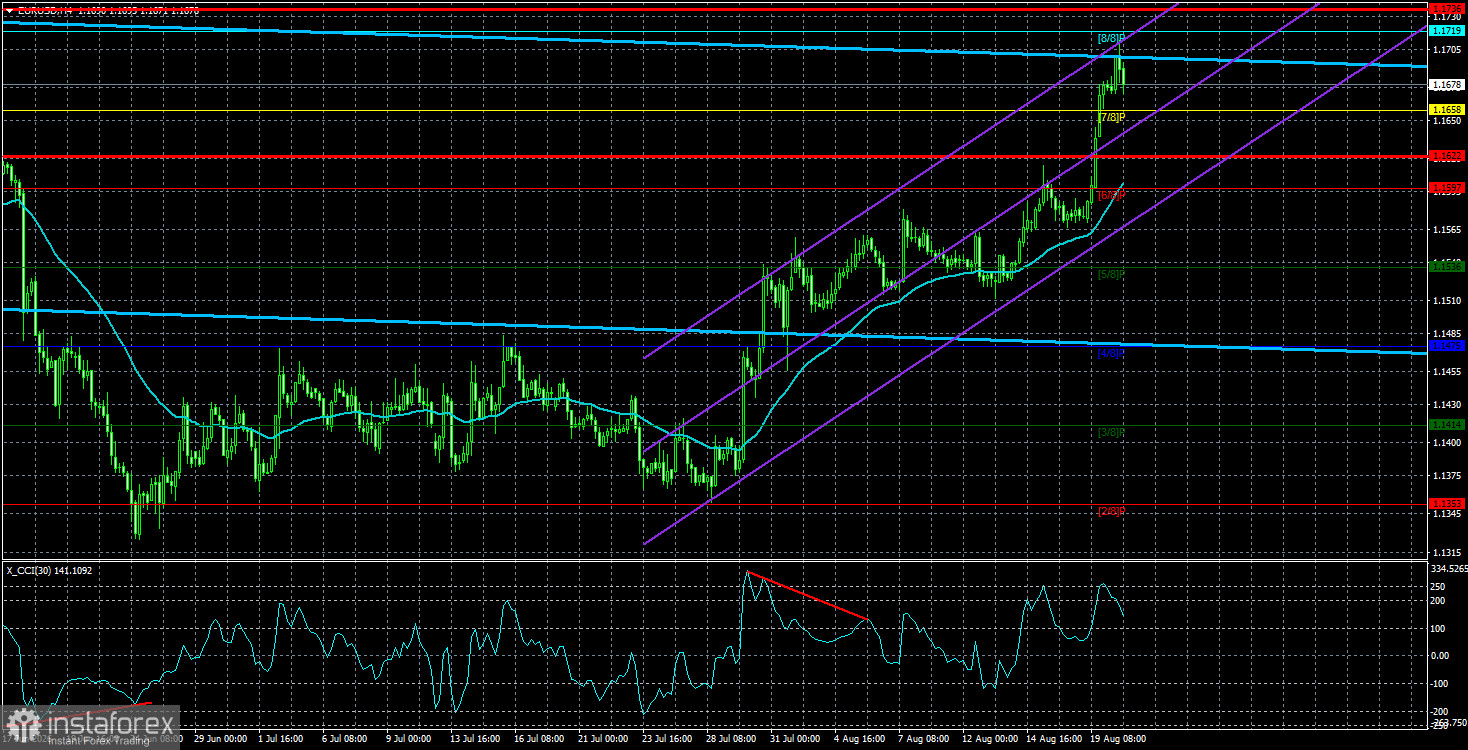
The EUR/USD currency pair continued its upward movement calmly throughout Thursday, with each analyst explaining the situation in their own way. We do not deny that the US Treasury's decision to increase the long-term bond buyback program significantly affected the stability of the US dollar. Still, we have frequently outlined a range of reasons why the dollar will continue to fall. The Treasury's decision became the "final straw." The mechanism is quite simple: the US Treasury intends to buy back its own bonds in double the volume to reduce their yield and ease the overall burden on the budget and national debt. The national debt has increased "only" by $3 trillion in the first one and a half years of Donald Trump's presidency, surpassing $40 trillion. Now, the costs of servicing the US national debt exceed defense spending. In simpler terms, the American government spends the most money on interest on bonds and loans. It's mind-boggling.
However, even without current problems, the prospects for the US currency were extremely unclear. The high national debt was not news yesterday. The extraordinarily high costs of servicing that debt have long been known. It is clear that if the debt continues to grow, payments for its servicing will also rise. Therefore, we do not consider these two pieces of news as the true reason for the fall of the US dollar on Wednesday and Thursday. The Treasury's decision to increase bond buybacks is primarily a signal to the market about danger.
In other words, even the Treasury now realizes where Trump's policies are leading. If the Treasury is sounding the alarm, then there are real reasons for concern. In addition, the new policy by the US Treasury signals lower bond yields. Demand for them will decline, and investors' free capital will shift towards riskier assets: stocks, cryptocurrencies, and so on. This explains, for example, the sharp surge in Bitcoin.
For the dollar, the situation on Wednesday worsened further, though it was already dire. The Federal Reserve is likely to abandon further monetary policy tightening, the labor market is weakening, the economy is slowing, the national debt is rising, payments on its servicing are increasing, and Trump's "golden age" has yet to arrive, while geopolitics is no longer friendly to the dollar. It is also important to consider the technical picture, which we constantly mention. Despite trading in a limited range for an entire year (which is clearly visible on the weekly timeframe), these movements fall under the concept of "flat" or "correction." In other words, over an entire year, the dollar showed no growth, except for a small (by global standards) correction. And this in the face of significant geopolitical support. Thus, our forecasts remain unchanged: a long-term decline for the US currency. As long as Trump remains president, the dollar should not expect anything good.
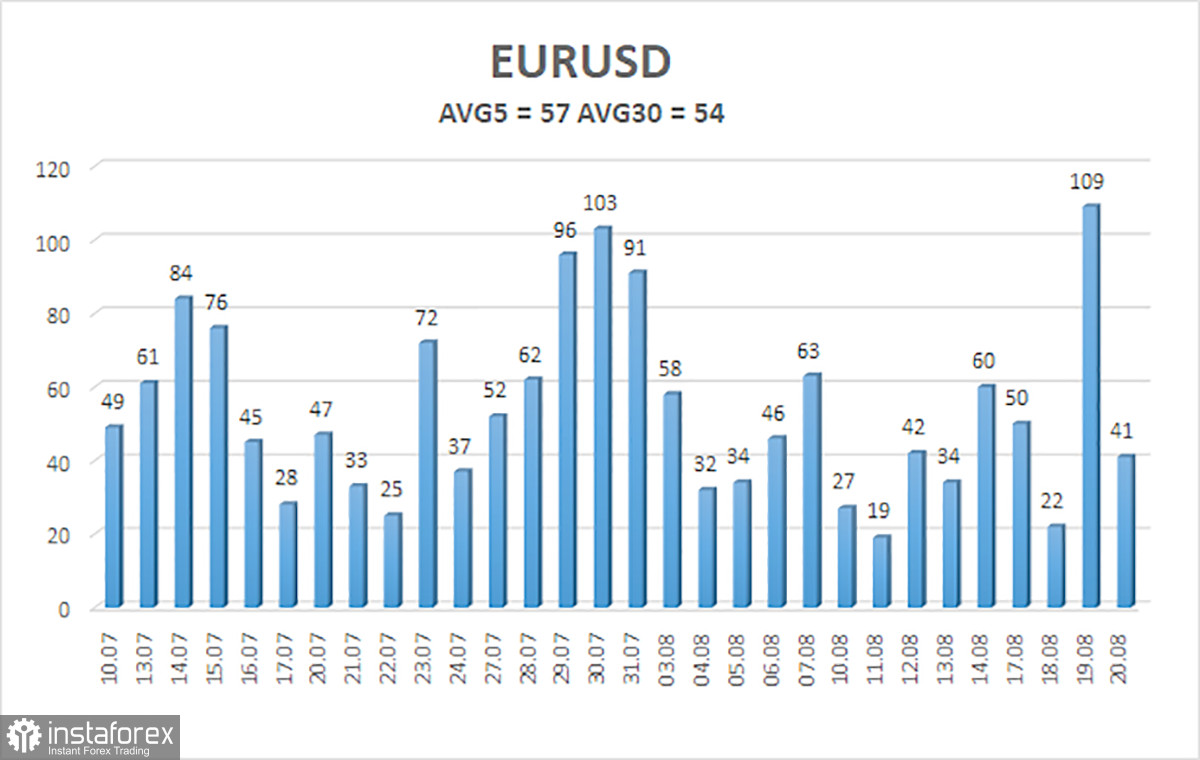
The average volatility of the EUR/USD currency pair over the last five trading days, as of August 21, is 57 pips, which is considered "average." We expect the pair to move between levels of 1.1622 and 1.1736 on Friday. The upper channel of the linear regression is directed downward, indicating that the trend remains downward, although it has already changed. The CCI indicator has once again entered the overbought area, warning of a possible new downward pullback.
S1 – 1.1658
S2 – 1.1597
S3 – 1.1536
R1 – 1.1719
R2 – 1.1780
R3 – 1.1841
The EUR/USD pair continues its upward trend on the 4-hour timeframe, suggesting the beginning of a new phase in the global uptrend on higher timeframes. The global fundamental backdrop for the dollar remains negative, but in 2026, geopolitical factors, followed by the Fed's hawkish stance, had provided strong support for the US currency. However, at this time, these factors no longer support the dollar. When the price is below the moving average, short positions can be considered on corrective grounds with a target of 1.1536. Above the moving average, long positions remain relevant with targets of 1.1719 and 1.1736.


