
আরও দেখুন


 21.08.2026 11:01 AM
On Thursday, EUR/USD rose to the 127.2% retracement level at 1.1700 and rebounded from it. A second rebound from this level may occur this morning. Thus, a decline toward the 100.0% retracement level at 1.1620 may begin today. Consolidation above 1.1700 would allow traders to expect further gains toward the 1.1786–1.1802 resistance level.
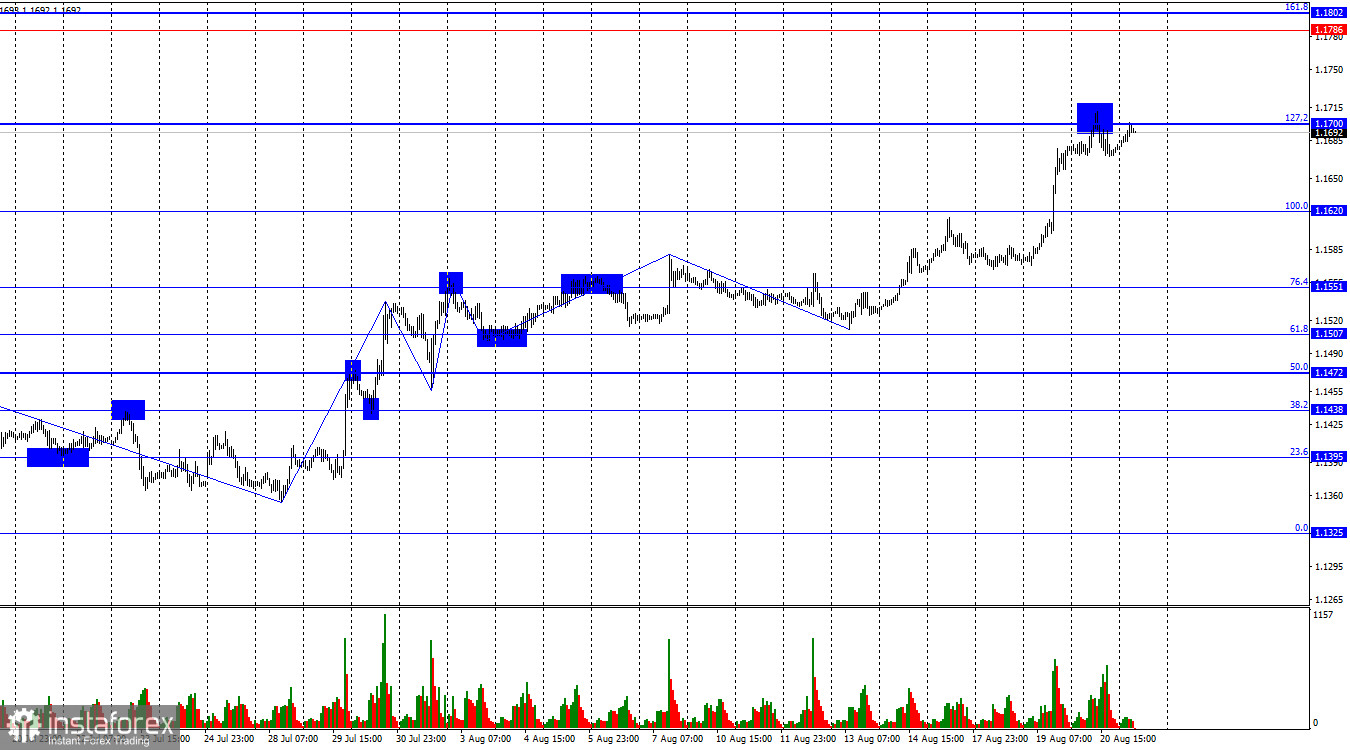
The wave structure on the hourly chart remains bullish. The latest completed downward wave did not break the previous low, while the new upward wave broke the previous high. Geopolitical developments remain consistently negative: negotiations between Iran and the United States are not taking place, and the blockade of the Strait of Hormuz remains in place. However, the FOMC's stance is currently more important for the dollar, and it remains highly contradictory.
There was virtually no fundamental background on Thursday, but traders did not lack factors to trade. The market has not yet fully recovered from Wednesday's "information bomb," when the U.S. Treasury announced an increase in purchases of its own bonds, which is somewhat analogous to the QE programs usually conducted by the Fed when economic growth needs to be stimulated. Every coin has two sides. The U.S. economy may grow faster, while the burden on the budget may decrease. However, the broader economic situation in the United States is unlikely to change. Structural problems are emerging, and resolving them will take years. And that is only if the government addresses the problems it created itself. However, Donald Trump is currently more focused on the confrontation with Iran and intends to secure support from other countries. The U.S. president intends to unite the international community against Iran by imposing sanctions on any country that supports Tehran in its conflict with the United States. Any such action may be considered support: purchasing Iranian oil, providing services to Iranian companies, and so on.
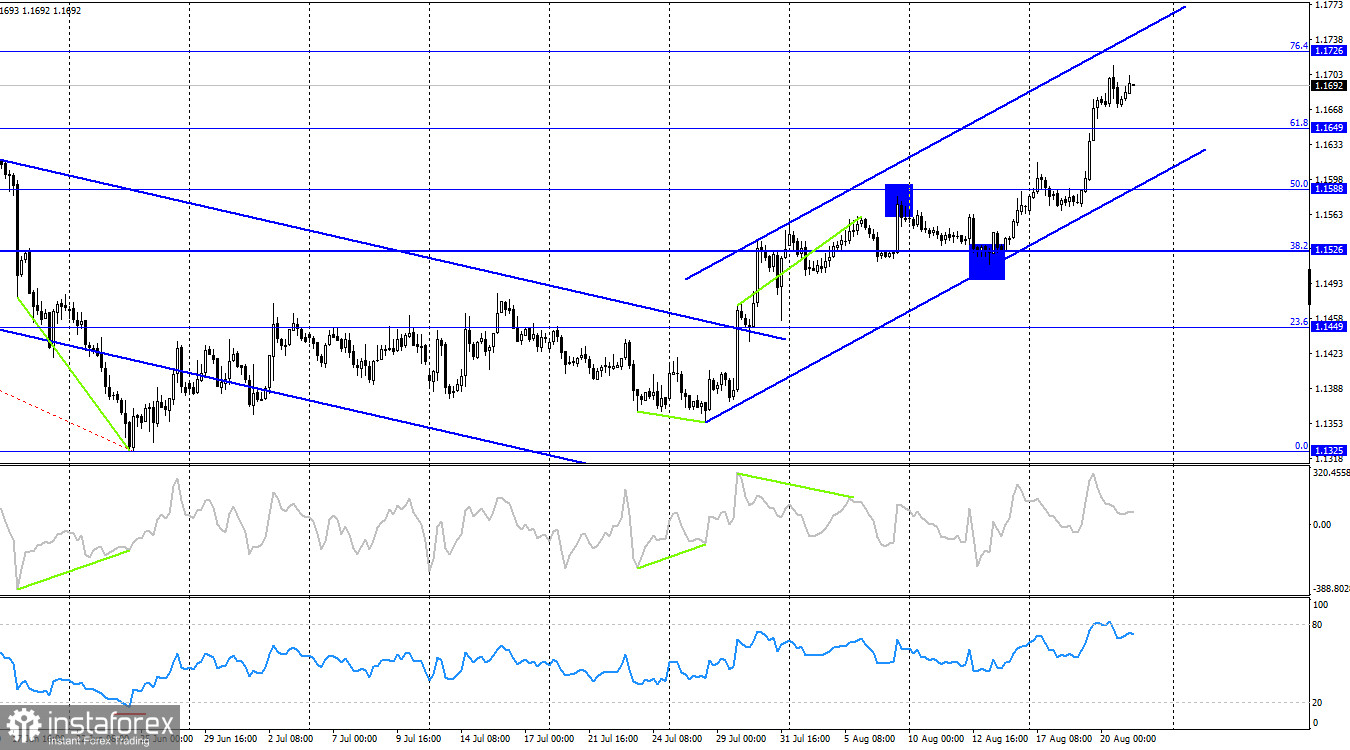
On the 4-hour chart, the pair continues to advance and has consolidated above the 61.8% retracement level at 1.1649. Thus, the euro's advance may continue toward the next Fibonacci level of 76.4% at 1.1726. The upward trend channel indicates a full-fledged bullish advance. From now on, a strengthening of the U.S. currency can be expected only after the price closes below the channel. No emerging divergences are observed today, but the RSI indicator has entered overbought territory (above 80).
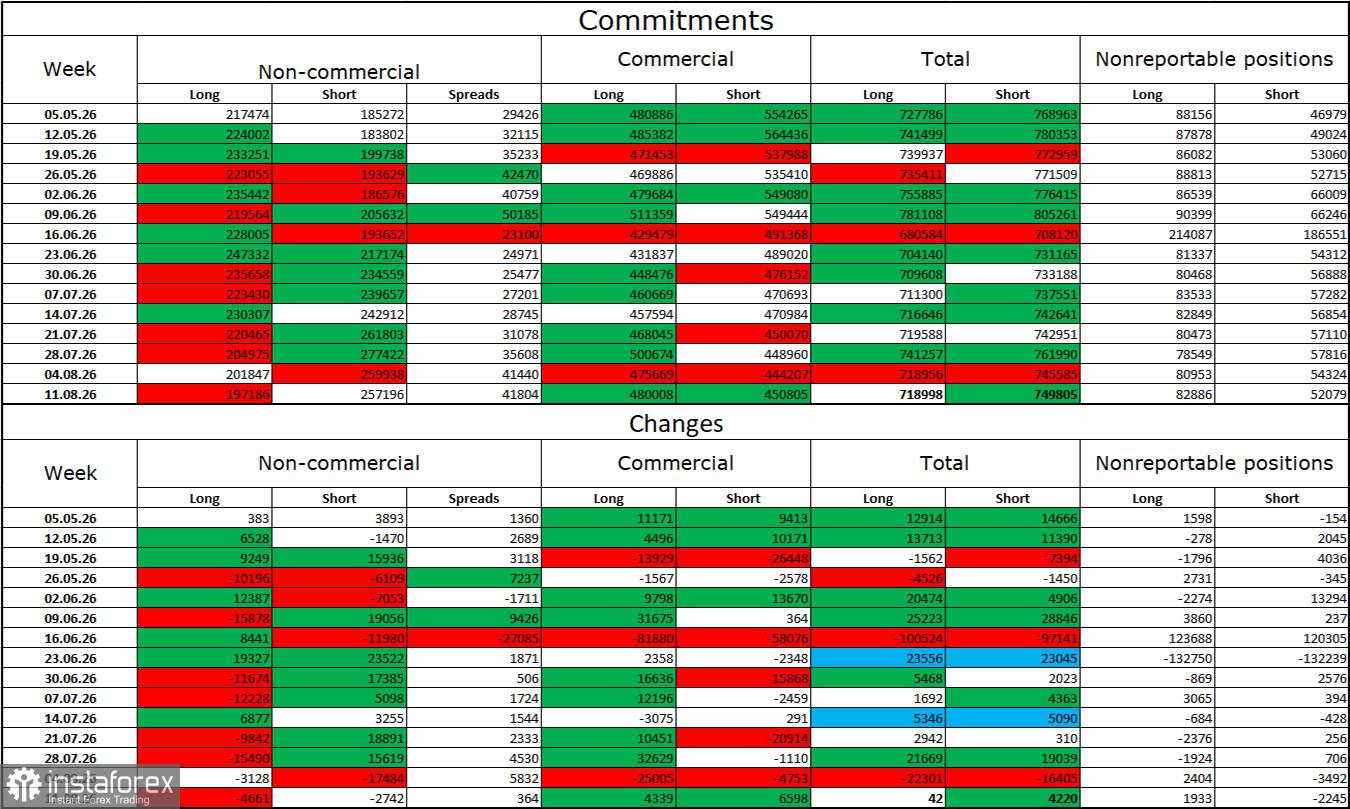
During the latest reporting week, professional traders closed 4,661 Long positions and 2,742 Short positions. During the seven weeks in February and March, the bulls' overwhelming advantage disappeared due to the war in Iran, while over the past twenty weeks, the situation has leveled out amid the supposed truce and market hopes for an end to the war. The total number of Long positions held by speculators currently stands at 197,000, while the number of Short positions stands at 257,000. The bears are once again taking the lead.
Overall, over the long term, large market participants continue to show greater interest in the euro. Naturally, events of various kinds around the world, which have been plentiful in recent years, affect investor sentiment. In particular, the market is currently keeping a close eye on the situation in the Middle East, where the war ends and then resumes again. The market initially ignored the truce and then ignored the resumption of the war. Thus, geopolitics no longer determines the dollar's fate on its own.
The economic calendar for August 21 contains six entries, none of which I would consider important, especially in light of recent events. The impact of the economic background on market sentiment on Friday will be limited.
Buying the pair was possible after consolidation above 1.1620 on the hourly chart, with a target of 1.1700. A close above 1.1700 would allow traders to keep positions open with a target of 1.1786. Selling the pair is possible today if it rebounds from 1.1700 on the hourly chart, with a target of 1.1620.
The Fibonacci grids are drawn from 1.1620–1.1325 on the hourly chart and from 1.1849–1.1325 on the 4-hour chart.


