
Lihat juga


 11.02.2026 04:38 AM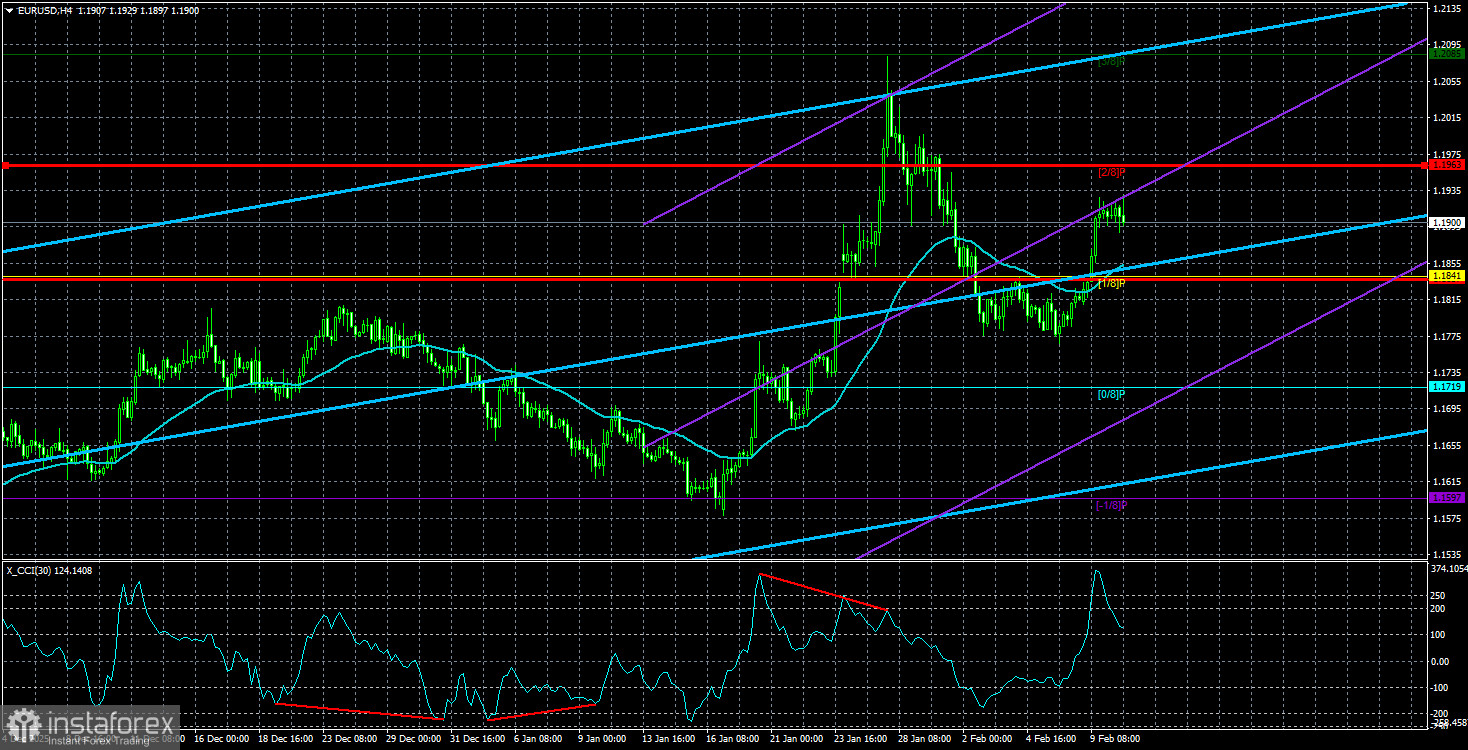
The EUR/USD currency pair traded calmly on Tuesday. The new year has just begun, yet it has already brought the markets so many events that it would be enough for several months ahead. However, the flow of news shows no signs of drying up. Just the day before, it became known that the Chinese government had prohibited its banks from purchasing US Treasury bonds. As the saying goes, "an eye for an eye, a tooth for a tooth." We have long stated that China is one of the few players on the world stage prepared to respond to Washington and Trump with equal force. You raise tariffs on our products? We will respond by restricting exports of rare earth metals or cease purchasing your Treasuries.
China can hardly retaliate against the US in terms of trade. However, it can counter in other areas. Metaphorically speaking, both the US and China hold strong cards, but they are of different suits.
As a result, the dollar failed to recover from the weekend and immediately fell by 100 pips. On Tuesday, it managed to avoid another collapse, but such a drop seems inevitable. Reports on Non-Farm Payrolls and unemployment will be published in the US today, and inflation data will follow on Friday. What would you bet on in the current circumstances? A strong labor market or another failure? Of course, individual reports could provide support for the dollar. We have mentioned many times that the irony is that the market assesses not the actual state of the labor market but the relationship of the actual report values to the forecast. In other words, the labor market doesn't need strong metrics for the dollar to rise; it just needs to show a value above the forecast.
Thus, for the dollar to show growth today, Non-Farm Payrolls must exceed 70,000, and the unemployment rate must not exceed 4.4%. If these conditions are met, the American currency will strengthen. However, it is unlikely to be strong or long-lasting. While the market enjoys playing out the "expectation/reality" scenario, it still understands that even 80,000 new jobs is woefully insufficient for a country like the US. Furthermore, we should not forget that each Non-Farm Payroll report revises the estimates for previous months, and, as a rule, downwards. Therefore, the value for January may be relatively high, while the values for November and December may be revised downwards.
On the daily timeframe, the technical picture remains clear. There are no signs of the completion of the global upward trend that began back in 2022 and intensified in 2025. Last week, the EUR/USD pair corrected lower after a sharp 500-pip rise. Now, we may be entering a new phase of the trend. The only concern is that the CCI indicator has entered the overbought zone, warning of a potential downward correction. But this week's movements will depend on macroeconomic data rather than the CCI indicator. For now, the dollar is losing one battle after another.
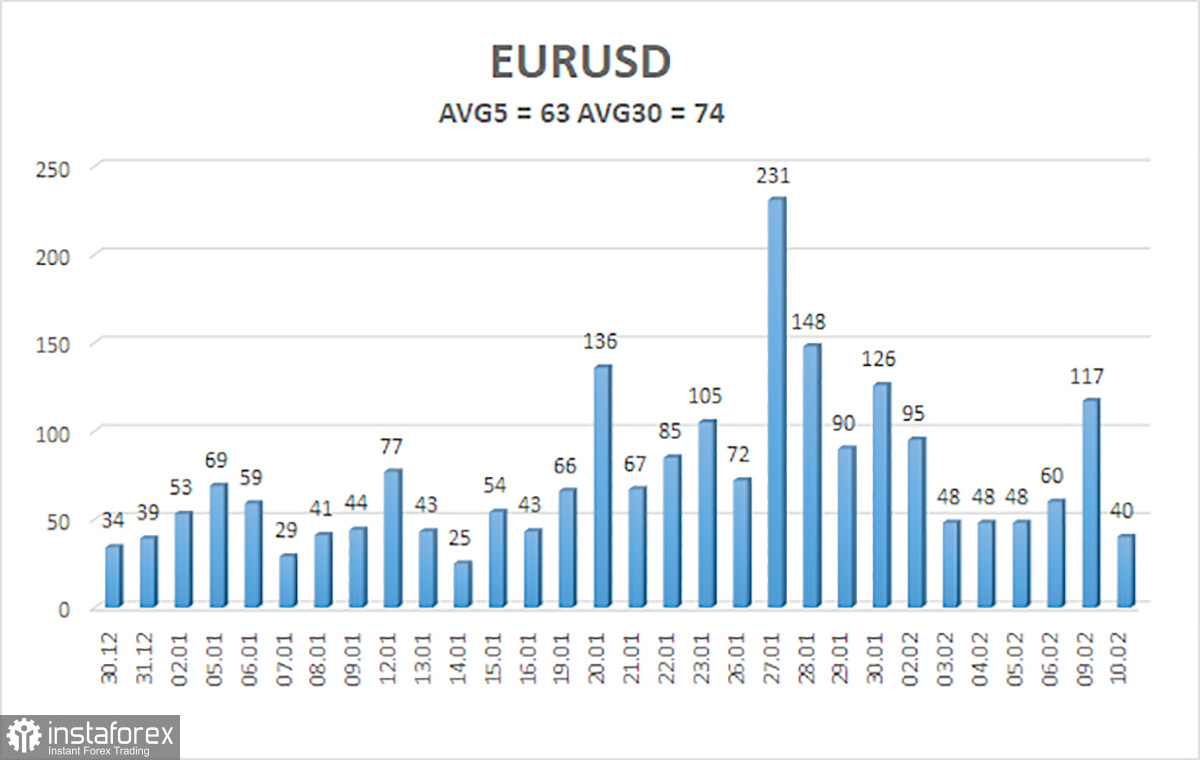
The average volatility of the EUR/USD pair over the last 5 trading days, as of February 11, is 63 pips and is characterized as "average." We expect the pair to trade between 1.1837 and 1.1963 on Wednesday. The upper channel of the linear regression points upward, indicating further growth for the euro. The CCI indicator has entered the overbought zone, warning of a possible pullback.
The EUR/USD pair is continuing a fairly strong correction within the upward trend. The global fundamental backdrop remains critically negative for the dollar. The pair spent seven months in a sideways channel, and it is likely that now is the time to resume the global trend from 2025. The dollar lacks a fundamental basis for long-term growth. Therefore, all the dollar can hope for is a flat or a correction. If the price is below the moving average, small shorts can be considered with a target of 1.1719 based purely on technical grounds. Above the moving average line, long positions remain relevant with targets at 1.1963 and 1.2085.


