
यह भी देखें


 10.08.2026 11:56 AM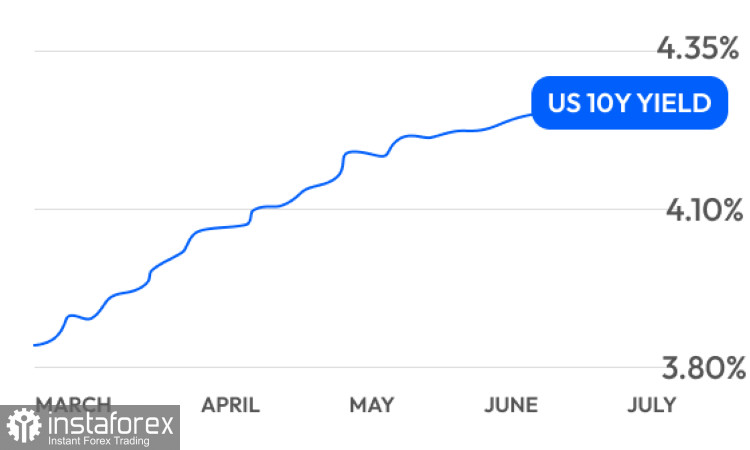
For months, Wall Street was laser-focused on one key question: exactly how many times would the U.S. Federal Reserve cut interest rates this year—two, three, or more? Investors and analysts scrutinized every speech by Fed Chair Jerome Powell for signals of imminent monetary easing. However, the latest inflation report from the U.S. Bureau of Labor Statistics completely upended the market narrative, forcing market participants to prepare for the opposite scenario.
According to the figures, the Consumer Price Index (CPI) rose by 0.6% in April following a 0.9% jump in March. Year-over-year, inflation accelerated to 3.8%, reaching its highest level since May 2023. Instead of the anticipated cooling in prices, the U.S. economy is showing a fresh flare-up of inflationary pressure. As a result, a scenario where the Fed is forced to raise rather than cut its policy rate no longer seems improbable. This poses a fundamental threat to financial markets that had priced in a period of cheap credit and easy financial conditions.
Even potential leadership changes at the central bank are losing their former significance. Donald Trump has repeatedly criticized Powell for being too slow to cut rates, and his prospective candidate for Fed Chair, Kevin Warsh, was viewed by the market as a proponent of more aggressive stimulus. However, rising prices leave the regulator with increasingly little room for maneuver. Data from the prediction market Kalshi reflects a rapid repricing of risk: the probability of a Fed rate hike by the end of 2027 has reached 27% (a month earlier, the chance of a rate hike in 2026 was pegged at just 18.2%), while the likelihood of a hike before July 2027 stands at 41%, and by the end of 2028, at 77%.
The current macroeconomic situation is driven by a complex set of fundamental factors that constrain the Fed's options and pose risks to the U.S. economy:
Based on the analysis of these data, our outlook on the Fed's next steps and the state of financial markets is as follows:
In the short to medium term, investors should entirely discount the baseline scenario of imminent and aggressive rate cuts. Expectations of monetary easing are giving way to a period of prolonged uncertainty and tight financial conditions.
The primary decisive factor will be oil price dynamics and the evolution of the Iran conflict. If Middle Eastern geopolitical tensions persist or intensify, the energy component will continue to exert upward pressure on the CPI, rendering the 2% target unachievable. Under these circumstances, with a probability exceeding the current 27–41%, the Fed will be forced to shift from a pause to an actual rate hike to prevent inflation expectations from becoming entrenched.
For capital markets, this marks a shift in the psychological paradigm: the period of optimism fueled by hopes of cheap capital has come to an end. Equities and bonds must now adapt to an environment where borrowing costs remain elevated far longer than Wall Street anticipated, and the risk of another round of Fed tightening becomes the defining factor of volatility for years to come.

