
यह भी देखें


 13.05.2026 04:25 AM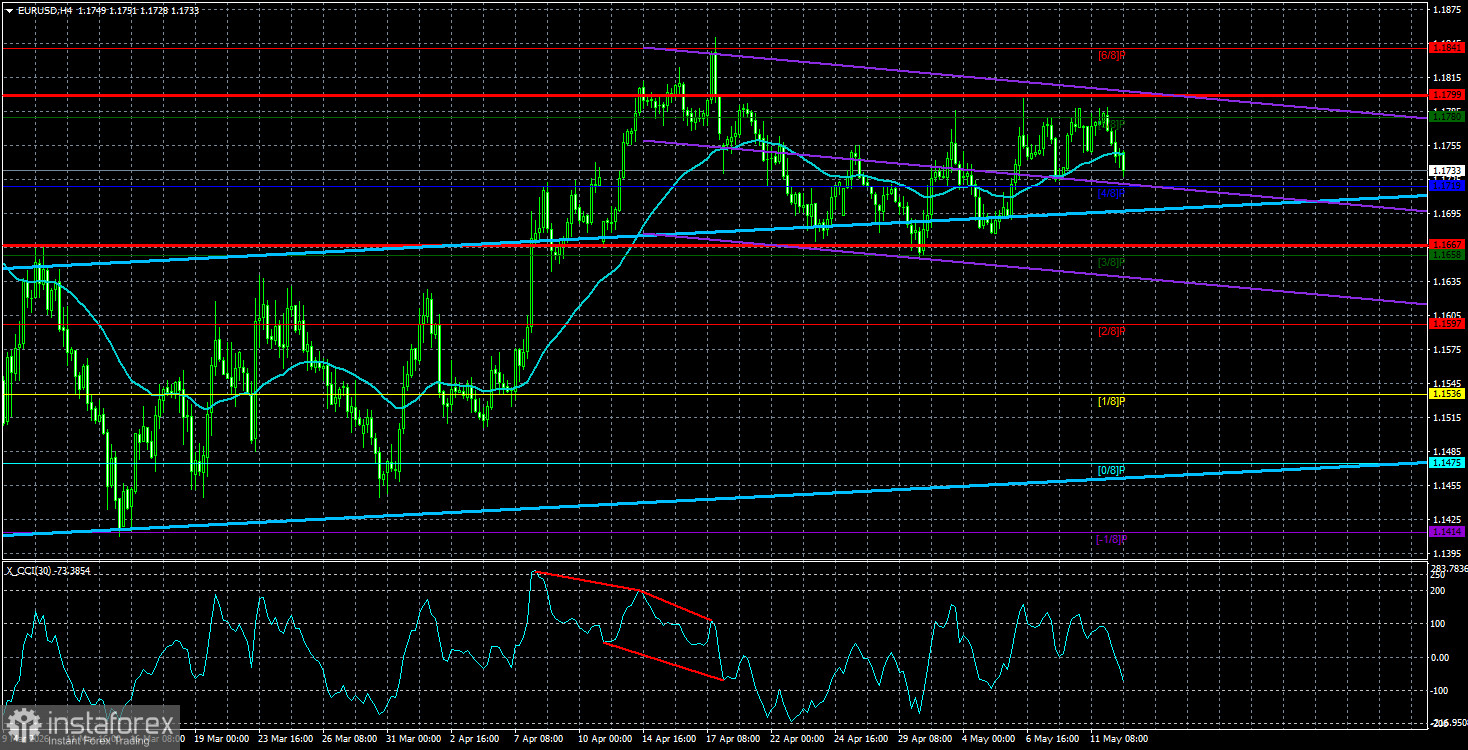
The EUR/USD currency pair unexpectedly fell on Tuesday. Recently, optimism regarding the Iran-US peace agreement among investors and traders in financial markets had been exceedingly high. We have repeatedly pointed out that this optimism lacks any solid foundation. Simply put, Iran and the US can hold new rounds of negotiations every two days, but what good does it do if the parties cannot reach an agreement? Tehran can propose anything: a temporary halt to uranium enrichment, an agreement to allow international experts to oversee its nuclear facilities, and promises not to produce uranium for ballistic missiles. But what is the point if Trump demands complete denuclearization? Washington can also propose anything: lifting sanctions, paying reparations, unfreezing Iranian assets, lifting the blockade on Iranian ports, and allowing oil trade. But there is no sense in that either, because Iran is not ready to abandon uranium, and the US is not willing to give up its main demand, which is the reason the war in the Middle East began.
As a result, the negotiations may continue for several months or even years. Maintaining optimism and hope for a positive outcome during such a lengthy period is extremely difficult. Meanwhile, crude oil inventories in strategic reserves worldwide are steadily declining. In a month or two, they could simply run out. Then the world will face a new wave of rising energy prices, and along with it, the inflation spiral will continue to escalate. Thus, the last month and a half of the ceasefire has provided a temporary pause for the entire world. If the situation with the Strait of Hormuz is not resolved soon, oil prices could soar to $150 per barrel. And this is still far from the most pessimistic scenario.
However, there is some good news. The euro, along with the British pound, experienced a sharp decline on Tuesday, which many experts quickly associated with the market's waning patience. The deal is not being signed, the Strait of Hormuz remains blocked—how much longer must we wait? Nonetheless, we do not believe that the decline in the euro and the pound on Tuesday was linked to market discontent over the Middle East peace agreement. Looking at the movements of both currency pairs over the past weeks, it is clear that the direction of movement frequently changes, and there is no pronounced trend. In other words, Tuesday's movements fit well within the characteristics of previous weeks.
It is important to remember that not every movement has a specific reason behind it. It is a mistake to try to explain every market movement by certain events. Yesterday, a large bank might have executed a significant transaction to buy dollars necessary for its operational activities, not to profit from currency fluctuations and not because faith in the peace agreement in the Middle East has run out. Therefore, we would not be surprised if the euro and pound appreciated again today.
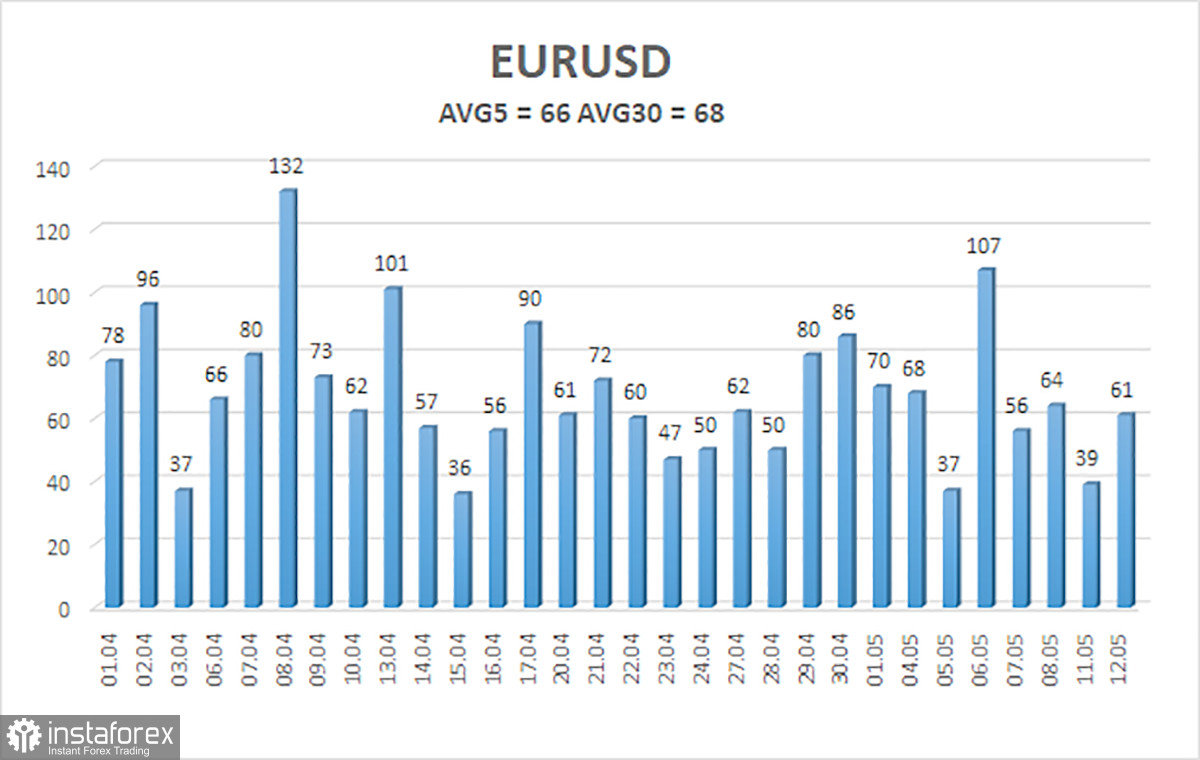
The average volatility of the EUR/USD currency pair over the last 5 trading days as of May 13 is 66 pips, which is "average." We expect the pair to trade between 1.1667 and 1.1799 on Wednesday. The upper channel of the linear regression has flattened, indicating a possible trend change to the upside. In fact, the upward trend for 2025 could have resumed a month ago. The CCI indicator has entered the overbought zone and has formed two "bearish" divergences, which warned of the beginning of a downward correction that is likely already complete.
S1 – 1.1719
S2 – 1.1658
S3 – 1.1597
R1 – 1.1780
R2 – 1.1841
R3 – 1.1902
The EUR/USD pair retains its upward trend amid the weakening influence of geopolitics on market sentiment and diminishing geopolitical tensions. The global fundamental backdrop for the dollar remains extremely negative, so we continue to expect long-term growth in the pair.
If the price is positioned below the moving average, short positions can be considered with targets at 1.1667 and 1.1658 on technical grounds. Above the moving average line, long positions are relevant with targets at 1.1841 and 1.1902. The market continues to distance itself from geopolitical factors, and the dollar continues to lose its only source of growth.

