
یہ بھی دیکھیں


 07.08.2026 07:43 PM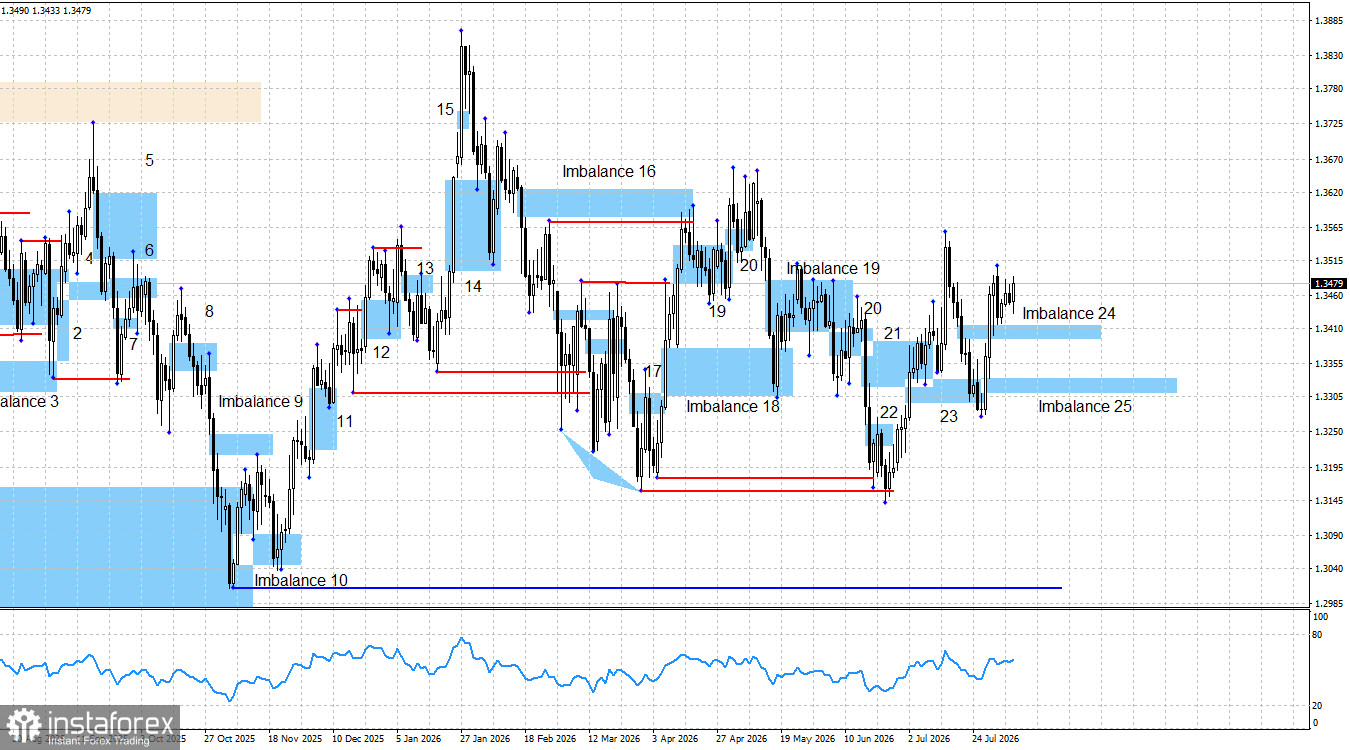
The GBP/USD pair moved quite calmly this week, clearly waiting for the most important reports, which became available today. These reports effectively put an end to the debate over whether the FOMC will raise interest rates in September. The Nonfarm Payrolls figure declined for the fourth consecutive time, but this time it not only came in at a low level but also fell below zero. Thus, the number of jobs in the US economy is no longer simply growing very slowly; it is declining. A similar situation occurred several times last year, and the Fed then had to cut interest rates three times to prevent a further contraction in the labor market. In recent weeks, there has been widespread speculation in the market that high inflation would force the Fed to raise interest rates. Kevin Warsh also spoke about excessive inflation that needs to be urgently brought back to the target level. However, as I expected, inflation is not the only factor that matters. Given the current Nonfarm Payrolls figures, I no longer expect monetary policy tightening. For the US dollar, this is a major blow.
As I have already said, geopolitics is no longer having a favorable effect on the dollar, as new escalations in the conflict occur approximately once every two weeks. Each new escalation is no different from the previous ones. According to some reports, negotiations between Tehran and Washington are continuing; according to others, they are on hold; and according to still others, they have failed completely. Officially, Tehran denies that it is negotiating with the Americans but continues talks with intermediaries, particularly Oman. It remains unclear what these negotiations will lead to in terms of ending the conflict and reopening the Strait of Hormuz. Iran may be able to agree on terms for control of the Strait of Hormuz with Oman, but how would this resolve the conflict with the US?
Last week, oil rose to $100, while this week it fell as low as $81. If the situation begins to develop according to the most pessimistic scenario, oil will rise again and retest the March–May highs. In this case, inflation in the US or the UK will begin accelerating again. If the situation develops according to the optimistic scenario, oil prices will return to the $60–70 per barrel range. In that case, Fed policy tightening may not be necessary, while the Bank of England is already not burdened by the problem of high inflation. However, at present, it is the Fed that cannot bring itself to take a hawkish step (although one is needed), while the Bank of England, conversely, will be ready to tighten monetary policy only if inflation begins to accelerate (which is not currently showing any signs of happening).
The chart analysis shows a new advance by the bulls. At present, traders have two bullish imbalances (24 and 25), within which long positions can be considered. Imbalance 24 formed a bullish signal as early as last Friday, which traders could have acted on by opening long positions. On Monday, the price fell back to this pattern once again and rebounded from it. No bearish patterns were formed, and another bullish imbalance could form as early as Monday, given today's rise.
The economic news backdrop on Friday put strong pressure on the dollar and forced the bears to flee the market. In fact, there is no need to analyze all three reports, as the most important one, Nonfarm Payrolls, was a major disappointment. After this report, traders were no longer interested in either wage growth or the unemployment rate.
The overall fundamental backdrop remains such that, in the long term, I can expect nothing other than a decline in the US dollar. The war between Iran and the US has not changed this. The possibility of a Fed rate hike in 2026 has not changed it either. Geopolitical developments caused the market to recall the dollar's safe-haven status for several months, but the conflict has already passed its active phase. The Fed intends to raise interest rates in 2026, which is positive for the dollar. However, it should not be forgotten that monetary policy tightening will lead to a slowdown in the economy and labor market, while Kevin Warsh was appointed by Donald Trump as FOMC Chair to ease monetary policy, something Jerome Powell was unable to deliver. Therefore, in my view, any rise in the dollar is temporary and driven by short-term factors.
News Calendar for the US and UK:
On August 10, the economic events calendar contains no noteworthy releases. The economic backdrop will have no impact on market sentiment on Monday.
GBP/USD Forecast and Trading Tips:
The long-term outlook for the pound remains bullish. After liquidity sweeps of the two most recent swing lows, the bulls began their advance, followed by a corrective pullback and another bullish attack. Next week, I expect the pound to continue rising, as the US labor market reports were a major disappointment and the probability of FOMC monetary policy tightening is now extremely low. An inflation report will also be released next week, but FOMC policy no longer depends on it. If the bears launch another attack, bearish patterns will be required for short positions, but there are currently none. The bulls have received a new buy signal from imbalance 24. The current upside targets for the pound are the highs from July 15 and May 1 at 1.3557 and 1.3656, respectively. Another bullish pattern may form on Monday.


