
یہ بھی دیکھیں


 11.08.2026 04:35 AM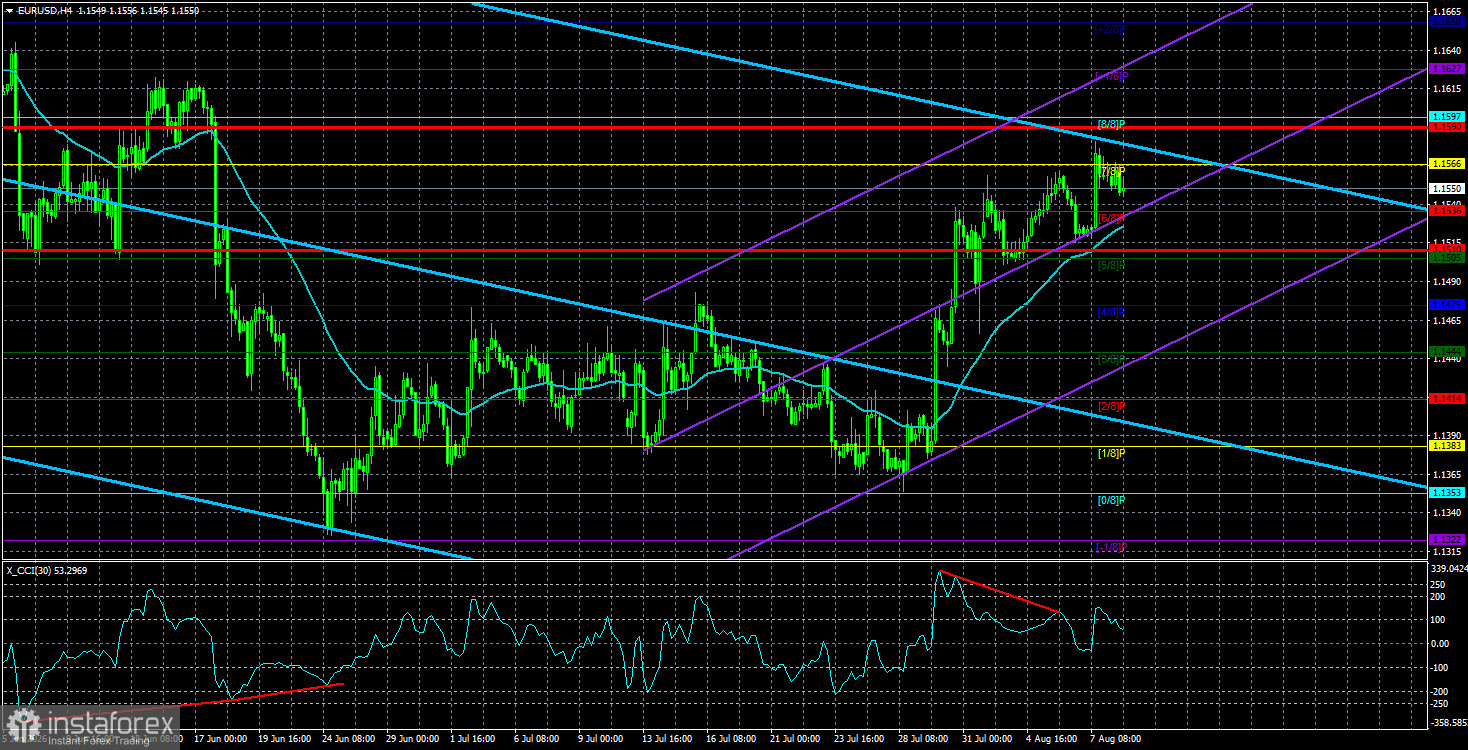
The EUR/USD currency pair traded slightly lower on Monday, which, on the one hand, does not contradict the overall technical picture, while, on the other hand, seems strange, as the market currently has every reason to continue selling the dollar. Recall that on Friday, a significant Nonfarm Payrolls report came out in the US, effectively blocking the possibility for the Federal Reserve to raise the key rate in September. In our view, the Fed was very hopeful for a downturn in the labor market to avoid tightening monetary policy. It is worth remembering that the head of the central bank is now a protege of Donald Trump, who continuously calls for monetary easing. Therefore, our opinion is simple: Kevin Warsh will do everything in his power to avoid raising the key rate.
In reality, the current macroeconomic data do not warrant a rate hike. Inflation is slowing, and the labor market is in another crisis. Thus, the Fed has all legitimate reasons to avoid "hawkish" actions. As the market apparently believed that the Fed would begin tightening in 2026 at the June meeting, there is now nothing left but to acknowledge its own error and sell the dollar. In our view, the American currency could have declined not only on Friday but also on Monday—simply inertia in the downward trend. We do not currently see any factors supporting the US currency.
Much has already been said about the technical picture. The global uptrend remains intact. Over the past year, the EUR/USD pair has predominantly traded sideways. Since the price remains within the sideways channel, it can only move between the two boundaries. The lower boundary of the range (weekly timeframe) was recently hit, so movement toward the upper boundary is expected. Although the geopolitical conflict in the Middle East has yet to be resolved, it is steadily heading toward a logical conclusion. Rumors suggest that Donald Trump is ready to even relinquish nuclear claims just to end the war with Iran. Thus, it is the US president who must ultimately concede to stop the conflict, which is causing irreparable damage to the American economy and his own political ratings.
If the conflict is resolved, the dollar will lose another growth factor, as in 2026 it has been rising solely due to geopolitics. So what do we have at the end? The Fed is unlikely to support the dollar with a 90% probability, geopolitical factors no longer support the dollar, the technical picture remains in favor of the euro, the European Central Bank has already raised rates at least once and may raise them again in September, macroeconomic data in the US are deteriorating again, and Trump continues to pursue protectionist policies that scare off investors, causing the US dollar to lose appeal in the eyes of the world. We believe that in the next 2-3 years, the American currency will continue to decline. In 2026, only Trump's war interrupted this process for a few months.
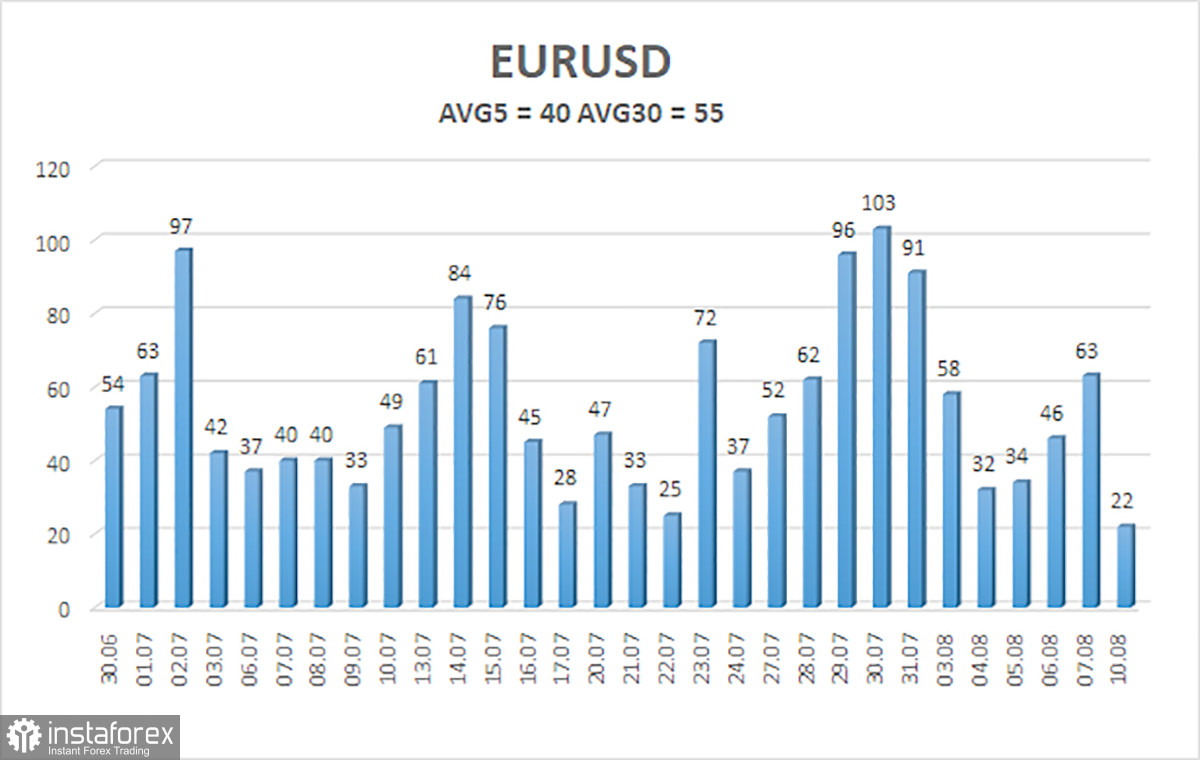
The average volatility of the EUR/USD currency pair over the last 5 trading days as of August 11 is 40 pips and is characterized as "low." We expect the pair to move between the levels of 1.1510 and 1.1590 on Tuesday. The upper channel of the linear regression is directed downward, indicating that the downward trend remains in place. The CCI indicator has entered the overbought area and has formed a "bearish" divergence, warning of a potential downward correction.
The EUR/USD pair continues its upward trend on the 4-hour timeframe, which could mark the beginning of a new cycle of the global upward trend on higher timeframes. The global fundamental backdrop for the dollar remains negative, but in 2026, geopolitical factors, followed by hawkish Fed sentiment, initially provided strong support for the US currency. However, every fairy tale comes to an end sooner or later. With the price positioned below the moving average, short positions can be considered, targeting 1.1475 and 1.1444. Above the moving average line, long positions are relevant with targets of 1.1590 and 1.1597.


