
Veja também


 31.03.2026 12:54 AM
On Monday, the EUR/USD pair continues to decline, breaking through the psychologically significant 1.1500 level amid the broader strengthening of the US dollar. The American currency retains its position amid weakening investor interest in risky assets, driven by ongoing geopolitical tensions in the conflict between the US, Israel, and Iran, as well as the continued rise in global oil prices.
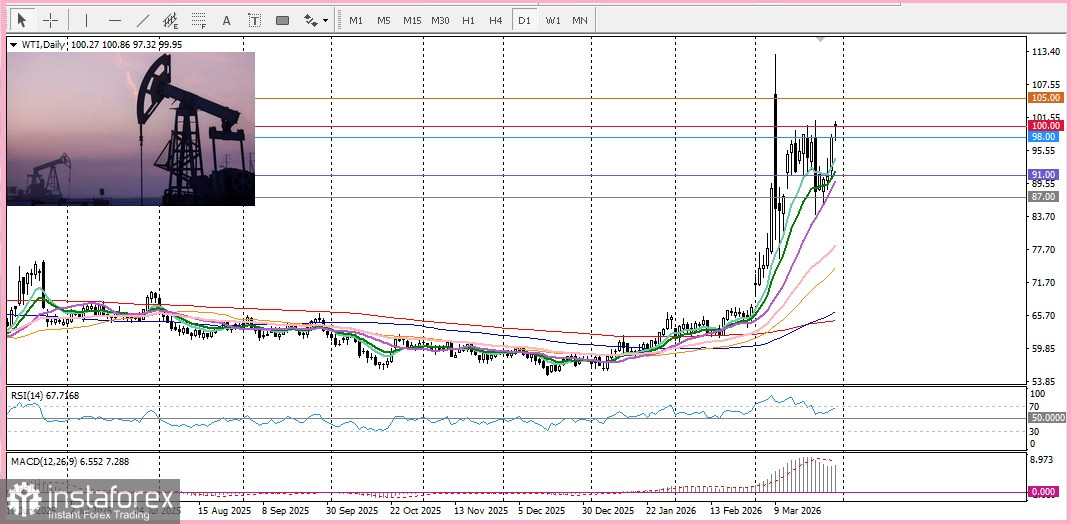
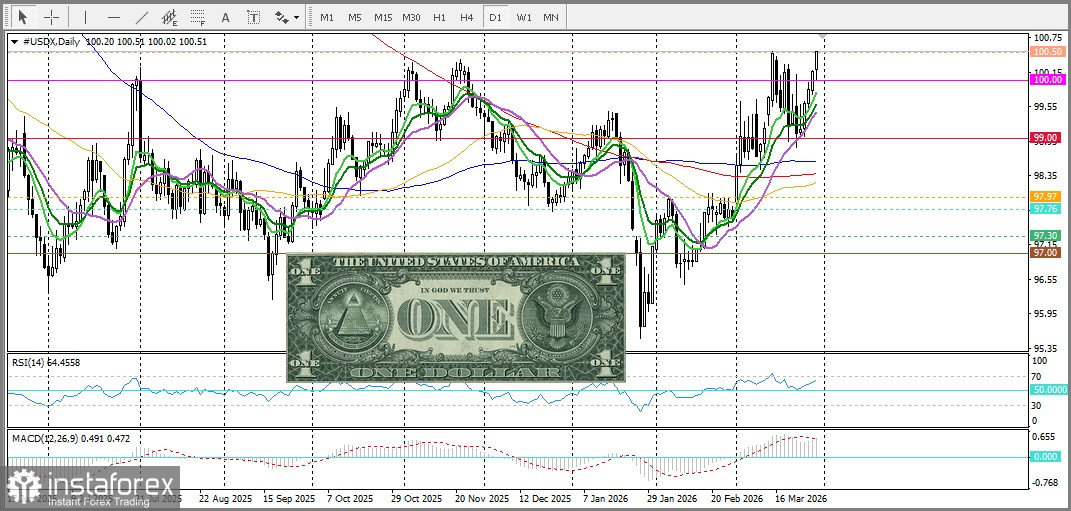
Since energy prices are denominated in dollars, rising oil prices typically contribute to an increased demand for the US currency. The dollar index (DXY), which tracks the dollar's performance against six major currencies, is trading above 100.00.
Meanwhile, government bond yields on both sides of the Atlantic are declining as market participants reassess their expectations for the future trajectory of monetary policy. While earlier increases in oil prices heightened concerns about accelerating inflation and pushed expectations of further rate hikes, attention is now shifting to the risk of economic growth slowing, which reduces the likelihood of tightening conditions.
In the US, market participants increasingly believe that the Federal Reserve will maintain current interest rates until the end of 2026. According to the CME FedWatch tool, just recently, the probability of an interest rate hike by the end of the year was estimated at almost 50%. Thus, the combination of ongoing geopolitical instability and the maintenance of high interest rates will provide further support to the US dollar, limiting the potential for euro recovery.
In Europe, traders are, on the contrary, reducing their expectations for a near-term rate hike by the European Central Bank, given the eurozone economy's vulnerability to high energy prices due to the region's reliance on imports. However, the market still anticipates the possibility of two rate hikes by the end of 2026.
As for the data, preliminary March inflation data from Germany showed an increase in price pressures, signaling the beginning of a new inflation cycle. Attention is now shifting to the eurozone inflation data, scheduled for publication on Tuesday.
In the US, investors remain focused on the manufacturing sector activity indexes (PMI) and the non-farm payroll (NFP) report, expected at the end of the week.
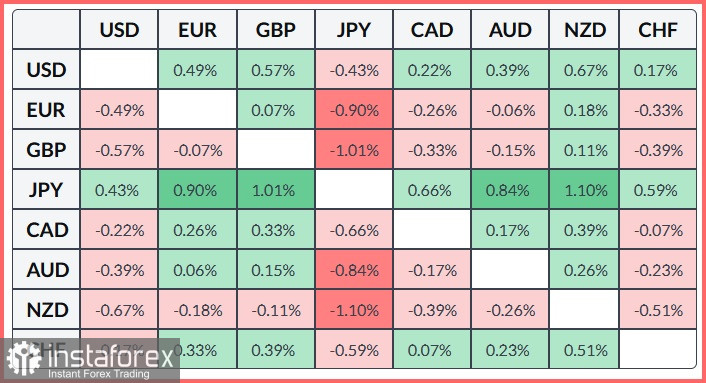
Below is a table reflecting the percentage change of the US dollar against major global currencies for Monday. The greatest strengthening of the American currency was observed against the New Zealand dollar.
From a technical perspective, the pair is in a bearish trend, with oscillators negative, confirming the bears' advantage in the market. Additionally, the pair is trading below all moving averages. For bulls to have a chance of minimal success, they need to overcome and secure above 1.1600.


