
Veja também


 30.06.2026 04:15 AM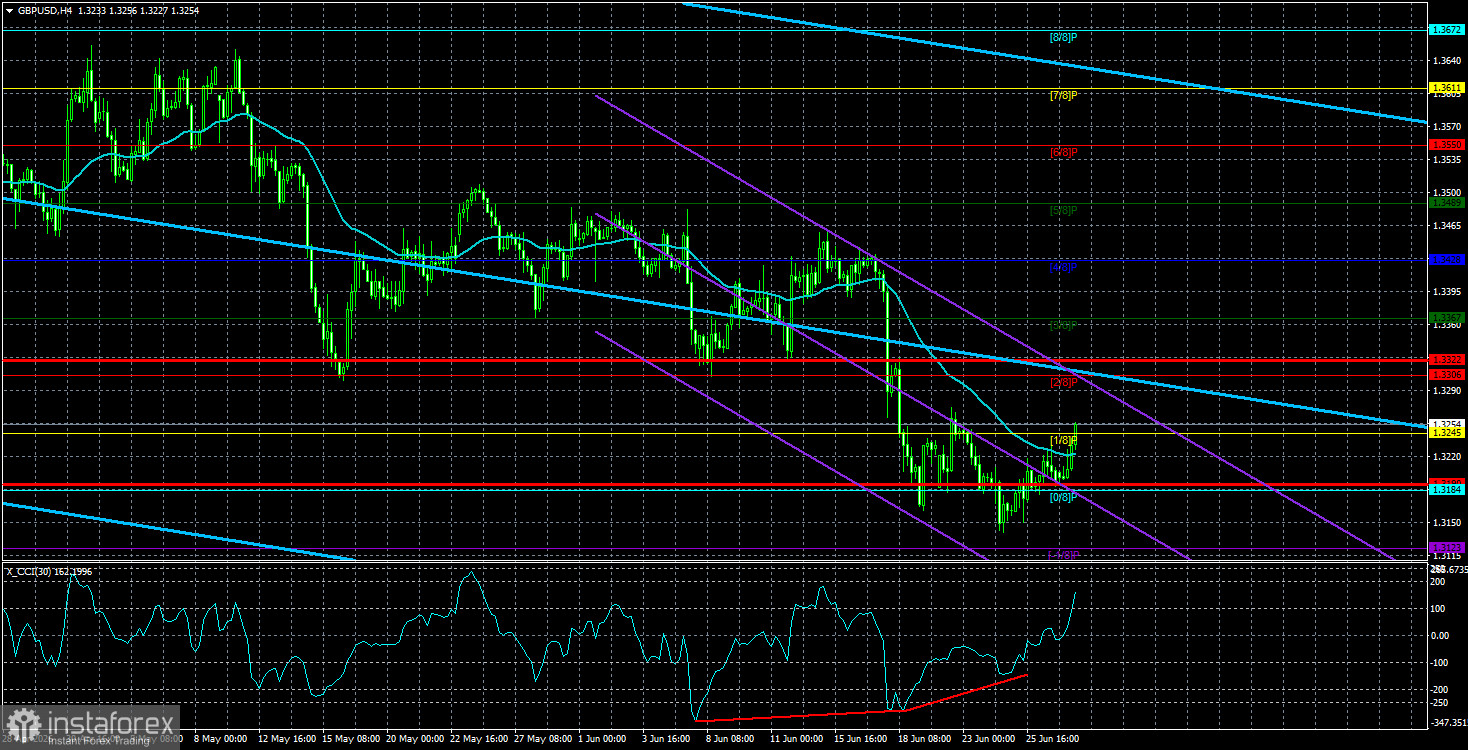
The GBP/USD currency pair attempted to bounce back from the "bottom" on Monday but was unsuccessful again. There were no significant events yesterday in the US or the UK, and the market has long ceased to react to geopolitical issues. Thus, it does not really matter at this stage what the status of negotiations between Iran and the US is, whether there is a chance for a ceasefire between Lebanon and Israel with Hezbollah's involvement, or how many more times the ceasefire will be violated in the Strait of Hormuz. What difference does it make when the US dollar continued to rise even after the signing of the memorandum of understanding?
The main narrative explaining what is happening in the market currently is the Federal Reserve's view on monetary tightening. Essentially, the Fed has not even raised the key rate yet, but the market is already rushing to buy dollars. However, we want to remind you that the Bank of England currently has no grounds to tighten its monetary policy. But such grounds could very well emerge by the end of the year. According to many experts, including Andrew Bailey, UK consumer price index growth is expected to accelerate slightly in the second half of this year. Thus, the BoE's stance may shift to a more hawkish approach.
In addition, geopolitical uncertainty in the Middle East remains high. It is impossible to confidently state that the conflict has ended. However, it is also unwise to be certain that the conflict will resume. If the conflict is over, and Tehran and Washington manage to finalize a peace deal that addresses the nuclear and Hormuz-related issues, oil prices will continue to decline. They have already dropped to levels seen in January-February 2026. Consequently, inflation may start to slow, and in that case, even the Fed may not need to tighten monetary policy.
It is worth reminding that Donald Trump appointed Kevin Warsh as chairman not to conduct tightening. Therefore, in our view, even if the Fed begins to raise the key rate, it will be a temporary measure aimed at quickly extinguishing the inflation spike. Then, the regulator is likely to resume easing policies. In the long run, the Fed will still maintain a more dovish stance compared to Jerome Powell.
We also do not know what actions Warsh will take in the near future. He will undoubtedly try to influence the Monetary Committee and limit the Fed's communication with the public to a minimum. For example, the "dot plot" charts may disappear from circulation. Changes will occur in any case, but the nature of those changes is still unknown. Therefore, we believe the market has prematurely priced in future tightening of Fed policy. We also think that many other factors favoring the British pound are simply being overlooked by the market. On the weekly timeframe, both the euro and the pound maintain four-year upward trends.
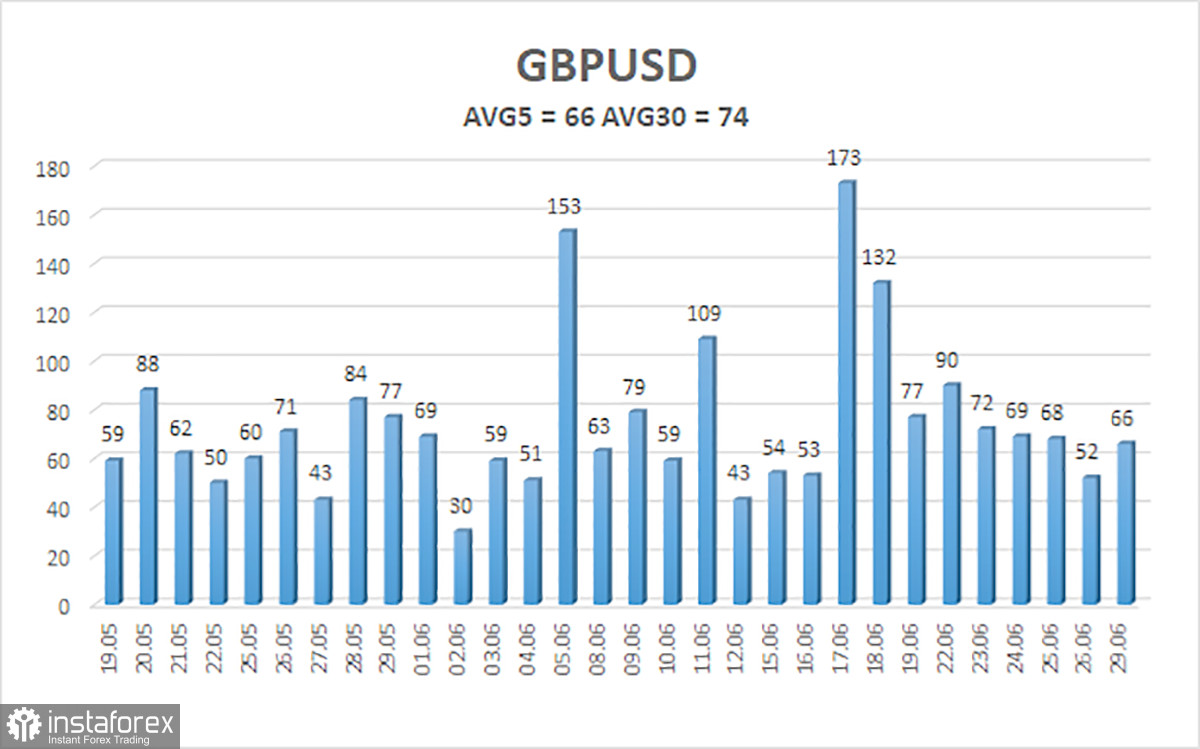
The average volatility of the GBP/USD currency pair over the last five trading days as of June 30 is 66 pips, which is considered "average" for this pair. On Tuesday, June 30, we expect the pair to move within a range bounded by levels 1.3190 and 1.3322. The upper linear regression channel is directed downwards, indicating a downward trend. The CCI indicator has entered the oversold area twice and formed two bullish divergences, suggesting a possible end to the downward trend.
The GBP/USD currency pair continues to maintain a downward trend. Trump's policies will continue to exert pressure on the US economy, and we do not expect the US currency to appreciate in the long term. The year 2026 is proving highly positive for the dollar due to geopolitical factors and, more recently, the Fed's willingness to raise the key rate. However, on the weekly timeframe, the price remains flat between 1.3150 and 1.3780, within the framework of a four-year upward trend. Long positions with targets at 1.3306 and 1.3367 can be considered when the price is above the moving average. Conversely, when the price is below the moving average line, bearish trading can be pursued with a target at 1.3123.


