
Vea también


 09.02.2026 02:36 PM
Last week, several Republican members of the Senate Banking Committee voiced skepticism about the Justice Department's investigation of Federal Reserve Chair Jerome Powell, even as one committee member threatened to block consideration of President Donald Trump's Fed nominee until the inquiry is resolved.
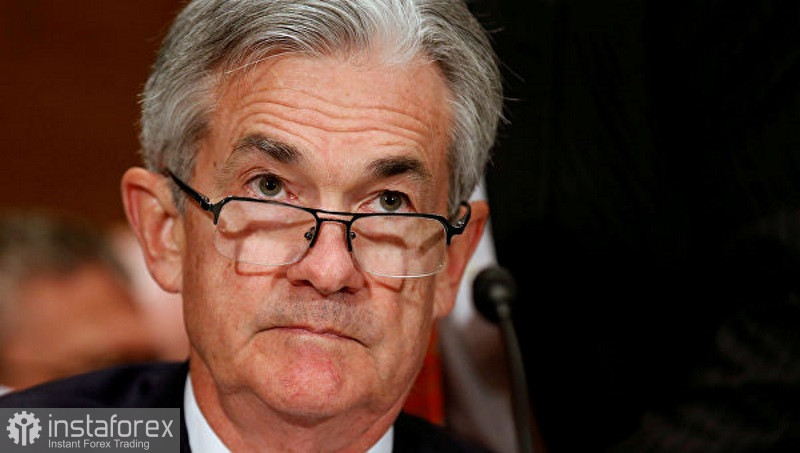
Republican senators, who have broadly welcomed Mr. Trump's decision to nominate Kevin Warsh as Fed chair, increasingly view the probe as an unnecessary obstacle to a confirmation that would otherwise proceed smoothly. The administration's concerted attacks on the central bank under Chair Powell, which have culminated in a criminal investigation into whether he misled Congress about a multibillion-dollar Fed headquarters renovation project, now risk delaying consideration of the Warsh nomination indefinitely.
Senator Thom Tillis, a Republican on the Banking Committee who has publicly raised concerns about Fed independence, said he will oppose any Trump nomination to the Fed chair until the matter is resolved. Although Republicans control the Senate, their margin on the Banking Committee is narrow; without Tillis's support, they are unlikely to muster the votes needed to advance Warsh.
Senator Kevin Cramer said he considered the probe excessive and a waste of time, adding that had the administration not driven the investigation to the extreme, it would not have drawn attention.
The Senate Banking Committee is one of two congressional panels charged with oversight of the Federal Reserve and with vetting central bank nominees. Tillis's and Cramer's remarks suggest committee opposition could block any Fed appointment in that forum, where party votes are split 13–11. For a nominee who does not secure a committee majority, confirmation on the Senate floor would require 60 votes, a threshold that Democrats are unlikely to meet for a Trump pick.
The Justice Department's investigation focuses on allegations that Chair Powell misled members of the Banking Committee during testimony in June about the cost and intended use of funds for a Fed renovation project. Powell, first nominated as Fed chair in 2017 by Mr. Trump and since repeatedly criticized by the president for not cutting rates faster, has said the heightened scrutiny is politically motivated and amounts to interference with the Fed's independence.
So far, these developments have had no discernible effect on currency markets.
A technical outlook for EUR/USD suggests that buyers should consider reclaiming 1.1870. That would open the way to test 1.1910. From there, a move to 1.1950 is possible, although advancing beyond that without support from major players would be difficult. The extended target is 1.1990. On a decline, meaningful buying interest is likely near 1.1835. If buyers do not appear there, it would be prudent to wait for a new low at 1.1805 or to open long positions from 1.1770.
As for GBP/USD, buyers of the pound sterling should capture the nearest resistance at 1.3630. Only that will allow them to target 1.3660, above which a breakout would be challenging. The extended target is around 1.3690. If the pair falls, bears will try to seize control at 1.3585. If they succeed, a break of that range would deliver a serious blow to bullish positions and could push GBP/USD down to 1.3545 with scope to extend to 1.3511.


