
Vea también


 20.05.2026 08:19 PM
The EUR/USD pair reversed in favor of the U.S. dollar, fully pierced bullish imbalance 14, and tested imbalance 13. On Monday, Donald Trump pleased bullish traders with conciliatory rhetoric regarding the Middle East conflict, which immediately triggered growth in the euro.
The U.S. president stated that very serious negotiations are currently underway, the outcome of which could bring an end to the war and satisfy the American side. In addition, Trump announced that he was postponing his decision to resume strikes against Iran for several days.
The market regained optimism, but, as it turned out, only briefly before falling back into uncertainty the very next day. Iran did not confirm the existence of negotiations with Middle Eastern countries or the imminent signing of an agreement on Tuesday. On Wednesday, Tehran stated that if the conflict resumes, it intends to strike not only targets in the region but also beyond it.
In effect, Tehran openly declared that another act of aggression against it would cause the war to spread beyond the Middle East and become global. Thus, on Tuesday and Wednesday, traders had little choice but to return to selling.
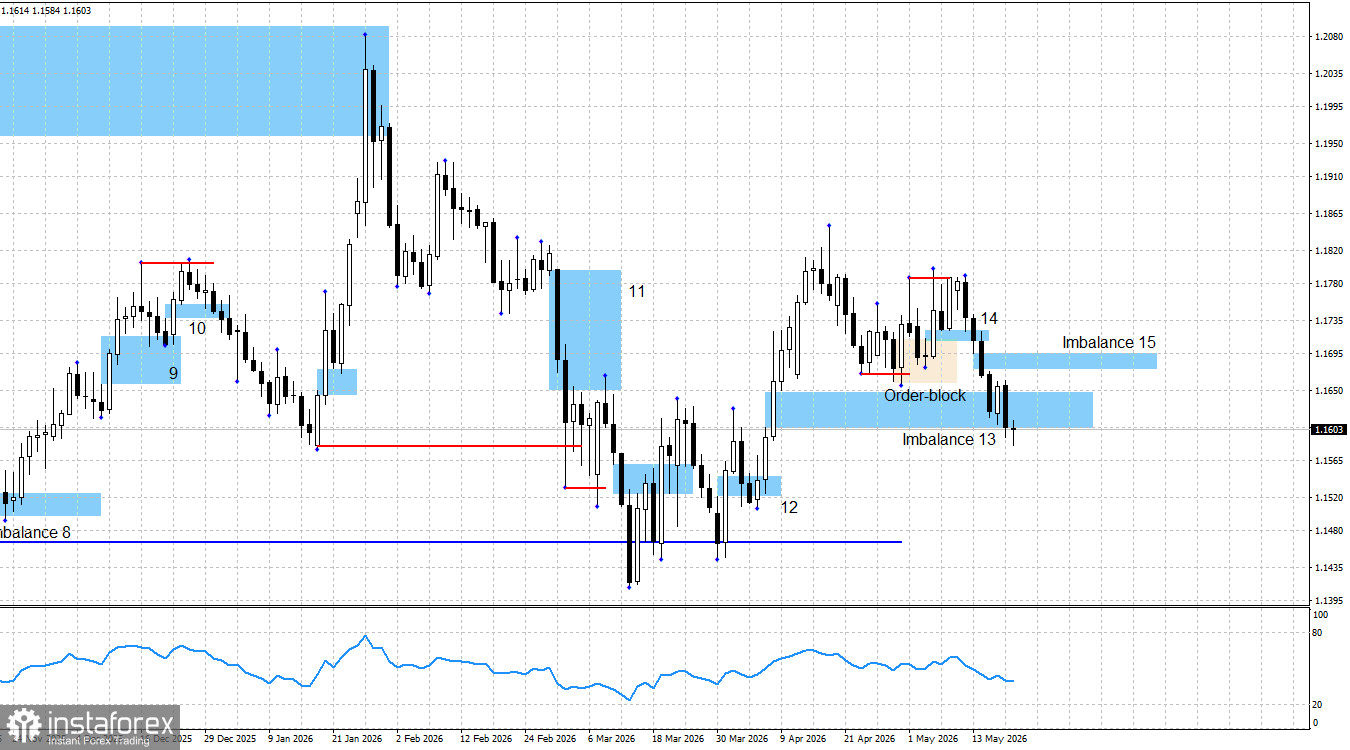
On Wednesday, the bears acted relatively cautiously, but bullish imbalance 13 is now close to invalidation. A little more pressure, and the bears may completely break the bullish momentum.
In the current situation, traders can only wait for another reaction from imbalance 13, which remains the last bullish pattern within the current bullish impulse — or for its invalidation. If the pair's decline is viewed as a corrective pullback, then it could indeed end within imbalance 13. However, without geopolitical support, traders appear unwilling to return to long positions.
Thus, hopes are pinned on a sharp geopolitical shift toward peace.
Once again, I must note that the entire rise of the U.S. dollar from January through March was driven solely by geopolitics. As soon as the United States and Iran agreed to a ceasefire, the bears immediately retreated, and for more than a month the bulls dominated the market.
At the moment, the ceasefire hangs by a thread, but negotiations have not completely stopped, and chances for peace remain. Unfortunately, traders themselves are increasingly losing faith in a full resolution of the conflict and an agreement between Iran and the United States.
More precisely, a deal will probably be signed eventually. But "eventually" does not satisfy the market. If, for example, an agreement is signed a year from now, traders are unlikely to become optimistic today and start selling off the U.S. dollar.
The overall technical picture currently remains clear. The bullish advance is still intact, but it desperately needs support. Ideally, that support would come from geopolitics — Iran and the United States resuming negotiations and finally beginning to make concessions.
Without a positive news background, it will be difficult for the euro to resume its upward movement.
The economic backdrop on Wednesday was effectively absent. Neither the eurozone nor the United States released any noteworthy reports.
There are still many reasons for bulls to attack in 2026, and even the outbreak of war in the Middle East has not reduced their number. Structurally and globally, Trump's policies — which caused the dollar's sharp decline last year — have not changed.
Over the coming months, the U.S. dollar may periodically strengthen amid investor flight from risk, but this factor requires continued escalation in the Middle East conflict. I still do not believe in a long-term bearish trend for the euro. The dollar has received temporary market support, but what can sustain bearish pressure in the long run?
The May 21 economic calendar contains nine events, with the PMI reports from Germany and the eurozone attracting the most attention. Despite the large number of releases, the influence of economic data on market sentiment on Thursday may remain limited.
In my view, the pair remains in the process of forming a bullish trend. The news background changed sharply three months ago, but the trend itself cannot yet be considered canceled or complete. Therefore, in the near term, the bulls may well resume their advance if geopolitics provides even modest support.
Traders had opportunities to open long positions based on signals from imbalance 12 and the order block. The upward movement may resume toward this year's highs from imbalance 13.
However, in the coming days, it is important that the bulls maintain control of the market. For uninterrupted euro growth, the Middle East conflict must move toward sustainable peace, and some signs of de-escalation do occasionally appear — though still too rarely.
Bullish traders currently do not have sufficient support for a new impulse. The zone for new buying positions is 1.1605–1.1649.


