Vea también


 02.07.2026 01:08 AM
The USD/JPY pair continues to build on Tuesday's upward momentum, approaching a multi-year high. Traders are cautious in anticipation of possible currency intervention by Japanese authorities.
On Tuesday, Japan's Chief Cabinet Secretary Minoru Kihara reiterated the government's readiness to take necessary measures in the currency market. Japan's Finance Minister Shunichi Suzuki also emphasized a willingness to intervene in the event of excessive fluctuations in the yen's exchange rate. However, such repeated warnings and verbal interventions have not yielded noticeable results, as the interest rate gap between Japan and other major economies, including the U.S., remains significant.
In June, the Bank of Japan raised its base interest rate to 1%—the highest level since 1995—while the U.S. Federal Reserve maintained its targeted range at 3.5-3.75%. The BoJ is expected to continue its gradual normalization of monetary policy. However, the ongoing expectations of Federal Reserve rate hikes support the relevance of the carry trade strategy using the yen. This aspect, along with the moderate strengthening of the U.S. dollar, is contributing to the rise of the USD/JPY pair, supporting the bulls.
Recently, the U.S. and Iran exchanged accusations of violating a temporary agreement signed in June, which jeopardizes the fragile peace process. Additionally, the JOLTS data (on job openings and labor turnover in the U.S.) confirmed the resilience of the labor market and strengthened expectations that the U.S. central bank will raise borrowing costs. Using the FedWatch tool from CME Group, traders assess the probability of such a move this year at around 83%. This confirms further strengthening of the U.S. dollar and the USD/JPY pair in the short term.
Traders' attention is now focused on Kevin Warsh's upcoming speech at the European Central Bank (ECB) forum in Sintra. Furthermore, the publication of U.S. economic data on Wednesday—the ADP employment report for the private sector and the ISM Manufacturing PMI—could strengthen the dollar's position in the second half of the North American trading session. Subsequently, the main focus will be on the release of the monthly U.S. labor market data—the Nonfarm Payrolls (NFP) report, expected on Thursday.
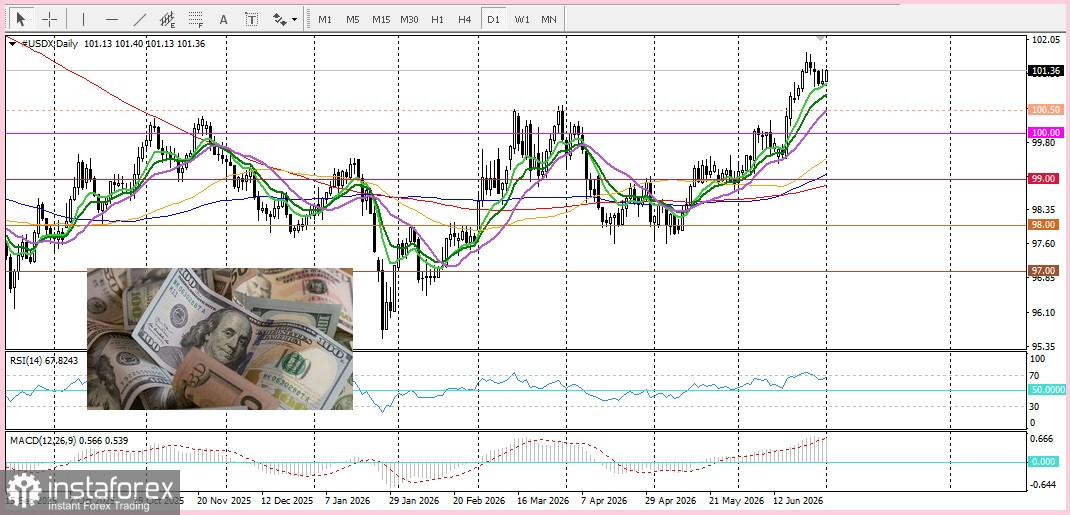
From a technical standpoint, the pair is trading above the major moving averages, with oscillators positive, indicating a bullish advantage in the market. However, the relative strength index is in the overbought zone, warning of a potential weakening of upward momentum and confirming consolidation or a pullback.
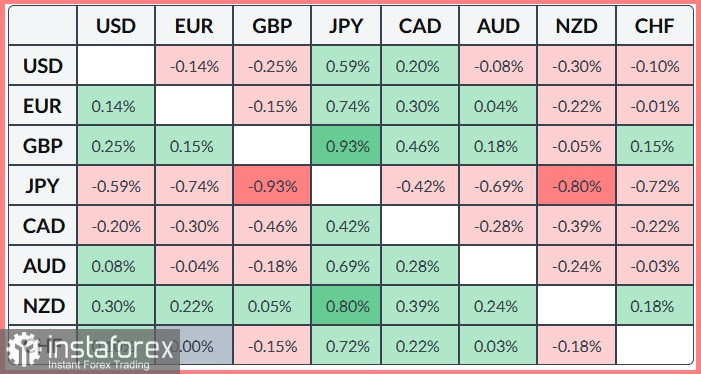
The table below shows the percentage change of the Japanese yen against major currencies for the current week. The Japanese yen demonstrated the strongest appreciation against the Canadian dollar.