
Vea también


 07.08.2026 11:19 AM
On Thursday, EUR/USD made a second consecutive rebound from the 76.4% retracement level at 1.1551 and reversed in favor of the U.S. dollar. Thus, the decline in the euro may continue today. A rebound from the 61.8% Fibonacci level at 1.1507 would favor the euro and the resumption of "bullish" attacks toward the 1.1551 and 1.1620 levels. Consolidation below 1.1507 would increase the likelihood of a further decline toward 1.1472 and 1.1438.
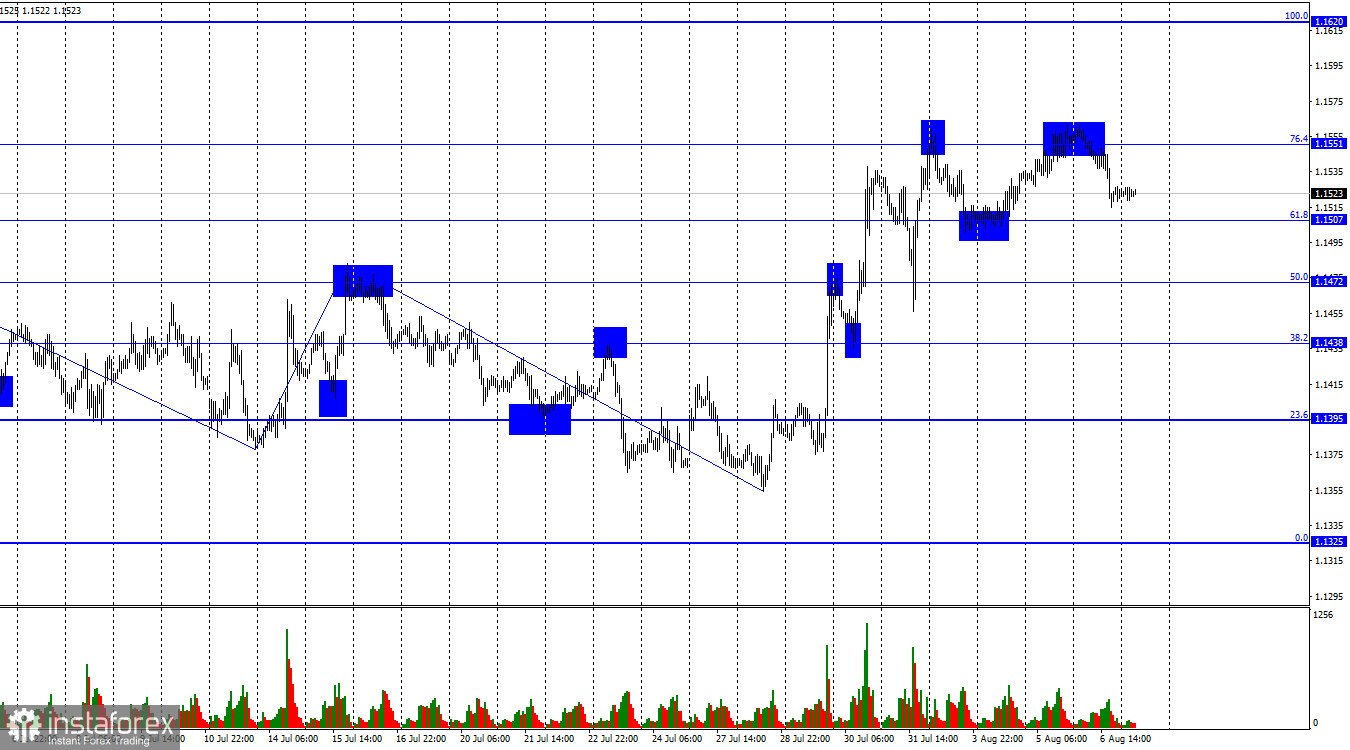
The wave structure on the hourly chart remains "bullish." The latest completed downward wave broke the previous low, but the latest upward wave also broke the previous high. Geopolitics has raised hopes for the reopening of the Strait of Hormuz, while Iran, the United States, and Oman are negotiating control over the strategically important strait. Thus, geopolitics is currently not working in the dollar's favor, while the market's "hawkish" expectations regarding FOMC monetary policy are easing.
The news background on Thursday forced the bulls to retreat for the second time in the past few days. The most interesting retail sales report in the European Union showed a rather weak reading, which led to a slight decline in the euro. Retail sales decreased by 0.3% in June, although most traders had expected a 0.1% month-on-month increase. Of course, this report does not resolve any major issues at present. Today, the July Nonfarm Payrolls and unemployment reports will be released, and the market will draw its conclusions based on them. The dollar's exchange rate over the coming weeks, up to the next FOMC meeting, will depend on the conclusions the market draws today. Throughout the current week, analysts and traders have repeatedly pointed to the importance of the state of the U.S. labor market, as most believe that the Fed will refrain from tightening monetary policy if the labor market continues to show negative results. Thus, all that remains is to wait for the reports. Two rebounds from 1.1551 suggest that a "bearish" attack may follow, but without strong labor market data, one should not expect the dollar to strengthen.
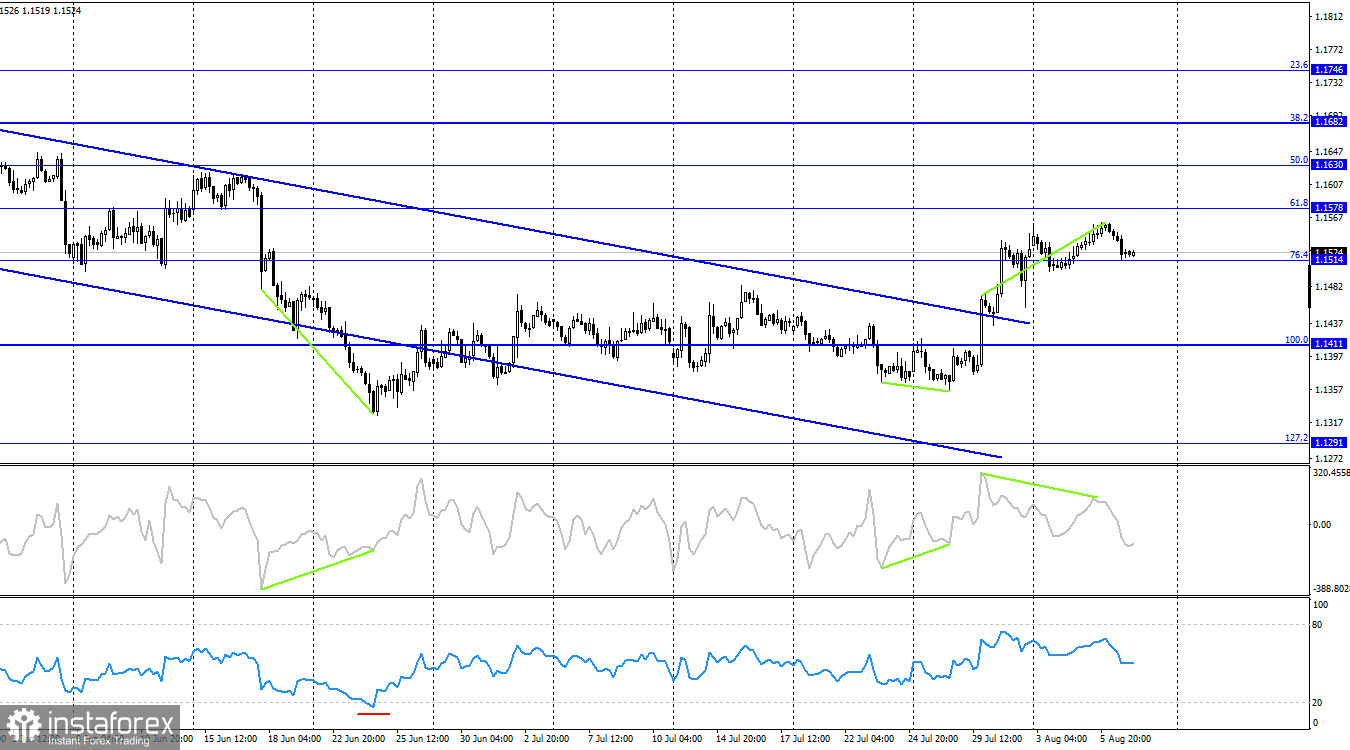
On the 4-hour chart, the pair consolidated above the downward trend channel, suggesting not simply a "bullish" attack but a full-fledged "bullish" advance and trend. Consolidation above the 76.4% Fibonacci level at 1.1514 allows for expectations of further growth toward the 61.8% retracement level at 1.1578. The CCI indicator has formed a "bearish" divergence, which suggests that the pair may decline.
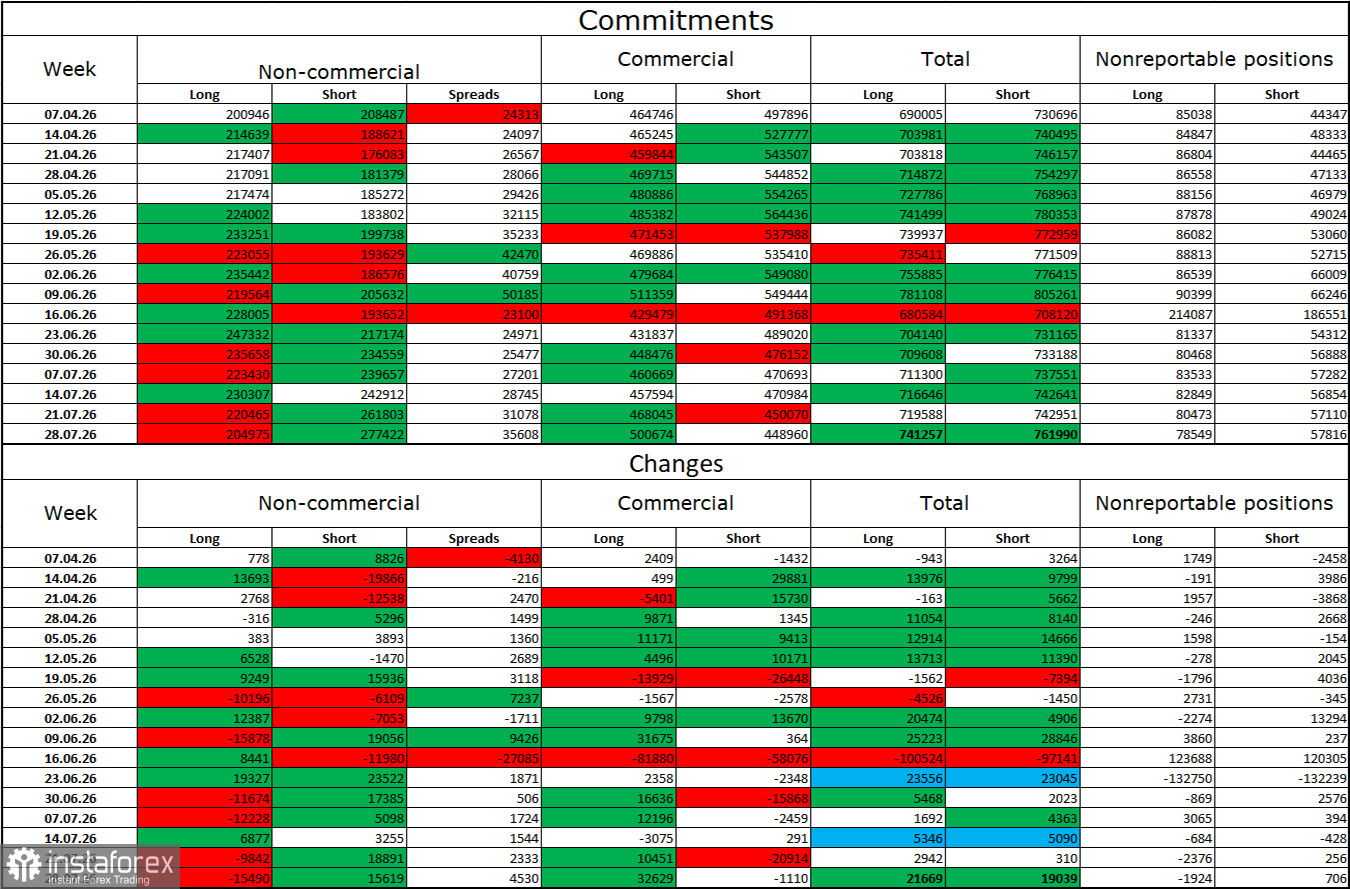
During the latest reporting week, professional traders closed 15,490 Long positions and opened 15,691 Short positions. During the seven weeks in February and March, the bulls' overwhelming advantage evaporated because of the war in Iran, while over the past eighteen weeks, the situation has become more balanced amid the supposed ceasefire and the market's hopes for an end to the war. The total number of Long positions held by speculators currently stands at 205 thousand, while the number of Short positions stands at 277 thousand. The bears are once again taking the lead.
Overall, over the long term, large market participants continue to show strong interest in the euro. Of course, events of various kinds around the world, which have been plentiful in recent years, affect investor sentiment. In particular, the market is currently keeping a close eye on the situation in the Middle East, where the war keeps ending and then starting again. The market initially ignored the ceasefire and then ignored the resumption of the war. Thus, geopolitics no longer determines the dollar's fate single-handedly.
On August 7, the economic events calendar contains five entries, two of which are classified as "important." There is probably no need to say which ones. The economic news background may have a strong influence on market sentiment on Friday, but only in the second half of the day.
Buying the pair is possible today following a rebound from 1.1507 on the hourly chart, with a target of 1.1551. Consolidation above 1.1551 would allow long positions to be held with a target of 1.1620. Short trades were possible following a rebound from 1.1551 on the hourly chart, with targets of 1.1507 and 1.1472. These trades can be kept open until the U.S. reports are released.
The Fibonacci levels are drawn from 1.1620 to 1.1325 on the hourly chart and from 1.1411 to 1.1850 on the 4-hour chart.


