
Xem thêm


 22.05.2026 09:12 AM
Oil rebounded after yesterday's decline; however, it's too early to talk about a return to a bullish market. Brent is trading above $104 per barrel, while WTI is around $98, and despite Friday's rebound, both grades have lost over 4% this week. The market still lacks clarity on the direction of negotiations, and this uncertainty is influencing traders' behavior.

The price decline was prompted by Iran's statement that the latest American proposal partially resolved key disagreements. However, almost simultaneously, the country's supreme leader emphasized the need to maintain uranium stocks in Tehran, and a separate point of contention arose regarding the transit fee through the Strait of Hormuz. US President Trump immediately opposed any attempts to monetize passage through this strategically important waterway. The predictable outcome: conflicting signals within the same news cycle prevent the market from forming a stable position in either direction.
It is worth noting that oil trading volumes have significantly dropped since the onset of the war. The CIBC Private Wealth Group described the situation accurately: buyers on dips are hesitant to enter, fearing that the opening of the Strait could send prices tumbling; physical market players prefer to reduce inventories and wait rather than chase expensive cargoes. Continuous fluctuations in headlines create an environment where risk is equally unpleasant in both directions, leading to a contraction in market activity.
The fundamental deficit, however, remains. According to Goldman Sachs, the war and supply disruptions have led to a record decline in global crude oil and petroleum product inventories. The IEA is prepared to release additional reserves if necessary—its executive director, Fatih Birol, confirmed this on Thursday, reminding that the first shipment from strategic reserves occurred in March. However, as was the case in the early weeks of the US-Iran war, interventions from reserves may only alleviate but not eliminate the deficit while the Strait remains effectively closed.
The main question now is not whether oil will rise or fall in the coming days, but when the market will receive a clear signal about real progress in negotiations. Until that signal is given, trading will remain nervous, volatile, and without a clear direction.
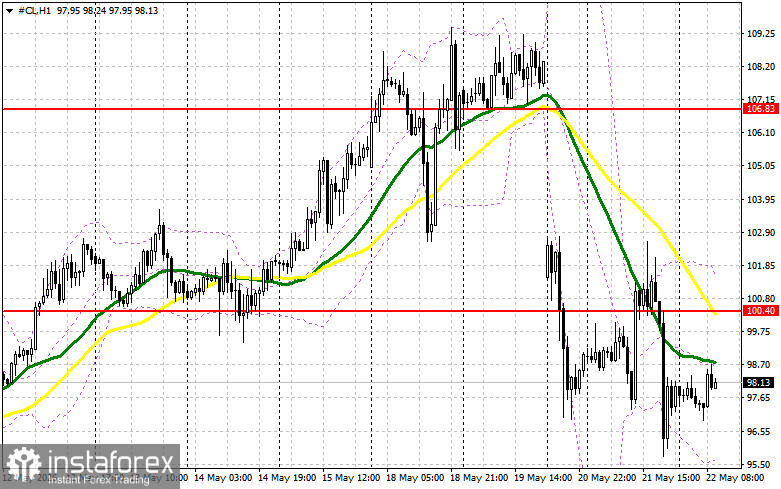
As for the current technical picture of oil, buyers need to reclaim the nearest resistance at $100.40. This will allow them to target $106.80, above which it will be quite challenging to break through. The furthest target will be $113.40. Should oil decline, bears will attempt to take control at $92.50. If they succeed, a breakout of this range will deal a serious blow to bullish positions and could push oil to a low of $86.60, with the prospect of reaching $81.40.

