
Xem thêm


 22.05.2026 12:58 PM
Since the beginning of the Middle East conflict, the U.S. dollar has remained under strong geopolitical influence. This has led to gains in the currency amid hopes for peace and, conversely, declines whenever those expectations fail to materialize.
This is a key question affecting not only currency pairs involving the dollar, but also a wide range of other assets, including gold. At the moment, many market participants appear to believe that the dollar is unlikely to strengthen significantly again. A large number of investors assume that major currencies currently have stronger positions relative to the U.S. dollar.
Let us examine the main factors influencing the dollar's dynamics and why it is currently consolidating against major Forex currencies.
The first major factor is the conflict in the Middle East and its consequences, particularly the Hormuz-related geopolitical risks. Against this backdrop, the dollar has been perceived by market participants as a safe-haven currency. It received support due to a correlation that emerged in early March: rising crude oil prices supported the dollar as a defensive asset, while gold prices declined and cryptocurrencies weakened. Conversely, falling oil prices supported gains in gold and cryptocurrencies, while the dollar came under pressure.
In practice, the current strength or weakness of the dollar largely depends on how markets react to the negotiation process between the United States and Iran. Any meaningful signs of progress in negotiations tend to weaken the U.S. dollar, while the absence of positive developments encourages speculative demand for the currency.
Another important factor is the relationship between the dollar's performance, inflation expectations in the United States, and the Federal Reserve's response. Many market participants believe that persistently rising inflation could force the Fed to raise interest rates further. This is the second major factor supporting the dollar, and it is also closely tied to developments in the Middle East. Therefore, traders should closely monitor these two primary drivers, which either support the dollar or place pressure on it.
The current calm in the Forex market can largely be explained by expectations surrounding news on negotiations between the United States and Iran. Both positive and negative developments are likely to trigger renewed buying or selling of the U.S. dollar.
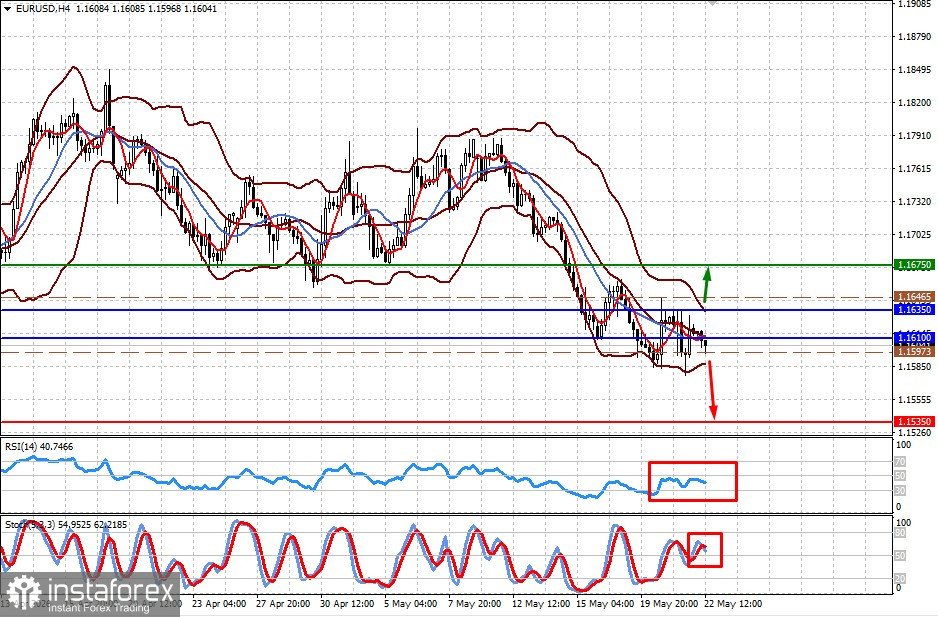
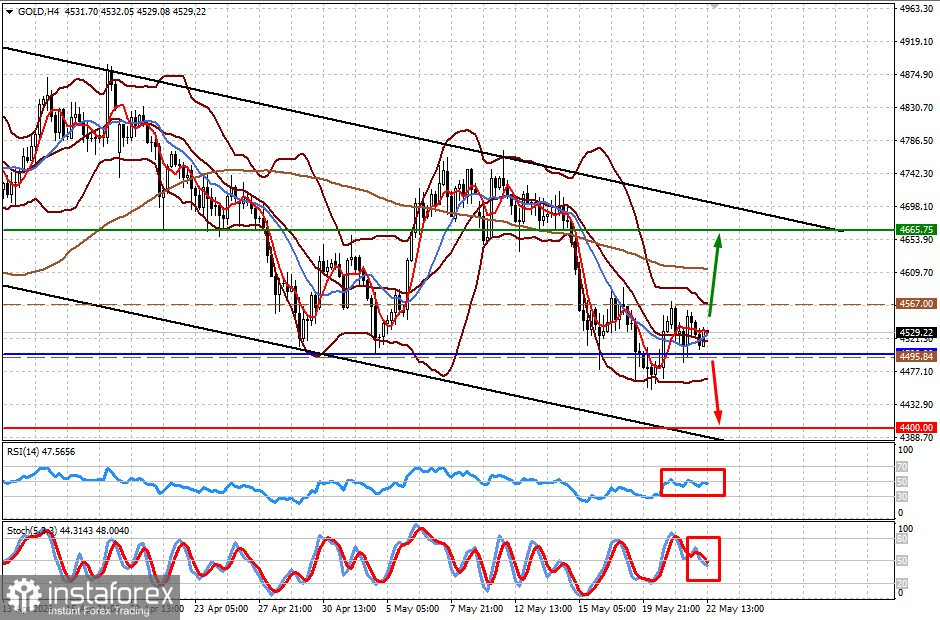
The pair is consolidating below the 1.1610 resistance level. It may either rise or decline depending on developments in negotiations between Washington and Tehran.
A peace agreement could provide the basis for growth toward 1.1675. At the same time, the absence of an agreement could trigger another decline toward 1.1535.
The 1.1579 level may serve as a trigger for short positions, while 1.1646 may serve as a trigger for long positions.
Gold prices remain within a very narrow range and may continue declining toward 4400.00 if negative news emerges regarding the negotiations. In this scenario, gold could fall toward the 4400.00 level.
Conversely, positive developments could push prices higher toward 4665.75.
The 4495.84 level may serve as a trigger for short positions, while 4567.00 may serve as a trigger for long positions.

