
আরও দেখুন


 03.07.2026 11:29 AM
The weak June jobs report became the catalyst for what Wall Street calls rotation trading: money moved out of AI giants into health care, consumer staples, and other sectors that were overlooked during the chip rally.
In June, the US economy added just 57,000 jobs, nearly half the experts' forecast of 115,000. The Dow Jones Industrial Average responded by updating its record high, while the Nasdaq Composite fell. The S&P 500 found itself caught between opposing forces: eight of 11 sectors closed higher, yet the broad index barely moved.
Stock Market Dynamics
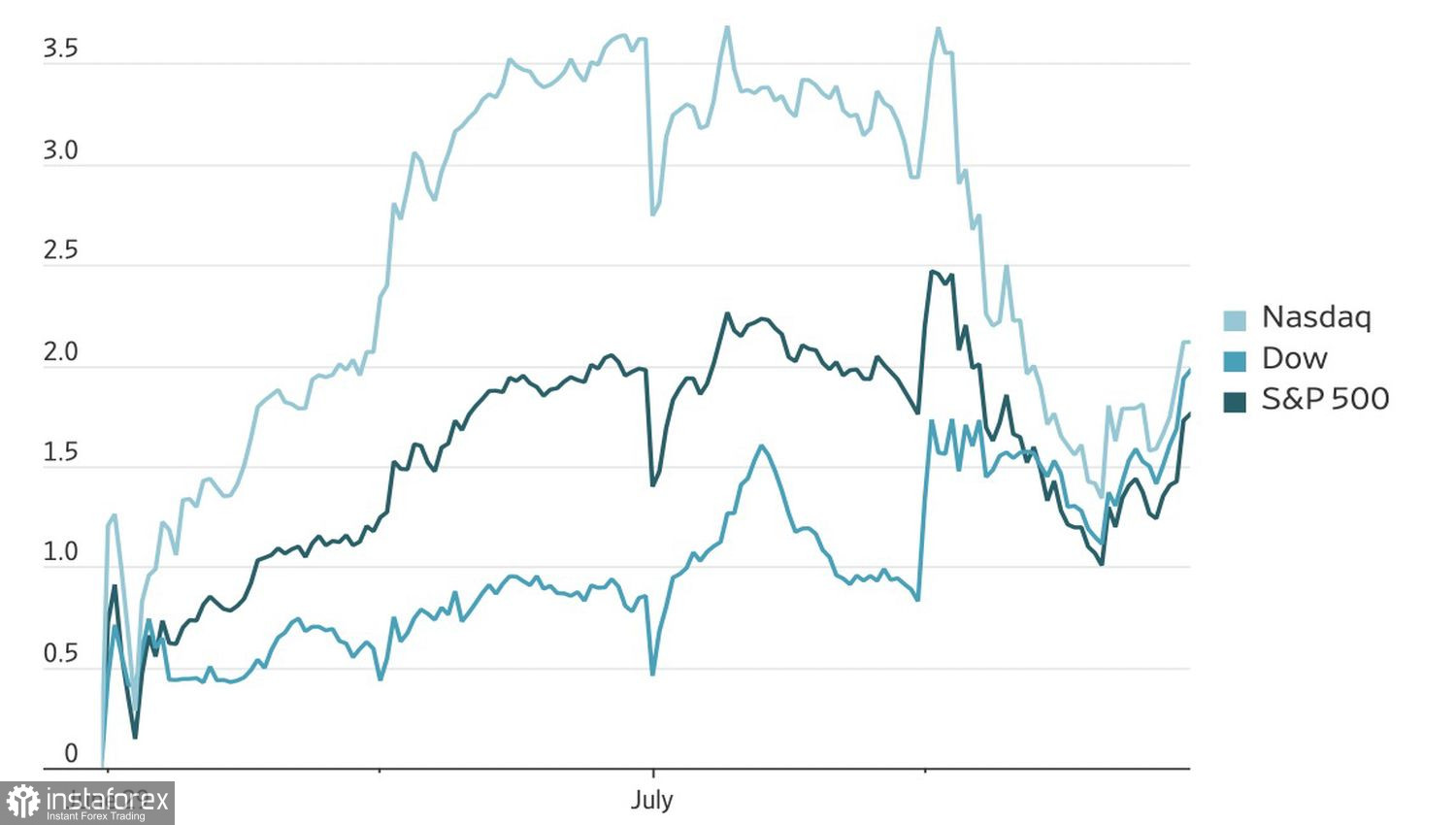
Investors are betting on the ideal scenario: inflation cools, the labor market stabilizes, and the Fed refrains from hiking. According to CME Group, the odds of July tightening fell to about 20% from 30% before the release. June's payrolls suggest the labor market pass-through is moderating. Nothing in this report points to a need for higher rates.
The cooler print eases pressure on Fed chair Kevin Warsh. With the labor market not overheating and inflation expectations softening, the Fed can plausibly sit in pause mode over the summer without contemplating immediate hikes or cuts.
That is not to say clouds have cleared. While the macro picture brings relief, volatility in the technology sector has spoiled investors' mood. Wall Street increasingly doubts whether massive AI investments will pay off. At best, trading the AI idea may enter a phase of deep consolidation; at worst, it may suffer a significant pullback.
Viewed from the half-year perspective, the picture is more optimistic. Wall Street enters the second half of 2026 convinced markets can keep climbing despite shocks. A diversified portfolio of equities, bonds, and commodities delivered its best first-half return since 2021, despite the Middle East war, the oil price surge and collapse, and one of the sharpest swings in rate expectations in years.
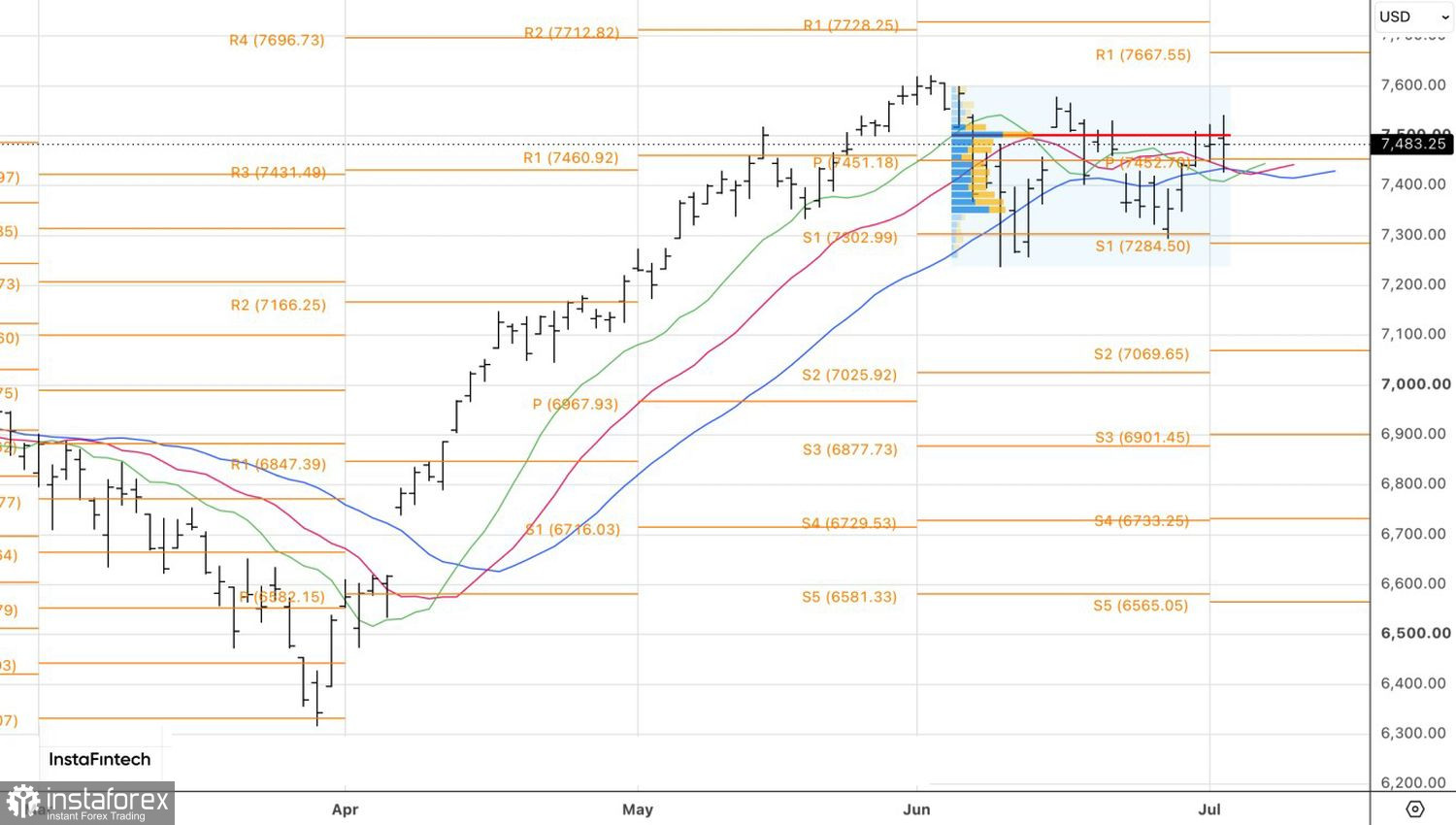
Higher valuations, more expensive borrowing, and a breakneck AI boom continue to reshape markets. The question is whether they can preserve a fragile balance between hope for a Fed pause and growing doubts about the technology sector's prospects.
Technically, the S&P 500's daily chart recorded a third consecutive failed test of fair value at $7,500. If bulls cannot reclaim levels above that mark, there will be scope for short-term selling.
You have already liked this post today
*এখানে পোস্ট করা মার্কেট বিশ্লেষণ আপনার সচেতনতা বৃদ্ধির জন্য প্রদান করা হয়, ট্রেড করার নির্দেশনা প্রদানের জন্য প্রদান করা হয় না।


