
Lihat juga


 09.11.2026 03:23 PM
EUR/USD has drifted amid an informational "off-season." Last week's high profile events (the midterms, nonfarm payrolls) are behind us, while this week's key releases (CPI and PPI) are still ahead. The resulting information vacuum has been filled by geopolitics as U.S. military and diplomatic activity toward Iran has intensified.
Given some media leaks discussed below, the geopolitical factor should not be underestimated. If the negotiating process truly gets moving, risk appetite could rise materially across markets and even eclipse U.S. inflation reports. Broadly speaking, geopolitics is "back in the game" after several months in the shadows.
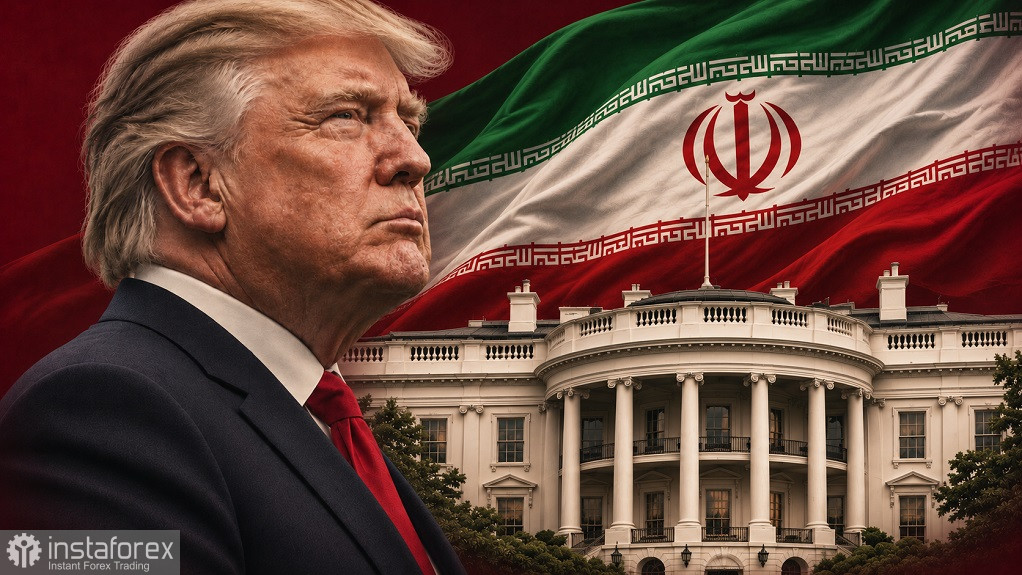
The catalyst for renewed diplomatic activity was the U.S. midterms. The Democrats' wins in both chambers substantially altered the political calculus around the war with Iran. It is increasingly difficult for the White House to pursue the previous course, since the new congressional configuration constrains Donald Trump's options. Although Democrats formally gain control only in January, the impending shift is already affecting budget talks. Over time the president may face not only funding limits for the campaign but also intensified parliamentary oversight.
According to Bloomberg, Democrats plan to block the $1.5 trillion defense budget proposed by Trump. Insiders say a compromise could be about $1 trillion. This is not a refusal to fund the Pentagon—Democrats say they will back necessary modernization programs—but they do not want "to become sponsors of a continuing Iranian campaign." For Trump, that is a painful blow that significantly narrows his maneuvering room.
At the same time, the story of a possible impeachment for Defense Secretary Pete Hegseth is gathering steam. ABC News reports that House Democratic leader Hakeem Jeffries supports the initiative, which Republican Thomas Massie intends to refile. Notably, pressure on the Pentagon chief is moving beyond simple partisan confrontation. That matters because a House impeachment vote and actual removal are different things: a conviction requires two-thirds of senators present. Without Republican votes, Democrats cannot secure that outcome.
Against that backdrop, Washington's recent actions resemble a classic carrot-and-stick approach. On the stick side, U.S. forces continue to apply military pressure to Tehran: over the weekend the U.S. struck air-defense targets on Iran's Qeshm Island in the Strait of Hormuz. Trump publicly confirmed the strike, describing it as "small in scale." In other words, these are targeted operations rather than the start of a broad new campaign.
Tehran's response was blunt. Iranian foreign policy official Abbas Araghchi threatened to "bring hell" if Washington pursues further military confrontation. Yet even amid bellicose rhetoric, Iran has kept a door open to diplomacy.
The U.S. side has not abandoned attempts to end the conflict diplomatically either. The Washington Post reports that Treasury Secretary Scott Bessent, with Trump's backing, asked China to use its influence with Tehran to help stop the war. Beijing is said to have relayed the message to Iranian leadership. The mere transmission of such a request does not prove Iran is ready to accept U.S. terms, but China's involvement expands Washington's diplomatic levers. It appears the White House is trying to raise the cost for Iran of rejecting a deal and to offer an acceptable path to de-escalation. Trump may also seek a visible result before January, when domestic constraints on his administration will tighten.
In this context, today's meeting between Donald Trump and Qatar's prime minister, Mohammed bin Abdulrahman Al Thani, takes on special significance. The talks are scheduled for today at 17:00 GMT at the White House and are expected to focus on a possible ceasefire and resumption of talks on Iran's nuclear program. Given Qatar's mediating role, the meeting's outcome could markedly clarify diplomatic prospects.
Still, it is premature to expect a swift agreement. High-level meetings can conclude long preliminary diplomatic work, but there are no convincing signals yet—official or unofficial—that Washington and Tehran have agreed on the core terms of a deal. Axios reports the Qatari prime minister will seek more time for diplomacy, and Secretary of State Marco Rubio bluntly warned that it is too early to speak of a breakthrough since Iran's demands remain unacceptable to Washington.
Nonetheless, the prospect of resuming talks is taking on more concrete shape. The Associated Press says mediators are discussing a "two-day plan of sequential confidence building measures," including easing the U.S. blockade, unfreezing some Iranian funds, and reopening the Strait of Hormuz. Essentially, this is an attempt to break the deadlock of mutual preconditions, where each side awaits initial concessions from the other.
This is important for EUR/USD traders. Real progress in negotiations could materially change the pair's fundamental backdrop. First, reduced geopolitical tension would lower demand for the safe-haven dollar. Second, restoring full shipping via the Strait of Hormuz would weigh on oil prices, easing energy risks for the European economy. That combination would favor EUR/USD buyers.
Even so, I would not rush into long. Diplomatic expectations are one thing; real results are another. A single optimistic statement — even if it emerges from today's White House meeting — will not be enough to sustainably weaken the greenback. The market needs firmer confirmation: concrete agreements, reciprocal concessions, and, above all, their implementation.
Thus, the intrigue around the "Iran case" remains. Moreover, Trump's weakening domestic position could backfire for Washington: sensing the president's shrinking room to maneuver, Tehran may harden rather than soften its demands. So far, the situation remains in limbo.
If talks stall again (especially while U.S. strikes continue), the dollar will gain renewed support as a safe-haven asset. In that case, EUR/USD sellers will again probe support at 1.1130 (the lower Bollinger Band on the daily chart). But if diplomacy replaces guns, buyers will have a clear reason to seize the initiative and attempt to secure EUR/USD above figure 12.


