
یہ بھی دیکھیں


 02.07.2026 06:12 AM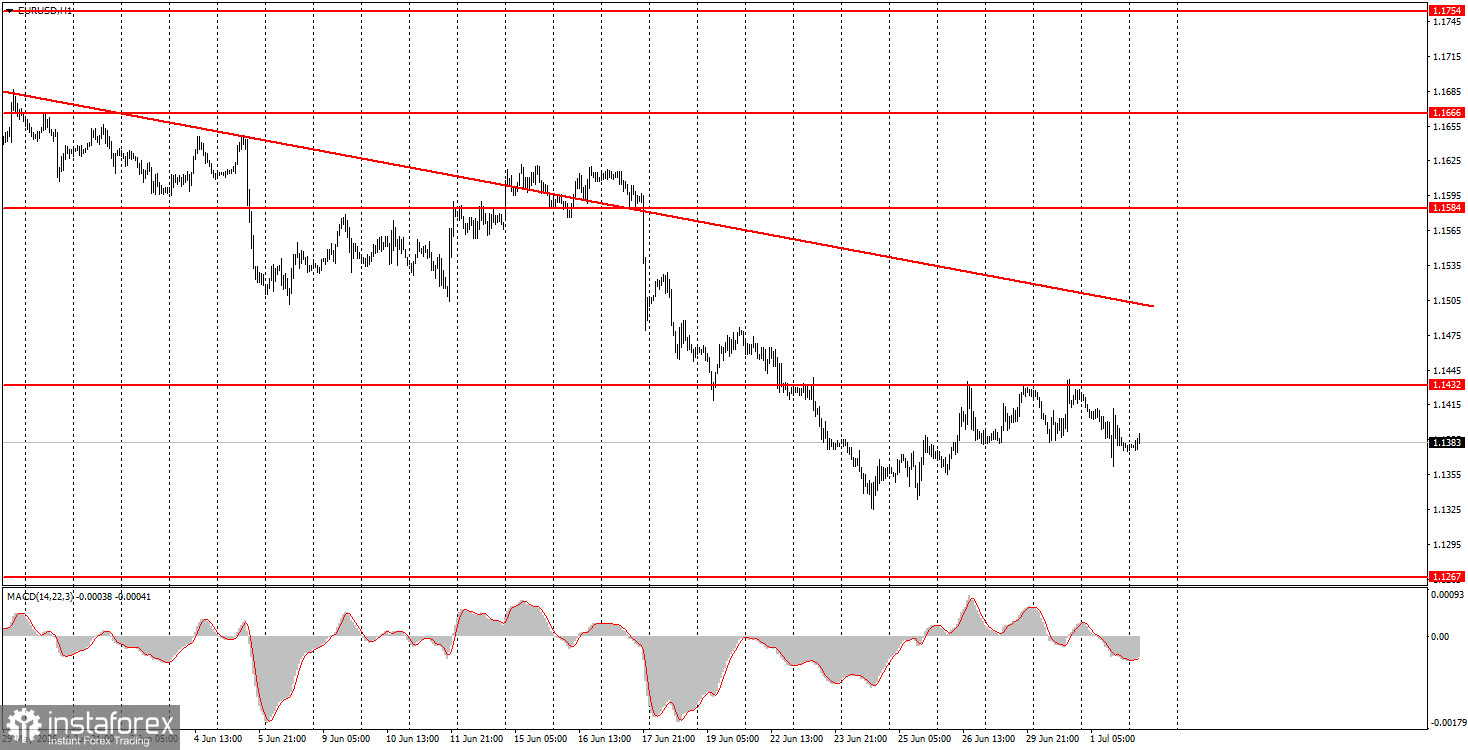
On Wednesday, the EUR/USD currency pair again failed to show any interesting movements or growth. We remind you that we do not consider the pair's most recent decline logical or reasonable. The market ignores factors favoring the euro and reacts with double intensity to factors benefiting the dollar. Thus, the euro has continued the downward trend for two months solely because the current movement has nothing to do with logic. Unfortunately, such situations arise in the market. If everything were always logical and sensible, trading would be much easier. For instance, yesterday, a significant ISM manufacturing index was released in the U.S. Its value came in lower than forecasts and expectations, which should have prompted a reasonable decline in the dollar. But what was the point of that if the U.S. dollar still rose by the end of the day? In the pound pair, the dollar fell, whereas against the euro, it increased. The Eurozone inflation report, which slowed to 2.8%, might have pressured the euro, but at the same time, the monetary policy factors of the European Central Bank and the Federal Reserve are not well perceived by the market.
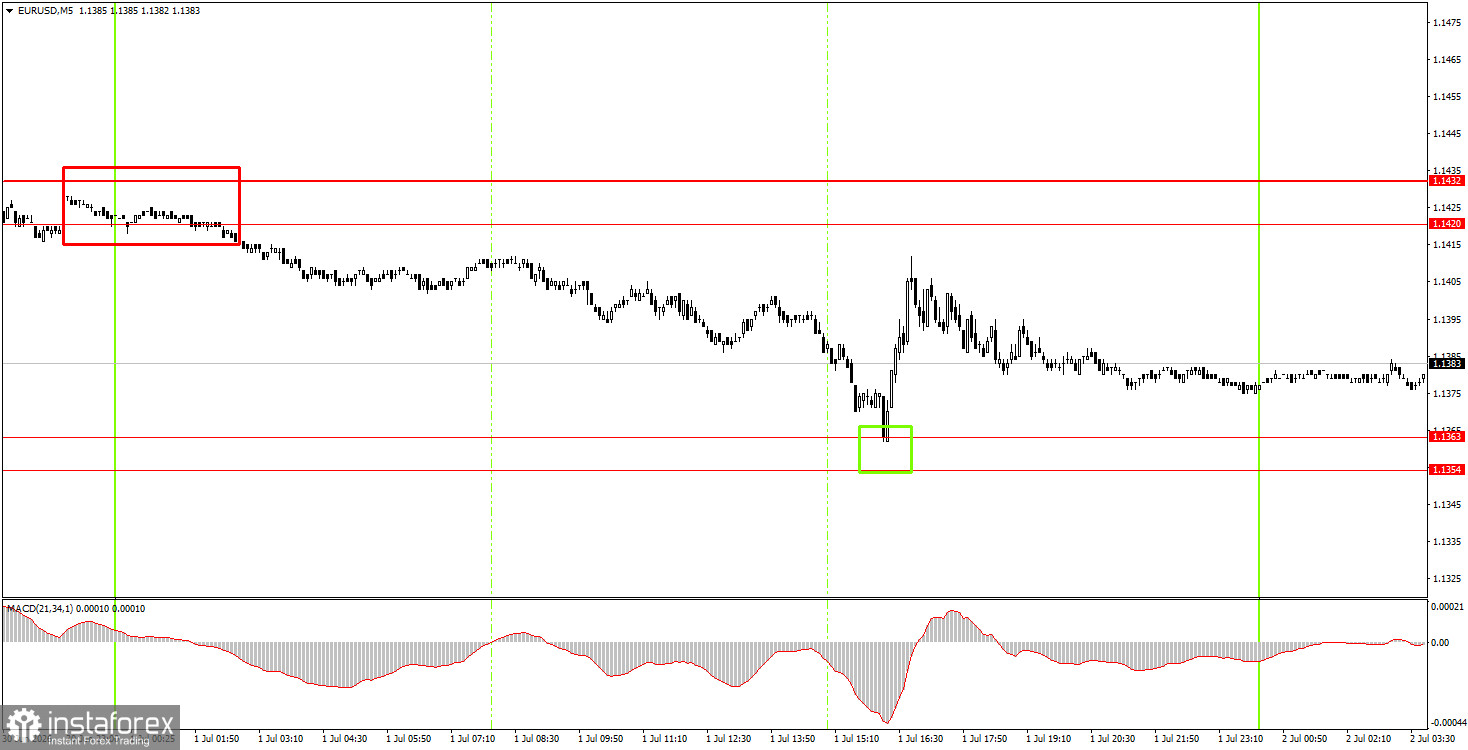
On the 5-minute timeframe, two trading signals were formed on Wednesday. During the night, the price bounced from the 1.1420-1.1432 area, and at the opening of the European trading session, traders may have opened short positions. At the beginning of the American session, the price reached the 1.1354-1.1363 area and generated a buy signal, which proved profitable.
The downward trend continues on the hourly timeframe. With the deal between Iran and the U.S. signed, the market has one less reason to buy the American currency. However, the market is completely ignoring this fact and generally disregards almost all factors favoring the euro. Thus, the current strengthening of the U.S. dollar lacks clear and understandable reasons.
On Thursday, novice traders can open short positions targeting 1.1292 if the price consolidates below the 1.1354-1.1363 area. Long positions can be opened with a target of 1.1420-1.1432 if the price rebounds from the 1.1354-1.1363 area for the second time.
On the 5-minute timeframe, the following levels should be considered: 1.1292, 1.1354-1.1363, 1.1420-1.1432, 1.1527-1.1531, 1.1584-1.1594, 1.1655-1.1666, 1.1745-1.1754, 1.1830-1.1837. On Thursday, the Eurozone unemployment rate will be published, while in the U.S., much more important reports, such as Non-Farm Payrolls and the unemployment rate, will be released. Therefore, the most interesting events are scheduled for the second half of the day.
Price levels (areas) of support and resistance are targets when opening long or short positions or sources of signals.
Red lines indicate channels or trend lines that display the current trend and indicate the preferred direction for trading.
The MACD indicator (14,22,3) – histogram and signal line – is a supplementary indicator that can also be used as a source of signals.
Important speeches and reports (contained in the news calendar) can significantly impact the movement of the currency pair. Therefore, during their release, trading should be conducted with maximum caution, or one should exit the market to avoid sharp reversals against preceding movements.
Beginners trading in the forex market should remember that not every trade can be profitable. Developing a clear strategy and practicing money management are key to long-term success in trading.


