یہ بھی دیکھیں


 07.07.2026 07:32 AM
The dollar is once again under slight pressure from sellers, while risk assets have gained some weight after yesterday's U.S. data.
The ISM Services PMI report published yesterday came in weaker than expected, with the business activity index falling to 54 points. Formally, the value remains above the 50 threshold that separates growth from contraction; however, the slowdown signals cooling in the largest segment of the U.S. economy. As services constitute the largest share of U.S. GDP and are closely linked to consumer demand and inflation, the market interpreted the release as an argument for a softer trajectory for Federal Reserve rates. The reaction was immediate—pressure returned to the dollar in the latter half of the day.
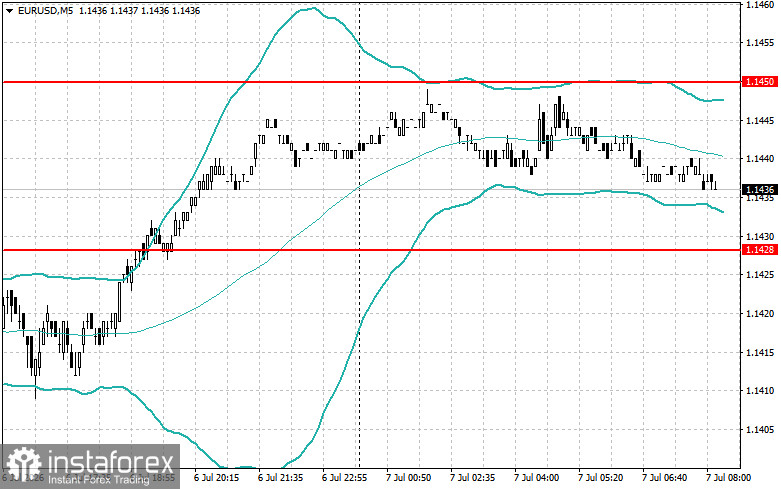
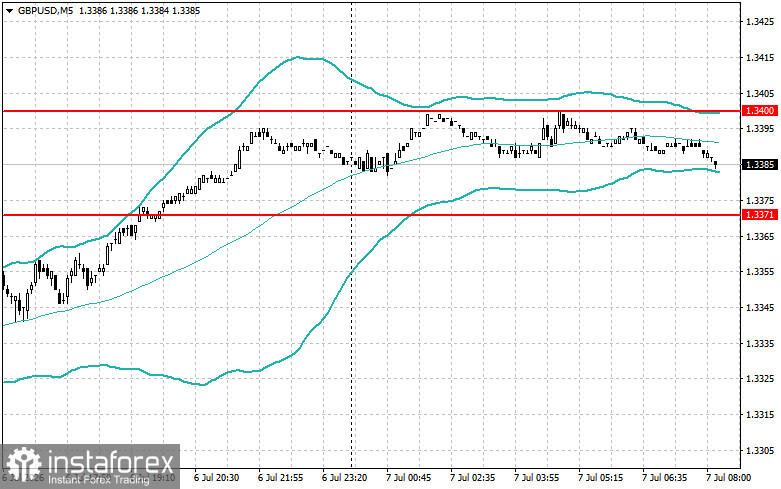
This provided support for the euro: the dollar's decline shifted the balance in the EUR/USD pair in favor of the single currency. The pound exhibited a similar dynamic—GBP/USD responded to the overall weakening of the dollar with moderate growth, benefiting from the reduced demand for the dollar.
Today, during European trading, attention will be focused on several important macroeconomic indicators. First, data on industrial production in Germany is expected. This figure is one of the key barometers of the state of the largest economy in the Eurozone and could significantly impact the dynamics of the euro. Alongside the German data, the balance of trade figures for France will also be in focus. Although the production and trade volumes of the two largest EU economies are unlikely to have a decisive impact on the overall picture, they can provide additional guidance for market participants seeking to assess current economic activity in the region.
Regarding the pound, Halifax's housing price index will be released in the first half of the day today. The Halifax housing price index, a leading indicator of the real estate market, can provide insights into current supply and demand dynamics and the impact of inflationary pressures on housing costs. Any unexpected deviations from forecasts could trigger short-term fluctuations in the British pound.
However, much more weight will be given to the Bank of England's Financial Stability Report. This document typically contains a comprehensive analysis of the risks facing the country's financial system, evaluates its resilience to potential shocks, and offers measures to mitigate them. Andrew Bailey's speech will also attract attention. His insights on the current inflation situation, labor market, and economic growth prospects, along with comments on possible changes to interest rates, will be closely watched.
If the data aligns with economists' expectations, it is best to act based on the Mean Reversion strategy. If the data comes in significantly higher or lower than economists' expectations, the Momentum strategy would be most appropriate.