
Vea también


 31.03.2026 12:54 AM
On Monday, the USD/JPY pair reached its highest level in almost 2 years, hitting 160.47. However, the price then reversed and fell nearly 100 points within a few hours. Currently, bearish sentiment prevails in the pair despite the US dollar's overall strengthening. The dollar index has returned to the 100 level, responding to bellicose statements from Donald Trump, who later retracted his earlier comments about the possibility of the US reaching an agreement with Iran "in the coming days."
Despite the overall strengthening of the greenback, the USD/JPY pair is declining, reflecting the yen's broader strengthening. Support for the yen has also come from Deputy Finance Minister for International Affairs Atsushi Mimura, who suggested the possibility of currency intervention.
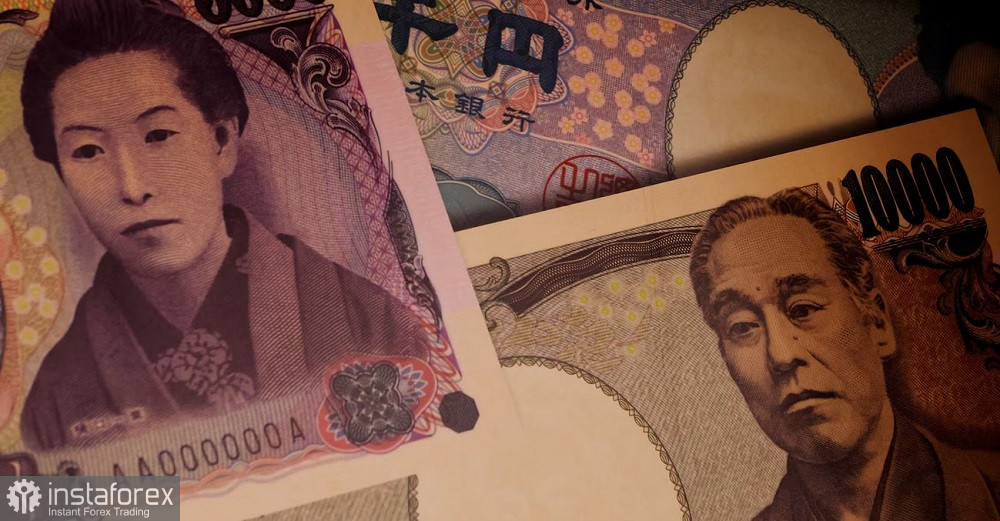
In general terms, considering the situation in the currency market, such a reaction from the Japanese Ministry of Finance seems logical. Officially, Japanese authorities have never confirmed the existence of a "red line" for the USD/JPY pair. However, historical experience shows that the mark of "160" serves as a kind of trigger – a crucial psychological and technical threshold. One could say that the Japanese central bank's patience runs out in this price area. A return to this mark automatically activates protective algorithms and an expectation of sharp retaliatory actions from Tokyo.
This happened again: on Friday, the USD/JPY pair broke above 160.00, while on Monday, Mimura expressed concern about the rise in speculative activity. According to him, if such trends continue (i.e., if the yen continues to depreciate), there will be an "objective need to take decisive measures." The market interpreted these words quite unambiguously – as a warning of an impending currency intervention. Moreover, last week, Japanese government representatives indicated they were considering supporting the national currency, including through direct interventions in the oil market. This means that Japanese authorities allow for the possibility of indirect influence on the yen's exchange rate via the oil market. Tokyo is already actively using its strategic oil reserves and is now considering selling oil futures to support the national currency.
It is necessary to emphasize that this is not a fundamental tool of influence, but rather an experimental (and yet to be realized) one: by lowering the price of energy resources, Japanese authorities hope to reduce the demand for dollars domestically and thus stop (or slow down) the yen's decline.
However, the market is skeptical about the likely effectiveness of such an "experiment." According to analysts, the effect will be temporary and limited. First, Japan will not be able to significantly influence the oil market on its own. Second, importers will still hedge currency risks in advance. Third, demand for the greenback will not decrease immediately – global flows (carry trade, U.S. yields) will remain dominant. All of this suggests that the effect of indirect support for the weakening yen through direct interventions in the oil market will either be weak or delayed.
Nevertheless, the yen was strengthening on Monday, exerting strong pressure on the USD/JPY pair. Regardless of the "experiments," the main focus of Japanese authorities will still remain on currency interventions. At the same time, the risks of intervention have increased significantly after buyers of the pair confidently surpassed the 160.00 target last week. This is the price level at which a weak yen begins to affect not only the economy but also the government's political rating (despite Prime Minister Sanae Takachi's recent "welcome" of a cheaper yen).
Over the past four years, the Japanese Ministry of Finance, together with the Bank of Japan, has already conducted interventions – for example, in 2024, the target of 160.00 became the "red line," after which authorities moved from words to action. Since then, any approach to this level entails consequences. For example, in January 2025 and in January of last year, the USD/JPY pair traded near the 159 mark, after which representatives of the Ministry of Finance began discussing the prospects of "appropriate decisions." Against the backdrop of such rhetoric, rumors about an impending currency intervention surfaced in the market, after which the price reversed downwards and subsequently declined by several figures.
Will verbal signals/rumors be effective this time as well? This is an open question. If buyers of the USD/JPY again seize the initiative following Monday's decline, Japanese authorities may indeed carry out their threats and resort to intervention.
What trading strategy to choose in the current conditions? In my opinion, short positions on the USD/JPY pair now carry a high degree of risk. Despite the downward momentum, sellers have not even approached the support level of 159.00 (the lower line of the Bollinger Bands indicator on the four-hour chart). Trump's belligerent statements that the U.S. could "destroy Iran's energy system" if Tehran does not unblock the Strait of Hormuz have increased demand for the safe dollar. The USD/JPY pair began to gradually retreat from the reached lows.
Nevertheless, selling the pair remains a priority – not at current price levels, but in the vicinity of 160.00 (and above). This target remains the last bastion; its breach significantly increases the risk of intervention by Japanese authorities.


