
Vea también


 19.08.2026 12:27 PM
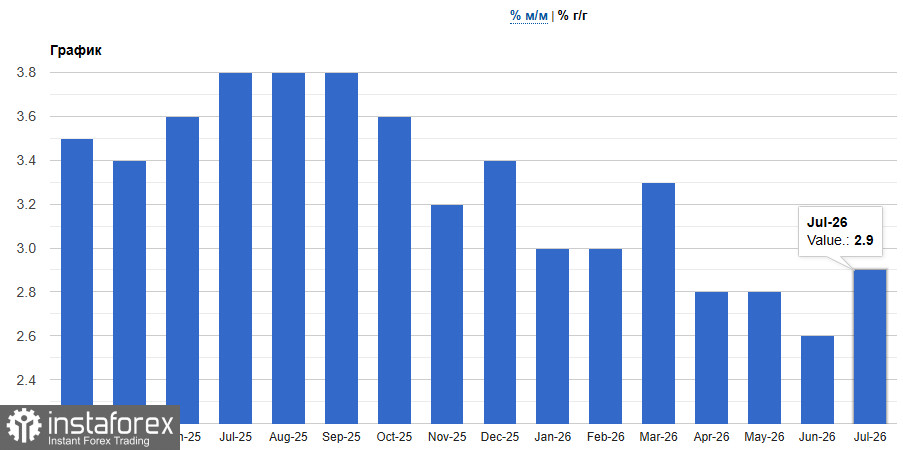
The pound rose after data showed that inflation in the United Kingdom accelerated in July following a jump in household energy bills, ending a brief respite for British households. The Office for National Statistics said consumer prices rose 2.9% year-on-year in July, up from a 15-month low of 2.6% in June. The result matched the consensus of economists, while the Bank of England had expected a rise only to 2.8%.
The main contribution came from a 13% increase in the household energy price cap. Gas prices jumped nearly 15% on the month, the sharpest monthly rise in four years. That effect was partly offset by cheaper motor fuels—average diesel prices fell by 8.8 pence per liter—and by weaker pressure from airfares, which rose much less than a year earlier.
The key paradox of the report is that British consumers are feeling the impact of the energy shock with a lag. Because of the delayed effect of the price cap, households had been largely insulated from the worst consequences of the Iran war, but they are beginning to feel the impact now. Oil started July near the lows seen since the Iran conflict began, but renewed tensions have pushed Brent back above $91 per barrel.
A closer look shows that core inflation remains sticky and that, together with the recent rise in energy prices—above the Bank of England's July forecasts—is likely to keep the central bank cautious in the near term and leave the option of a rate increase this year on the table. That said, a weak labor market and the pass-through of energy costs into domestic price pressures could ultimately restrain the regulator from aggressive action in 2026.
Recall that yesterday's labor market data showed ongoing cooling: payrolls are shrinking, and private sector pay growth excluding bonuses slowed to 2.8%—the weakest in almost six years.
Food inflation remains a restraining factor. Food and non-alcoholic beverage prices rose only 1.3% in July, down from 1.7% in June and the weakest since September 2021. Prices for meat, vegetables, and sugar were a particular relief for consumers; the category's contribution to the headline CPI was just 0.14 percentage points.
The Bank of England currently expects inflation to peak at 3.2% in the final quarter. Although that is below earlier, more pessimistic projections made at the start of the war, it remains well above the 2% target and will depend on how the conflict evolves.
A technical picture for GBP/USD suggests that pound buyers need to take the nearest resistance at 1.3550. Only that will allow a target of 1.3580, above which further progress will be difficult. The farther target is the 1.3615 area. On a decline, bears will attempt to seize control of 1.3520. If they succeed, a break of the range will inflict a serious blow to bulls and push GBP/USD toward 1.3500 with the prospect of extending to 1.3470.


