
আরও দেখুন


 08.05.2026 12:51 AM
The dynamics of the dollar exchange rate following the conclusion of the war in Iran will depend on several important factors, none of which suggest a strengthening of the US currency. Let's start with the most crucial factor: the monetary policy of central banks. As is well known, both the European Central Bank and the Bank of England are contemplating tightening their policies this summer if the conflict in the Middle East has not been resolved by then, the Strait of Hormuz remains blocked, and inflation continues to accelerate. This plan is based on the premise that inflation will slow down on its own, which I personally doubt. But let's assume the central banks are correct (after all, they are central banks) and that inflation will indeed self-correct. In that case, the British and European central banks will no longer need to raise interest rates.
What about the Federal Reserve? The situation is more complicated due to the "Trump factor." Even amid rising US inflation, the FOMC has shown no signs of readiness to tighten policy in 2026. Jerome Powell hinted in his last speech as Fed president that such a scenario could not be ruled out, but the market did not believe him. According to the CME FedWatch tool, the probability of a single rate cut by the end of the year is less than 15%. The probability of a single tightening is equally low.
Consequently, it is highly probable that we will not see any rounds of tightening or easing. However, this is where the "Trump factor" comes into play. Recall that Kevin Warsh was appointed head of the Fed not for his outstanding economic abilities. Trump has been trying to oust Jerome Powell since his first term, when he realized that he could not control the Fed from the White House. Therefore, Warsh is meant to resume the easing of monetary policy so that Trump can stop being anxious. After all, being anxious at his age is extremely harmful.
And there's plenty to be anxious about. The economy is growing weakly and may enter a recession. The US labor market showed disappointing results in 2025. Donald Trump's approval ratings are plummeting. The congressional elections in November are already looking lost in at least one chamber. Americans are dissatisfied with high fuel prices, rising inflation, the war in Iran, immigration policies, and cuts to health and social programs. If Trump could step to the podium and declare incredible economic growth rates, it might partially salvage his political ratings. But he cannot.
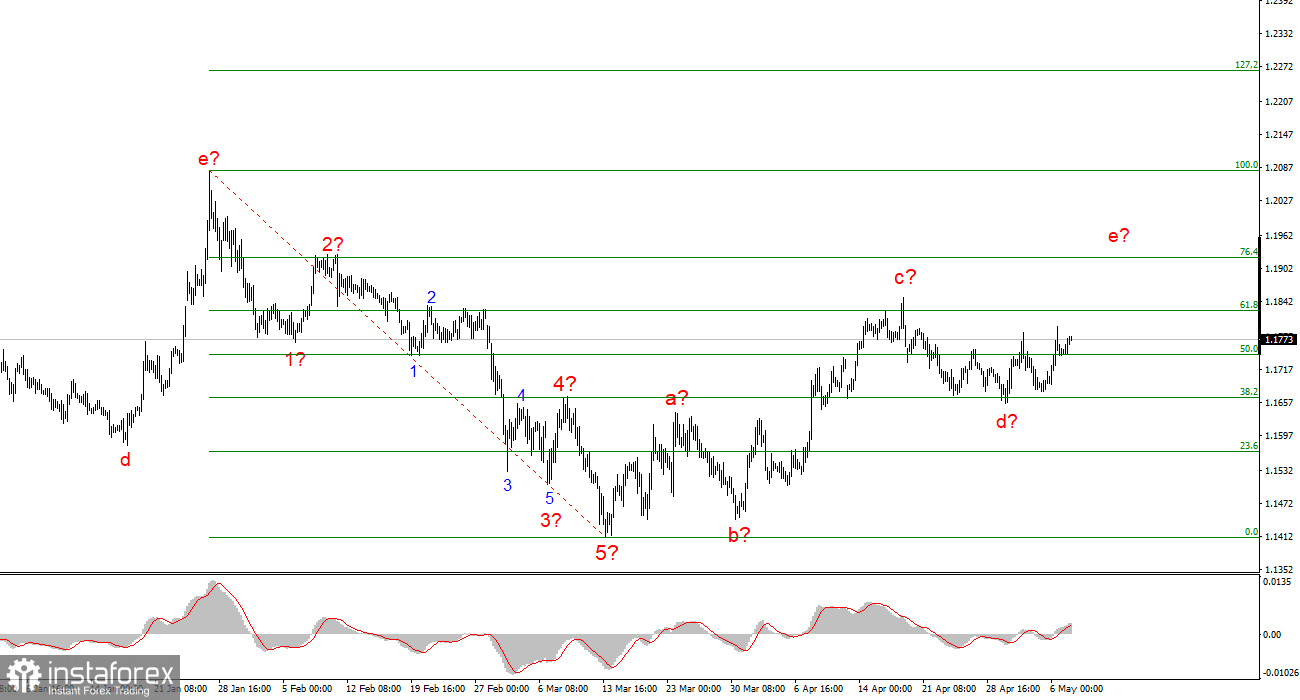
Based on the analysis of EUR/USD, I conclude that the instrument remains within the upward segment of the trend (as shown in the lower image), and in the short term, is in a corrective structure. The corrective wave set looks quite complete and may take on a more complex, elongated form only if the geopolitical background in the Middle East does not worsen. Otherwise, a new downward segment of the trend may begin from the current positions. We have seen a corrective wave, and I expect a new upward movement from current levels with targets around the 19 figure.
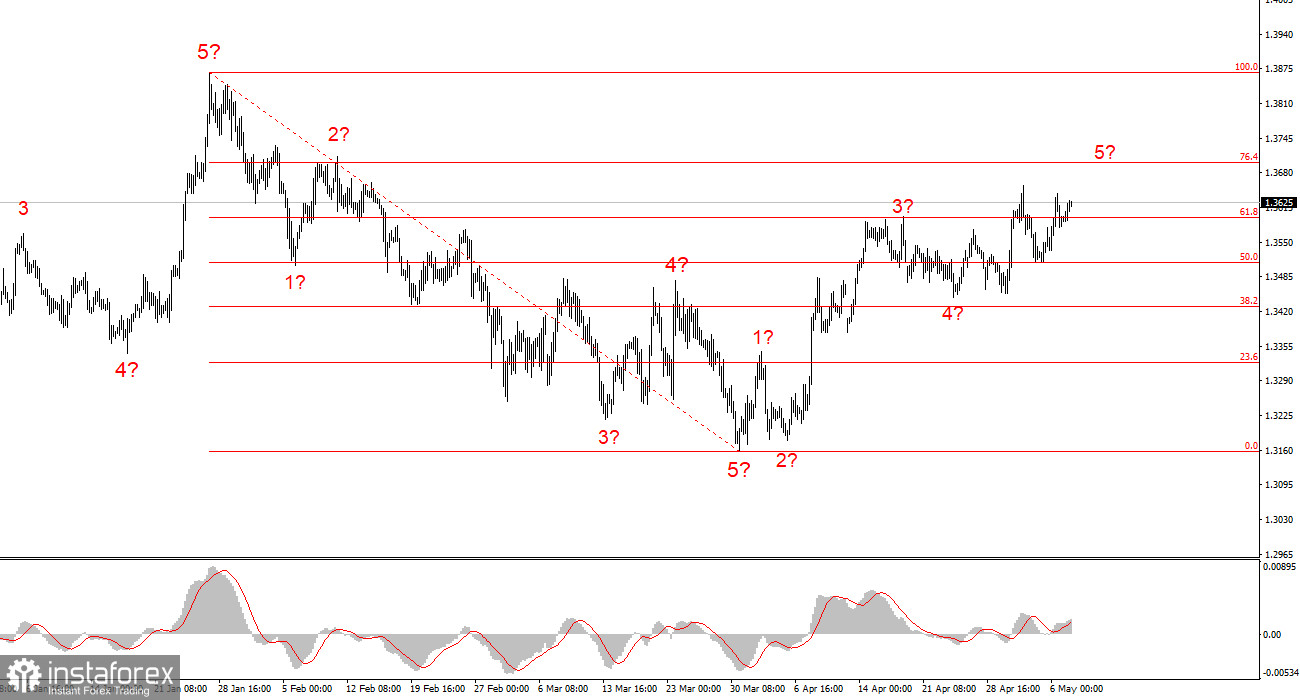
The wave picture of the GBP/USD instrument has become clearer over time, as I anticipated. Now we see a clear five-wave upward structure on the charts that may complete soon. If this is indeed the case, we should expect the formation of a corrective wave set. Therefore, the basic scenario for the coming days is an increase towards the 37 figure. What happens next will depend on geopolitical factors. Following an impulsive downward structure, we have seen an impulsive upward movement, suggesting the instrument may be at the very beginning of an upward segment of a larger trend.


