
আরও দেখুন


 05.10.2026 12:37 PM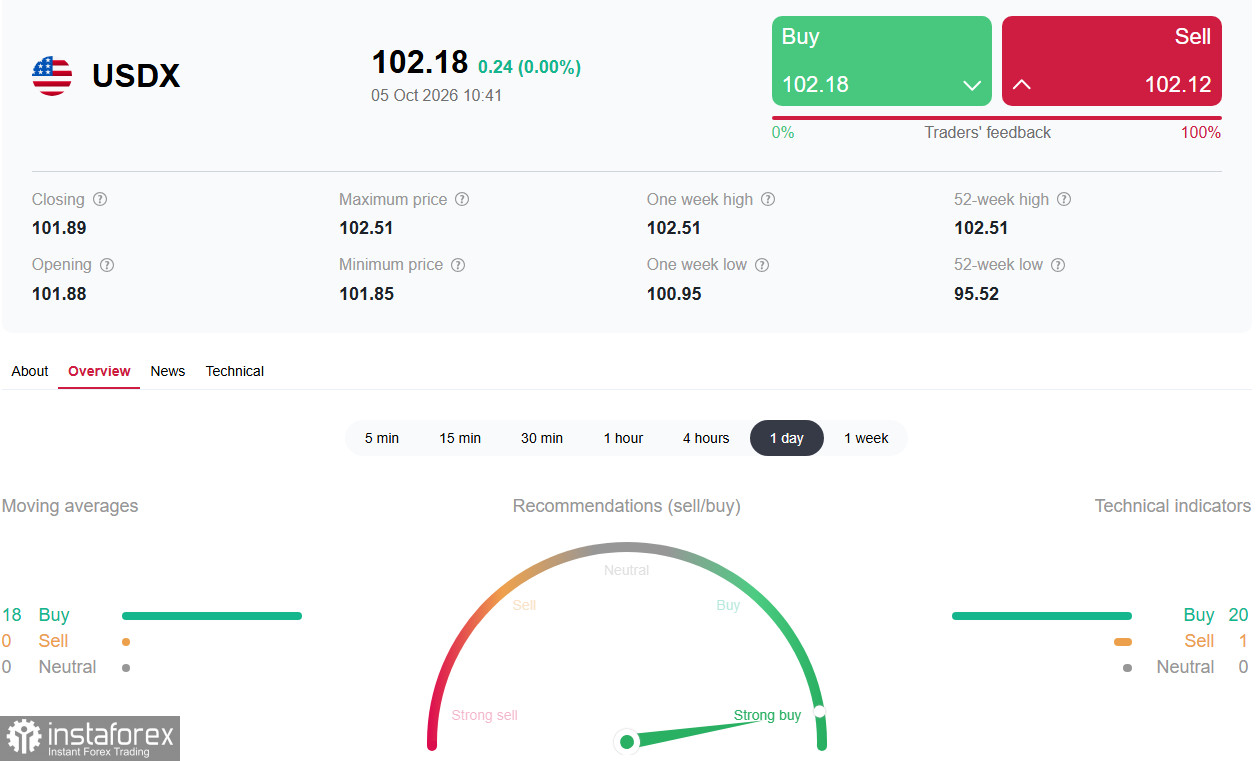
See also: InstaTrade trading indicators for USDX
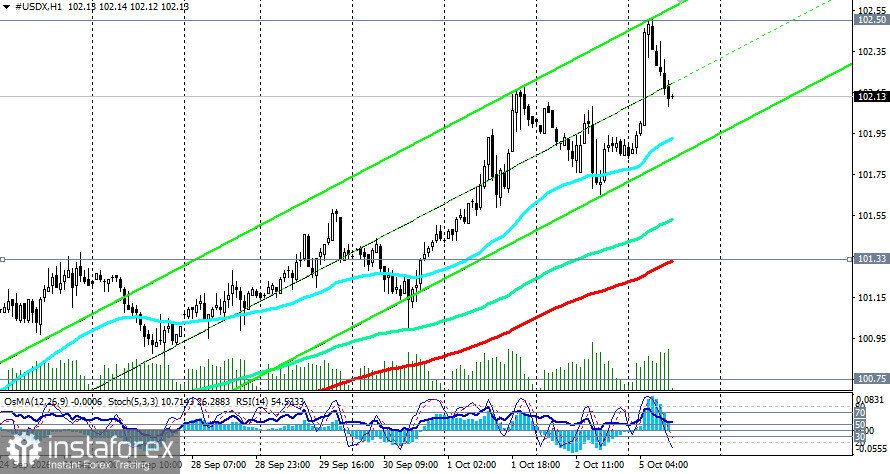
The US dollar index USDX trades around 102.10 on Monday, and at the time of this report, holding near the April 2025 high of 102.50 reached during the Asian session. The dollar shows remarkable resilience: a weak jobs report, which would normally weaken the currency, has not broken the uptrend. The reason lies in two factors—euro weakness and persistent expectations of a Fed rate hike in December.
What results NFP data shows
- Nonfarm payrolls plunged to 29,000, well below the 90,000 consensus and the revised August print of 133,000. July was revised from +21,000 to -10,000. The two-month net revision totaled -60,000.
- The unemployment rate rose to 4.2% versus a 4.1% expectation. Average hourly earnings rose 3.0% year-on-year—the weakest pace since May 2021.
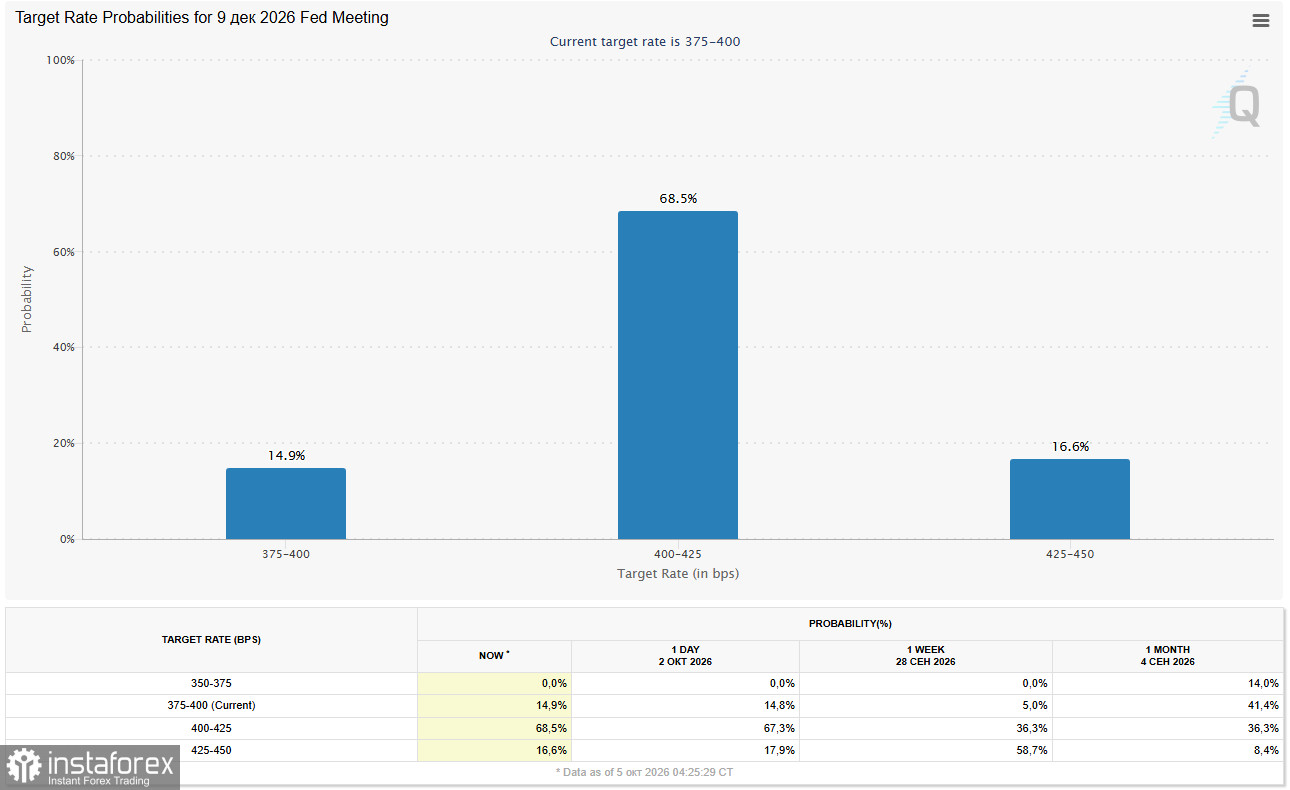
- Markets immediately repriced rate odds. According to CME FedWatch, the probability of an October hike fell to about 17–20%, while a December move is still priced at roughly 80–85%. The market is not abandoning the idea of further tightening, only pushing it later.
Why USD resist falling
The euro weakness is the main driver. The euro makes up 57.6% of the USDX basket. EUR/USD fell today to 1.1160—a May 2025 low—against the backdrop of France's debt crisis. The 10-year French yields reached 4.99%, surpassing their 2008 peak, and the spread to German bunds widened to 159 basis points. That automatically pulls USDX higher, even when the dollar weakens versus other currencies.
German bunds serve as the benchmark for the entire European region, help manage risk, and are, in a sense, a reference indicator. Their yields act as the benchmark for the rest of the eurozone. Mortgage rates, corporate lending, and equity valuations are tied to them. The European Central Bank accepts bunds as collateral in its credit operations, and changes in their yields are an important signal for the whole financial market.
Real yields remain at historic highs. The 10-year TIPS yield hit 2.91%—a record level. When an investor can earn nearly 3% above actual inflation in US sovereign debt, the attractiveness of European and Asian assets falls sharply.
The long end of the curve remains high. The 10-year Treasury yields hold near 5.27% and 30-year yields near 5.57%. That supports the dollar via the interest rate differential.
Brief technical analysis
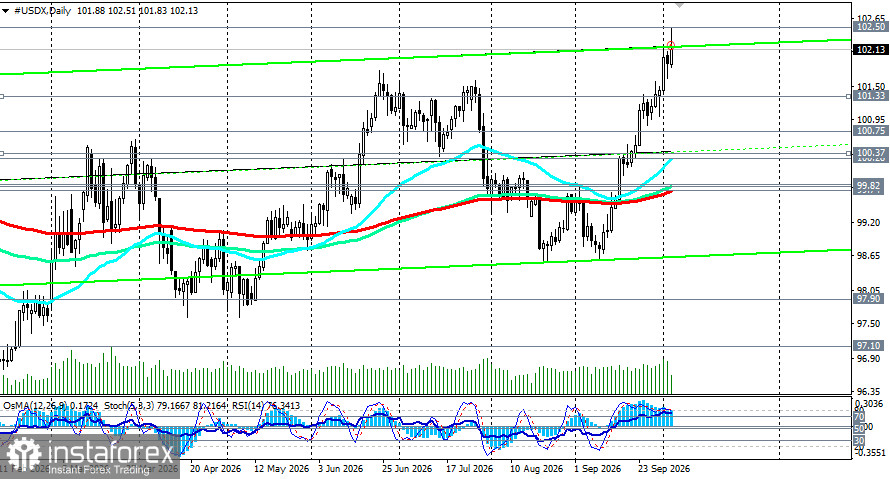
The technical picture remains bullish, but indicators point to overheating. Instaforex's aggregated technical analysis (on the daily chart) shows a "strong buy" signal: 20 of 22 technical indicators point to buy.
Indicators and moving averages:
- RSI (14) on D1 at 74–78—deep overbought territory. Historically such levels have preceded either consolidation or correction.
- Stochastic—in overbought territory, indicating the risk of a short-term pullback, but also confirming a strong bullish impulse.
- OsMA—positive histogram, though the pace of growth is slowing.
- 50-period EMA—around 100.28.
- 144-period EMA—around 99.82.
- 200-period EMA—99.74, key medium-term support.
Key levels:
Resistance: 102.50 (Monday high), 102.85 (next target), 103.30 (some economists' projection)
Support: 101.50 (near-term), 101.33 (H1 200-EMA), 101.00 (psychological), 100.75 (W1 200-EMA), 100.37 (H4 200-EMA), 100.28 (50-day EMA), 100.00 (psychological), 99.82, 99.74
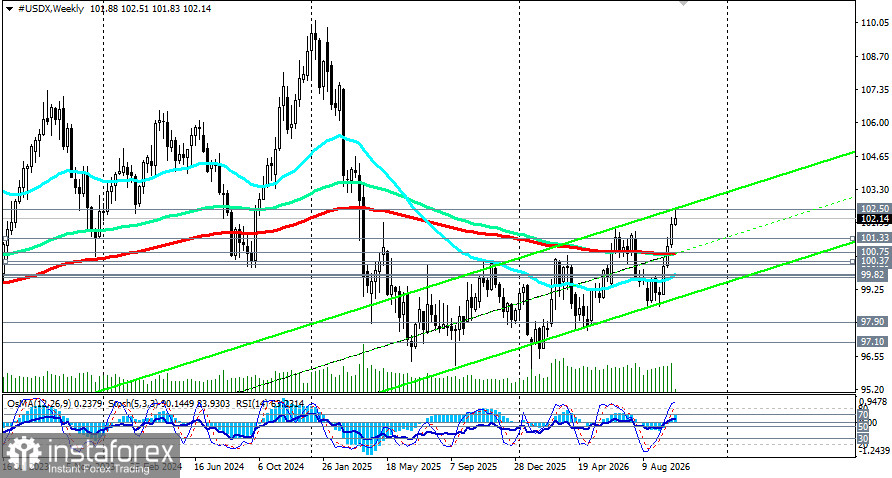
The index is in the overbought territory but remains structurally bullish while it holds above the moving average cluster around 99.70–100.30. A break below that cluster would open the path to 99.00–98.50.
For more details, look through: USDX—possible dynamic on 05.10.2026.
Events to watch
The main question of the week is, can the dollar hold gains after the weak NFP? If the index closes above 102.00, this would open the way to 102.85 and then 103.00. If the pullback continues, key support will be the 101.50–100.75 zone.
Today, October 5, at 14:00 GMT, the ISM services index for the US will be released. The consensus forecast calls for a rise to 55.7 from 55.4 in August. Pay special attention to the employment and prices paid components—they will indicate whether inflationary pressure persists in the largest sector of the US economy.
On Wednesday, October 7, at 18:00 GMT, the FOMC minutes will be published. After a weak NFP, the market will look to them for confirmation that the Fed is ready to pause in October.
On Wednesday, October 14, at 12:30 GMT, the consumer price index (CPI) for September will be released. This is the next key release that will determine whether the probability of a December hike remains at current levels.
Separate attention should be paid to the situation in France. French bond yields and the spread to bunds remain a key driver of euro weakness and, consequently, USD strength. Any further deterioration in France's fiscal picture will increase pressure on EUR/USD and support USDX.
Conclusion and recommendations
USDX holds near its annual high, supported by euro weakness and high real yields despite weak NFP. The key level for bulls remains 102.50; for bears it is 101.60.
For short-term traders:
- Consider entering long positions on a sustained break above 102.60 with targets of 102.85–103.30 and a stop-loss below 101.60.
- Consider short positions on a break below 101.60 with targets of 101.50–100.75 and a stop-loss above 102.10.
- Monitor ISM Services (October 5) and CPI (October 14) closely—these are key triggers for movement.
For medium-term investors:
- A potential correction to the 101.00–100.75 zone (weekly 200-EMA) could be used to cautiously add long exposure while maintaining a constructive dollar view.
- Some economists expect part of the dollar's recent gains to be offset by year-end if energy markets stabilize.
Risk management:
- Account for elevated volatility around inflation releases.
- Observe strict stop-loss discipline, especially when trading breakouts of key levels.
- Monitor French bond dynamics and Fed commentary closely.
This overview is based on open sources and media reports and represents an analysis of price dynamics that depend on many factors. Therefore, risk management and position control are especially important.


