
See also


 31.03.2026 08:59 AM
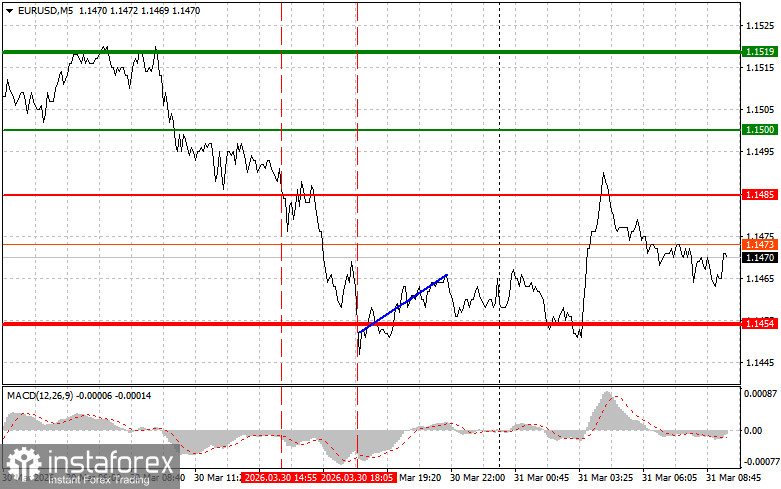
The test of the price at 1.1485 occurred when the MACD indicator had moved significantly below the zero mark, which limited the pair's downward potential. For this reason, I did not sell the euro.
Against the backdrop of heightened tensions in the Persian Gulf, US President Donald Trump expressed readiness to end military operations against Iran, even if restrictions on movement in the Strait of Hormuz remain largely in place. This statement provoked a positive reaction in the financial markets; however, it is unlikely that anyone seriously believed his words. Oil prices, which had been rising in recent weeks due to concerns over supplies through the Strait of Hormuz, began to decline, weakening demand for the dollar and leading to the strengthening of risk assets.
Today's European trading session is expected to be lively following the release of key macroeconomic data from the Eurozone. These figures can significantly influence the euro's exchange rate against other currencies. Market participants will particularly focus on data from Germany. Firstly, traders should closely examine the report on retail sales volume in Germany for February. This indicator serves as an excellent barometer of consumer activity and the overall state of domestic demand in the engine of the European economy. Any significant deviations from expectations may cause noticeable movements in the financial markets. At the same time, the market awaits Germany's unemployment data. An increase in unemployment could directly affect consumer sentiment and, consequently, the dynamics of retail sales. Analyzing these indicators will allow for an assessment of the current state of the German economy and forecasts for its future development.
Additionally, the focus will also be on the Eurozone's Consumer Price Index figures, including core prices. These values play a crucial role in assessing inflationary pressure in the region and serve as guidelines for the European Central Bank's decisions. An acceleration in inflation, which is likely, could prompt policy tightening. However, whether this will lead to a strengthening of the euro in the current situation is a rather complex question.
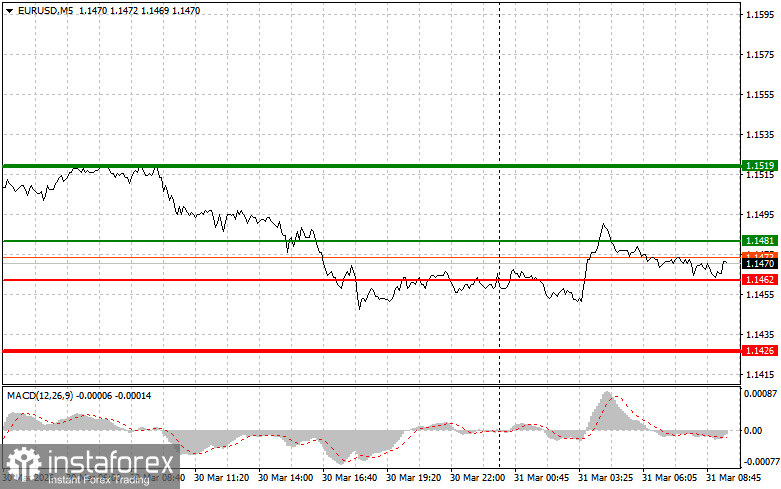
As for the intraday strategy, I will primarily rely on scenarios #1 and #2.
Important: Beginner traders in the forex market need to make entry decisions very carefully. It is best to stay out of the market before the release of important fundamental reports to avoid sharp fluctuations in prices. If you choose to trade during the release of news, always set Stop Loss orders to minimize losses. Without placing Stop Loss orders, you can quickly lose your entire deposit, especially if you do not use money management and trade large volumes.
And remember, successful trading requires a clear trading plan, like the one presented above. Making spontaneous trading decisions based on the current market situation is inherently a losing strategy for intraday traders.


