
See also


 19.05.2026 06:22 PM
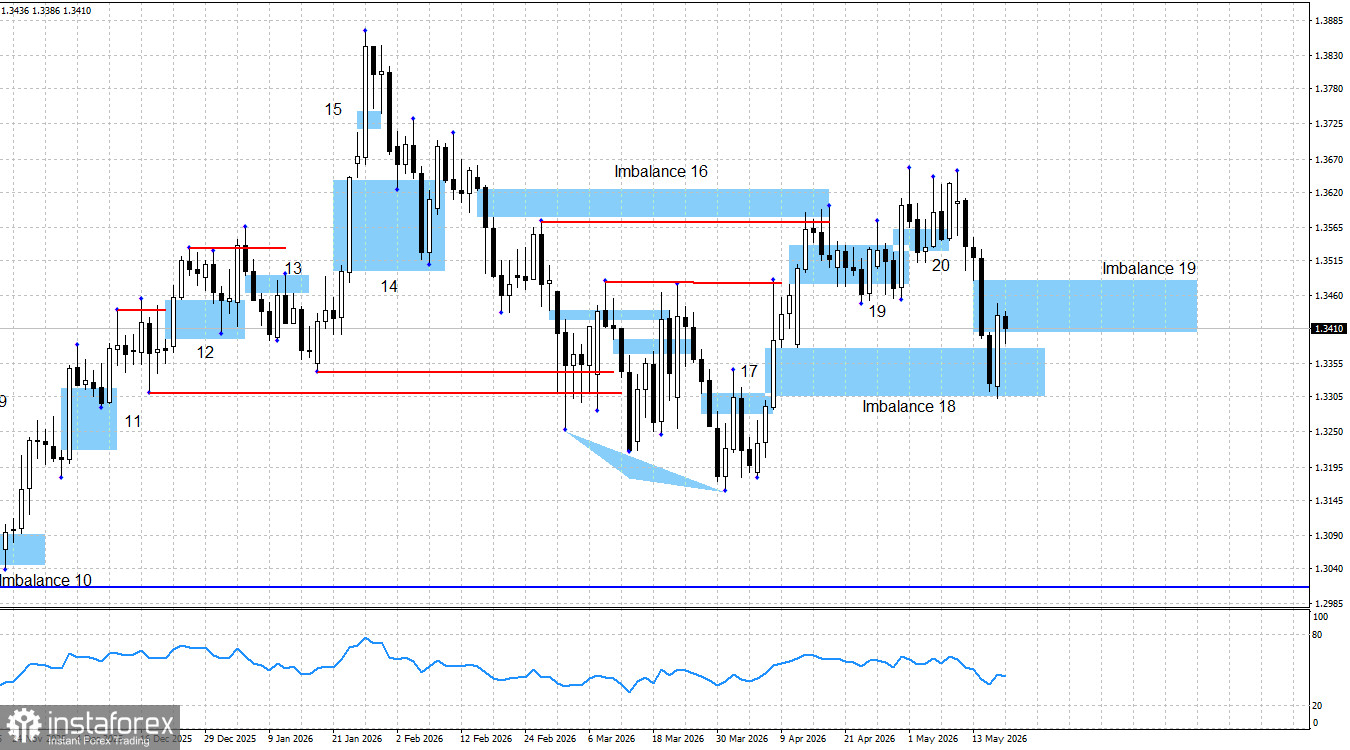
The GBP/USD pair declined for four consecutive trading days. As a result of this sell-off, the bears reached imbalance zone 18, which represents a bullish pattern. Therefore, unless new negative developments for the pound emerge this week, the bearish attacks may come to an end. As of Tuesday, we saw a convincing reaction from imbalance 18, a sharp rebound in price, the formation of a Bullish Engulfing pattern, and a return into bearish imbalance 19. Thus, the bulls have taken the first step toward resuming the bullish impulse; now they need to take the second step — invalidating the bearish imbalance. What are the chances of that happening? Given the euro's renewed decline on Tuesday, they are not especially high at the moment. Considering Donald Trump's latest aggressive statements, the chances are even lower. Tomorrow, the UK inflation report will be released, which is the key report of the week and partly responsible for the pound's decline last week. Therefore, the balance may shift either in favor of the bears or the bulls. However, based on yesterday's trading, it can be confidently stated that a bullish signal has formed. Today, the pound could have relied on support from economic data, but the most important report — UK unemployment — showed an unexpected rise to 5%, which no traders had anticipated. Nevertheless, until the bullish impulse is invalidated, I still expect GBP/USD to rise.
The situation surrounding the resolution of the Middle East conflict remains unresolved, and traders are uncertain about its future direction. Today it may favor the bulls; tomorrow it may favor the bears. This is exactly the kind of picture we have observed in recent weeks. At the moment, confidence in peace in the Middle East and in the lifting of the Strait of Hormuz blockade has fallen to minimal levels, but this factor has likely already been priced in by traders.
In my view, the trend remains bullish despite the pair's sharp declines this year. The ceasefire in the Middle East remains fragile, but it still exists. Of course, the market cannot indefinitely rely on information that lacks factual confirmation. The Strait of Hormuz remains under a dual blockade, and although Tehran and Washington set a course toward removing the blockade several weeks ago, there has been no result so far. The situation alternates between improving and deteriorating. Markets were filled with optimism for nearly a full month, but last week they received a harsh reminder of reality.
The technical picture currently looks as follows: bullish imbalance 18 generated a price reaction, so if not for bearish imbalance 19, I would already be preparing for a strong bullish advance. However, bearish imbalance 19 formed within a bullish trend, so I do not believe it should be used for opening short positions. The decline may continue only in the event of a sharp drop in UK inflation or genuinely significant and pessimistic geopolitical news regarding the Middle East conflict.
On Tuesday, the economic backdrop made every effort to push the pound back into a downward trend, but the bulls managed to hold their positions. UK unemployment unexpectedly increased, while faster wage growth suggests that UK inflation for April could come in above the forecasted 3%.
In the United States, the overall fundamental backdrop remains such that, in the long term, it is difficult to expect anything other than further dollar weakness. Even the conflict between Iran and the U.S. changes little in this regard. Geopolitics temporarily reminded markets of the dollar's safe-haven status for about two months, but overall the long-term outlook for the U.S. dollar remains difficult. The U.S. labor market continues to weaken, the economy is approaching recession, and unlike the ECB and the Bank of England, the Federal Reserve is not expected to tighten monetary policy in 2026. Across the United States, four major protest movements have already taken place personally against Donald Trump, while Jerome Powell's departure could further worsen the situation for the dollar if Kevin Warsh leads the FOMC toward a more dovish stance. From an economic standpoint, I see no basis for sustained dollar growth.
The May 20 economic calendar contains two entries, with the UK inflation report standing out as the key event. The impact of economic data on market sentiment may persist throughout Wednesday.
The long-term outlook for the pound remains bullish. The "Three Drives Pattern" warned traders about the beginning of the upward movement, and since then, three bullish patterns and three bullish signals have formed. Last week, geopolitics complicated the bulls' previously optimistic outlook, but they still have a chance to retain control within imbalance 18. I consider the target for the pound to be the 2026 high at 1.3867. I will only begin considering a bearish trend if imbalance 18 is invalidated. In that case, bearish patterns would come into play. Until that happens, I expect imbalance 19 to be invalidated and the upward movement to continue.


