
See also


 29.06.2026 10:39 AM
Trees don't grow to the sky. No matter how many rallies by tech stocks keep hitting records, sooner or later, they have to pause. The S&P 500 and the Nasdaq Composite fell for five consecutive trading days for the first time since April 2024. The Philadelphia Semiconductor Index posted its largest weekly loss since April 2025.
Investors are starting to doubt that AI companies can generate profits that justify the billions spent. Adding to this is the prospect that the Federal Reserve will keep interest rates higher for longer.
Memory-chip makers aren't having trouble selling product — everything they produce can be sold. The bigger risk is the ingenuity of their largest customers. Micron lost almost a third of its value in late March after Google published research on the TurboQuant compression algorithm. Prospects for technological breakthroughs that could reduce future memory demand are worrying investors, especially given how much issuers' market caps have grown.
Stock index dynamics
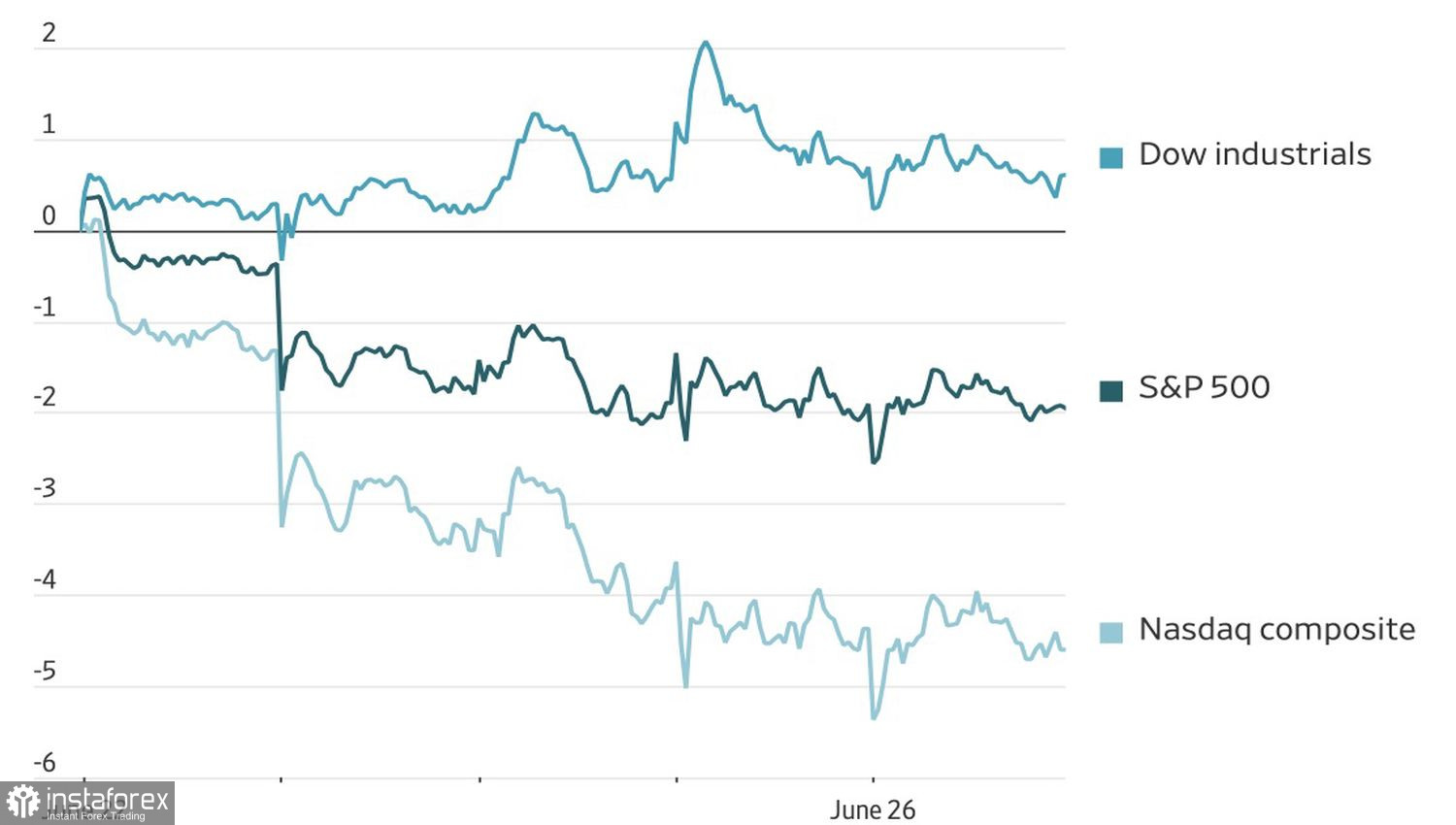
The BIS reminded the market that the five largest hyperscalers are preparing to commit more than $1 trillion to AI capex in 2025–2026. The regulator warns that the race for market share risks producing excessive investment, leaving the sector vulnerable if AI fails to deliver sufficient returns. History records similar episodes — the canal mania of the 1830s, British railways in the 1840s, electrification in the late 1920s and the dot-com bubble of the late 1990s — all of which ended in recession.
Meanwhile, enthusiasm is ebbing even around recent winners. SpaceX shares briefly dipped below the IPO price. Goldman Sachs and Morgan Stanley shares slid on news that OpenAI will delay its IPO until 2027. The IPOs of three major AI issuers expected this year were supposed to bring banks hefty underwriting fees.
Not everyone is pessimistic, however. Barclays raised its year-end S&P 500 target to 7,800, arguing that strong earnings growth will keep the rally afloat despite higher borrowing costs and AI?related stress. AssetMark shares that optimism: even if rates hit corporate profits, FactSet forecasts a 24% increase in S&P 500 earnings in 2026, which should still provide sufficient fuel for the stock market.
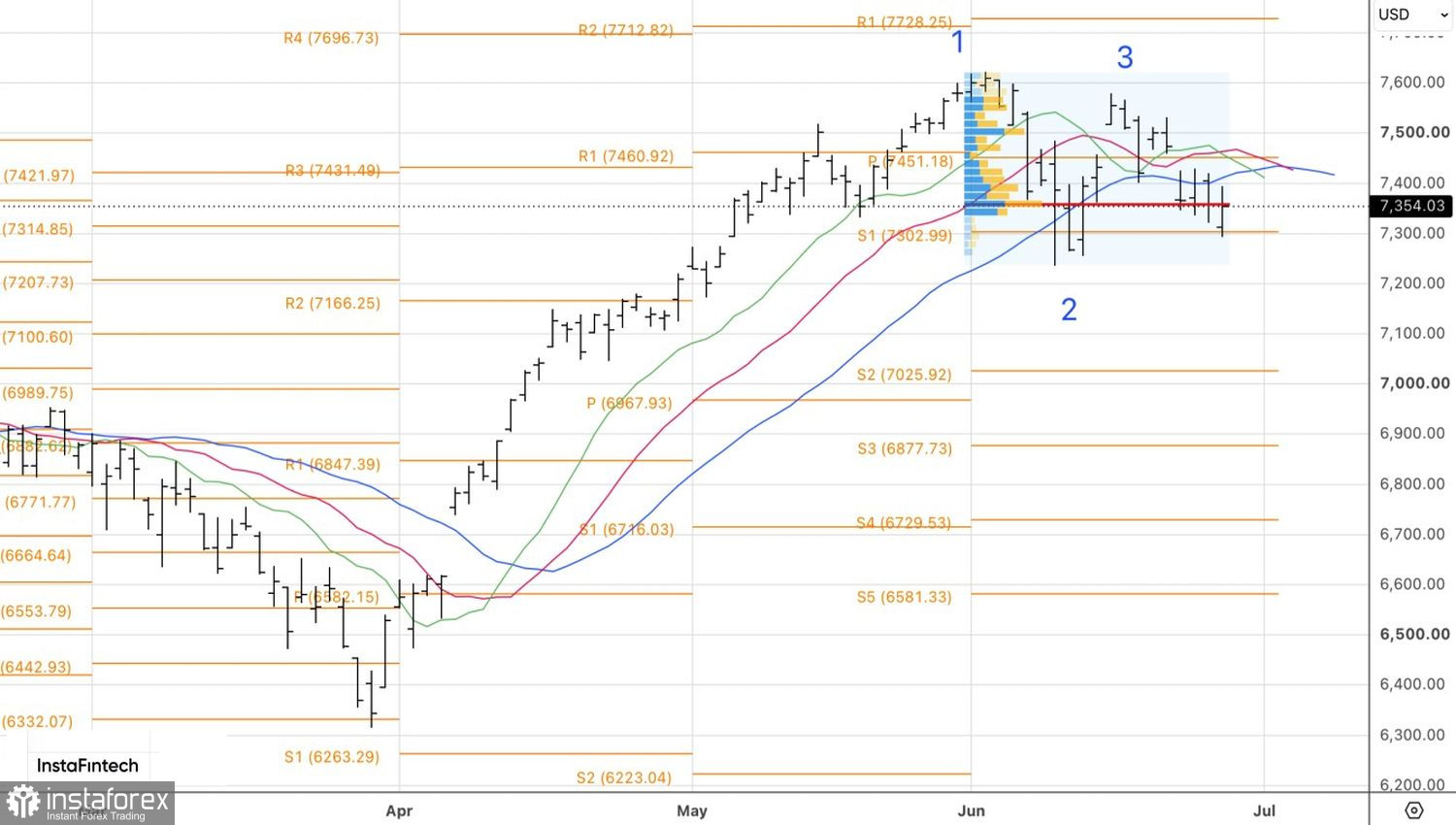
In my view, before the AI bubble truly bursts, the market will trick both bears and bulls with false alarms, swinging in a wide range more than once. The question is how many such oscillations it will take for investors to stop confusing a correction with a trend reversal.
Technically, on the daily S&P 500 chart, the battle for the fair value level of 7,355 continues. A win for the bears would justify adding to short positions opened from 7,450. A defeat would be a reason to return to long positions.


