
See also


 30.06.2026 06:10 AM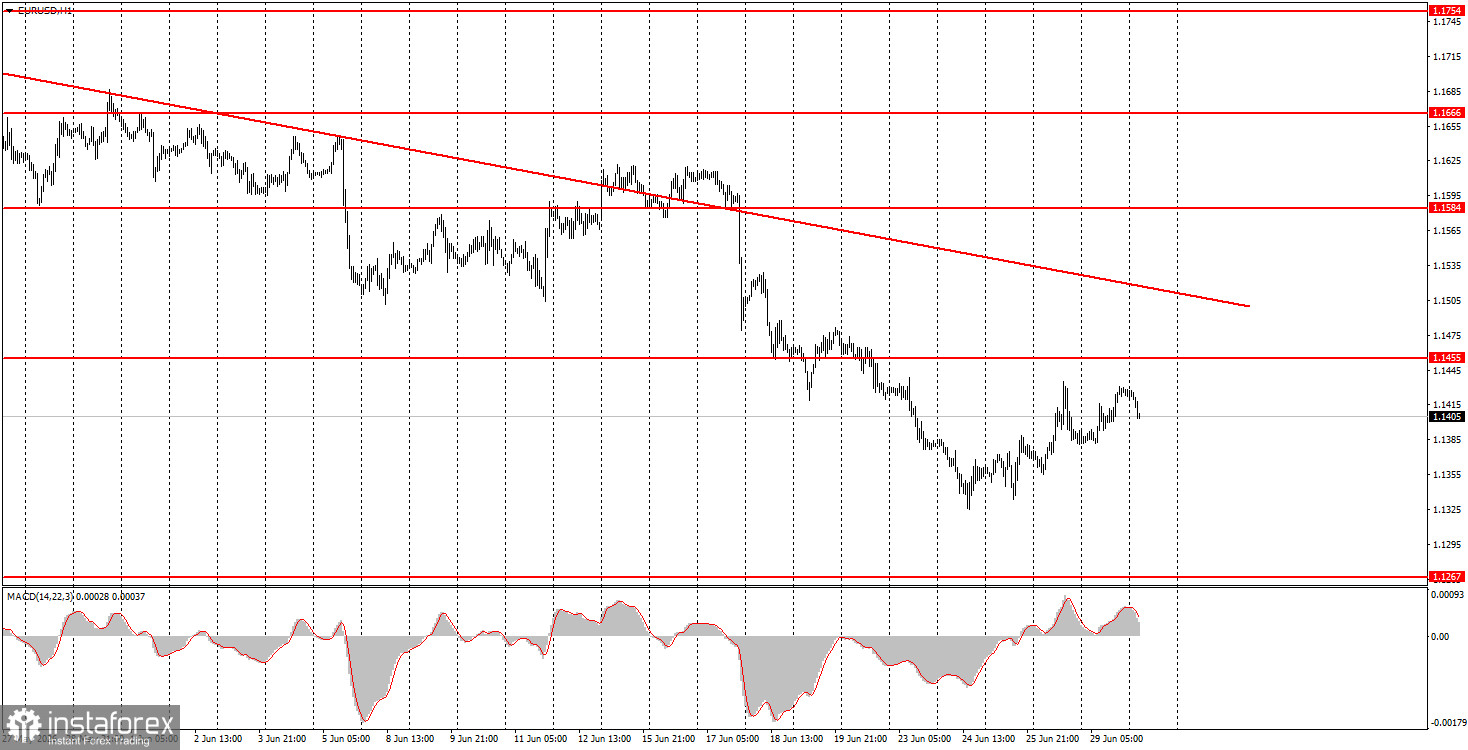
There are a few macroeconomic publications scheduled for Tuesday. Germany will release retail sales, the unemployment rate, changes in the number of unemployed, and inflation data. In the UK, the third estimate of GDP for the first quarter will be published, while the US will release the JOLTs report on job openings for May. At first glance, it may seem like there are many data points, but in reality, the market can easily ignore them. Data from Germany is currently insignificant, as the market is even overlooking the European Central Bank's interest rate hike and Christine Lagarde's speeches. It is very difficult to expect positive UK GDP data to support the British pound. The JOLTs report is released with a two-month delay and is generally not the most important report in the labor market and unemployment statistics.
Among the fundamental events on Tuesday are the speeches from ECB leaders Boris Vujcic, Isabel Schnabel, Piero Cipollone, and Philip Lane. However, two weeks ago, the ECB held a meeting at which it raised rates for the first time in three years. This event went unnoticed by the market, which focused on the potential increase in the Fed's key rate. Whether there will be a tightening of policy in the US remains an open question, but the market currently believes in it while ignoring other factors. Also, yesterday Christine Lagarde hinted at the ECB's readiness for further rate hikes in her speech.
The geopolitical backdrop remains steadily "conditionally positive." Iran and the US have signed an agreement remotely; however, too many crucial questions remain unresolved. In particular, the "nuclear issue," the war between Lebanon and Israel, and control over the Strait of Hormuz. Theoretically, the market may fear a resumption of full-scale war; however, this is clearly not a sufficient factor to sustain dollar demand. After all, Tehran and Washington are still on the tracks leading to peace, and negotiations are ongoing, although no one expects them to be quick and easy.
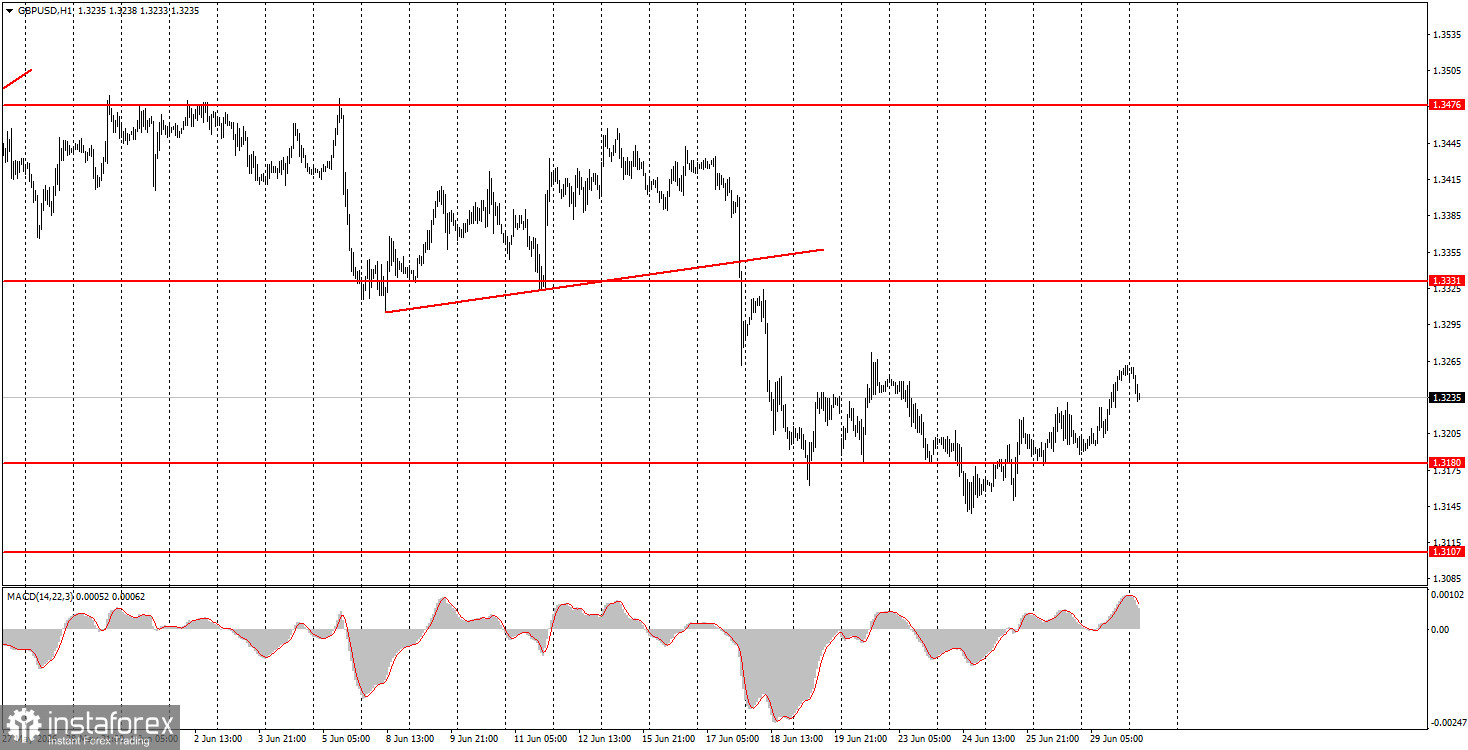
On the second trading day of the week, both currency pairs could continue to correct after strong declines, and market activity may be low throughout the day. The euro can be traded from the areas of 1.1354-1.1363 and 1.1455-1.1474, while the British pound can be traded from the area of 1.3259-1.3267. The market has irrationally accumulated US dollars over the past two weeks, which could be a long-term trap for bears.
Price levels (areas) of support and resistance are targets when opening long or short positions or sources of signals.
Red lines indicate channels or trend lines that display the current trend and indicate the preferred direction for trading.
The MACD indicator (14,22,3) – histogram and signal line – is a supplementary indicator that can also be used as a source of signals.
Important speeches and reports (contained in the news calendar) can significantly impact the movement of the currency pair. Therefore, during their release, trading should be conducted with maximum caution, or one should exit the market to avoid sharp reversals against preceding movements.
Beginners trading in the forex market should remember that not every trade can be profitable. Developing a clear strategy and practicing money management are key to long-term success in trading.


