
See also


 02.07.2026 04:54 AM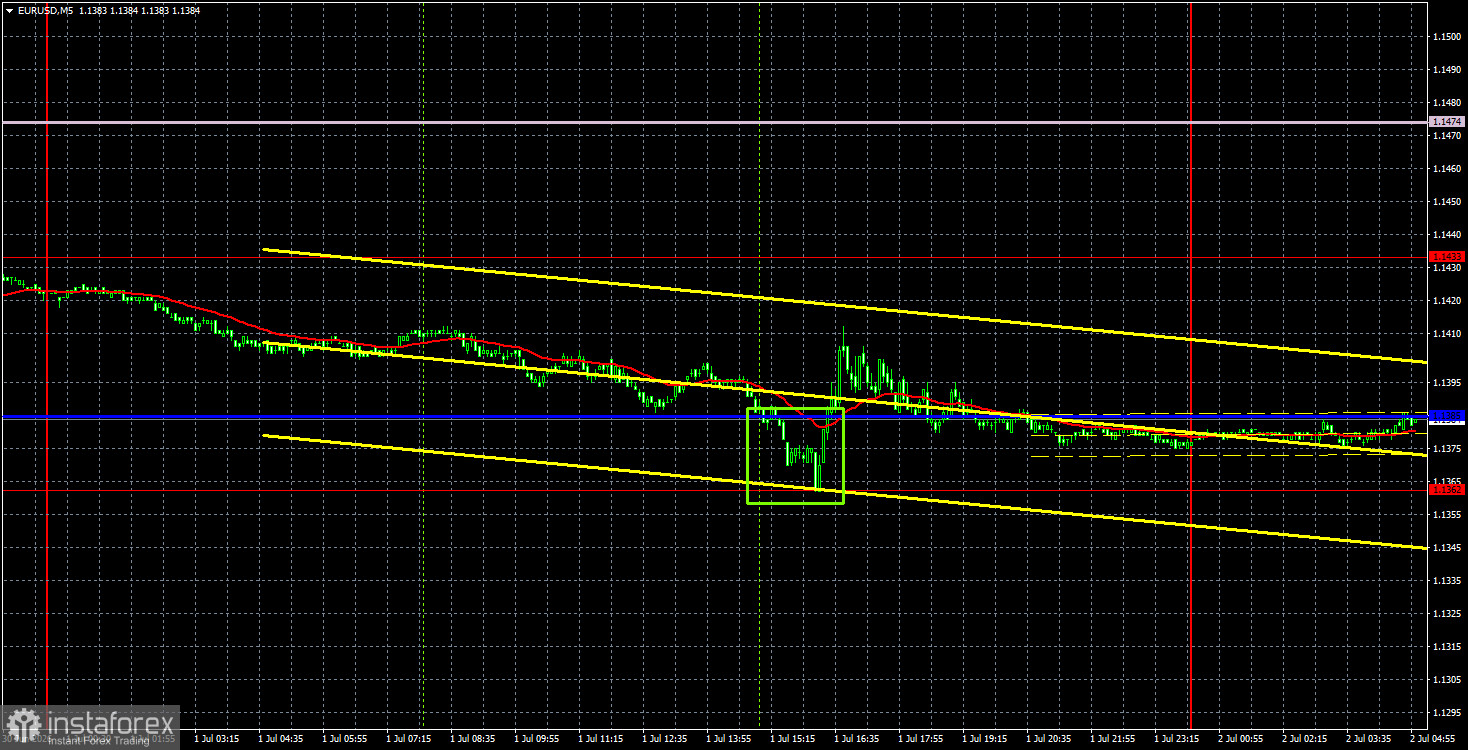
The EUR/USD currency pair declined on Wednesday to the area of 1.1362, which in the current circumstances can be considered the lower boundary of the trading range. Overall, the hourly timeframe clearly shows a flat range between 1.1362 and 1.1433 in recent days. Thus, the pair's correction proved minimal, and the market still shows no desire to sell the dollar and buy risk currencies. Yesterday could have supported the euro, but that is only at first glance. The fact is that the most important report on European inflation was once again ignored by the market, as has been the case with almost all Eurozone data lately and with most macroeconomic reports over the last four months. Thus, the slowdown in inflation in the Eurozone is more a negative factor for the euro, as the European Central Bank may now abandon further monetary tightening in July. However, we would like to remind you that a rate hike by the Federal Reserve is not guaranteed and is unlikely at the next meeting.
From a technical perspective, the downward trend continues, and the euro could rise at least to the Senkou Span B line. In general, the euro has been falling for two months despite fundamental and geopolitical factors. There is currently no trend line, and long-term upward trends persist on the higher timeframes.
On the 5-minute timeframe, exactly one trading signal was formed. At the start of the American session, the price rebounded from the 1.1362-1.1385 area but failed to sustain its upward momentum. Volatility was again low, despite a fairly strong macroeconomic background. The European currency cannot rise from its knees, and the dollar continues to lead.
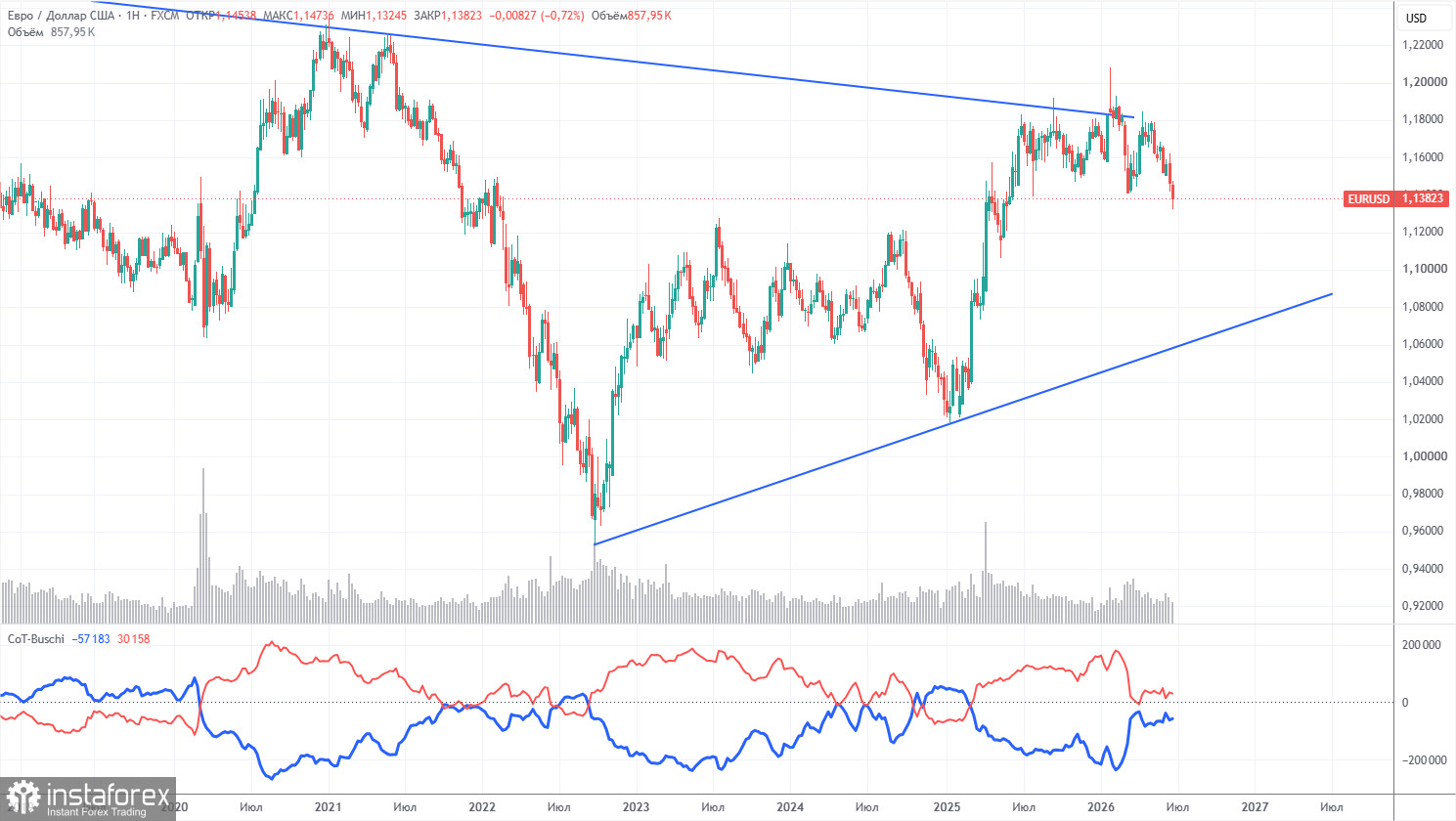
The latest COT report is dated June 23. In the weekly timeframe, the net position of non-commercial traders remains bullish but has declined significantly due to geopolitical events. Traders have been shedding the euro in favor of the U.S. dollar in recent months. Trump's policy has not changed, but the dollar has been "the reserve currency" for a time. However, this process may have already come to an end.
We still do not see any fundamental factors for strengthening the euro, while there remain sufficient factors for a decline in the American dollar. The war in the Middle East made the dollar temporarily super-attractive, but once this factor's "shelf life" expires, everything will revert to normal. And that could have already happened. In the long term, the euro could fall to the level of 1.08 (trend line), but the upward trend will still remain relevant. The pair has not gotten particularly close to this line in recent months.
The positioning of the red and blue lines in the indicator indicates parity between bulls and bears. Over the last reporting week, long positions in the "Non-commercial" group increased by 19,300, while the number of shorts increased by 23,500. Consequently, the net position fell by 4,200 contracts over the week.
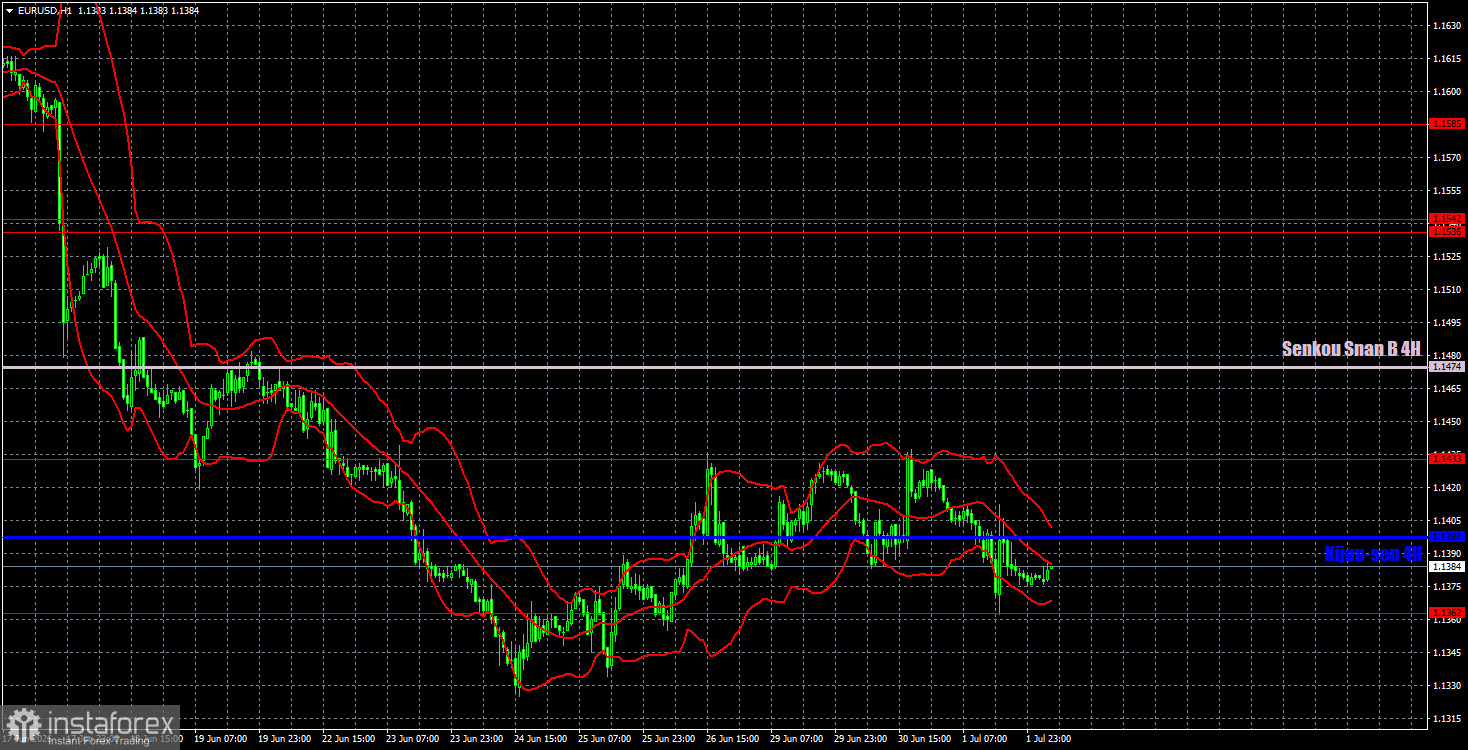
On the hourly timeframe, an unfounded downward trend is still developing. The situation in the Middle East remains tense, but we do not believe that further strengthening of the dollar is warranted due to renewed strikes between Iran and the U.S. or uncertainty in negotiations and deal prospects. The Fed has supported the U.S. dollar for two weeks, but the reasons for the continued decline are hard to say. The market ignores all factors favorable to the euro.
For July 2, we highlight the following levels for trading: 1.1234, 1.1274, 1.1362, 1.1433, 1.1536-1.1542, 1.1585, 1.1657-1.1666, 1.1750-1.1760, 1.1786, 1.1830-1.1837, as well as the Senkou Span B line (1.1474) and Kijun-sen line (1.1397). The Ichimoku indicator lines may shift throughout the day, which should be considered when determining trading signals. Do not forget to set a Stop Loss order to break even if the price moves 15 pips in the correct direction. This will protect against potential losses if the signal proves false.
On Thursday, the unemployment rate will be published in the Eurozone, which is likely to be ignored by 90%, while the U.S. will have important NonFarm Payrolls and unemployment rate reports that were originally scheduled for Friday but were postponed due to Independence Day in the U.S. Thus, we should expect interesting events and movements in the second half of the day, and the dollar will again try to strengthen in the currency market.
Today, traders can consider short positions with a target of 1.1274 if the price consolidates below 1.1362. Long positions can be opened with targets of 1.1433 and the Senkou Span B line, as the price rebounded from the 1.1362 level yesterday.
Price levels of support and resistance are represented by thick red lines, around which movement may end. They are not sources of trading signals.
The Kijun-sen and Senkou Span B lines are Ichimoku indicator lines transferred to the hourly timeframe from the 4-hour timeframe. They are strong lines.
Extreme levels are represented by thin red lines from which the price previously bounced. They are sources of trading signals.
Yellow lines are trend lines, trend channels, and any other technical patterns.
Indicator 1 on the COT charts represents the size of the net position for each category of traders.


