
See also


 06.10.2026 09:31 AM
Oil briefly stabilized after a roughly 2% drop on Monday, but then resumed falling. Brent trades around $100/bbl, while WTI remains below $89.
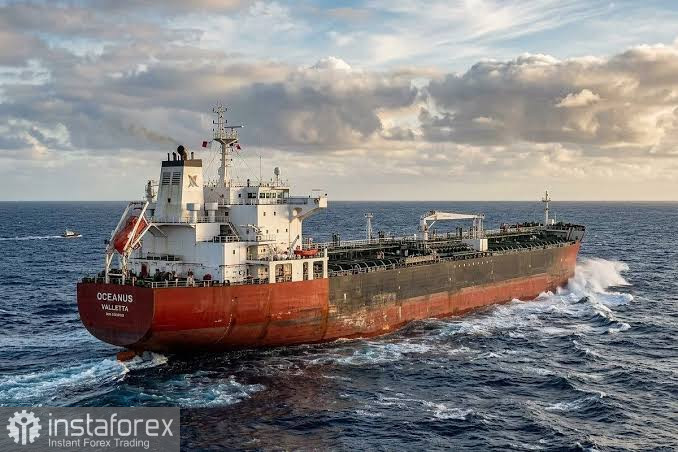
Pressure comes from rising exports out of the Persian Gulf and price cuts by Saudi Arabia — both point to a softening commodity market. Asian refiners and fuel consumers benefit; those long oil in anticipation of shortages lose. Supply is expanding: more oil is flowing through the Strait of Hormuz, and more tankers are willing to take the risky route. Kuwait reports output at roughly 75% of pre-war levels, and Iraq is hiring extra vessels to ship cargoes through the strait.
As noted above, Saudi Aramco cut the price of its flagship Arab Light for Asian buyers to a six-year low to defend market share. The Saudi move matters not only for price: it shows the kingdom no longer expects to sell from shortage, and that stance works against bulls.
However, crude and refined-product markets behave differently. Improved crude flows through Hormuz do not solve the energy problem because refined product supplies remain constrained.
Yemen developments continue to support prices. Riyadh-backed forces have retaken the Red Sea port of Mocha from the Houthis and are advancing toward the Bab-el-Mandeb strait, a key sea lane for Saudi exports. In recent months, Houthi escalation against Riyadh damaged energy infrastructure and tankers. Recapturing Mocha reduces the risk to that route but does not eliminate it: fighting continues, and attacks on vessels remain possible. For the market, that means any fresh strike would quickly restore a risk premium.
The nearest event is today's short-term outlook from the US Energy Information Administration, showing expected fuel supplies for the winter season. It will reveal how diesel and heating fuel supply look amid tight markets and record prices. Yesterday Donald Trump eased restrictions on the use of tax-exempt diesel to lower costs. The move was long anticipated and came about a month before the midterms — a politically sensitive timing.
My view: the next sessions should trade roughly in a $98–$103 Brent range with a slight downward bias while flows through Hormuz continue to rise, and Aramco keeps prices low. But any serious incident in Hormuz, at Bab-el-Mandeb, or on Saudi infrastructure would push Brent above $105 within hours — and as long as that risk exists, the downside correction will be limited.
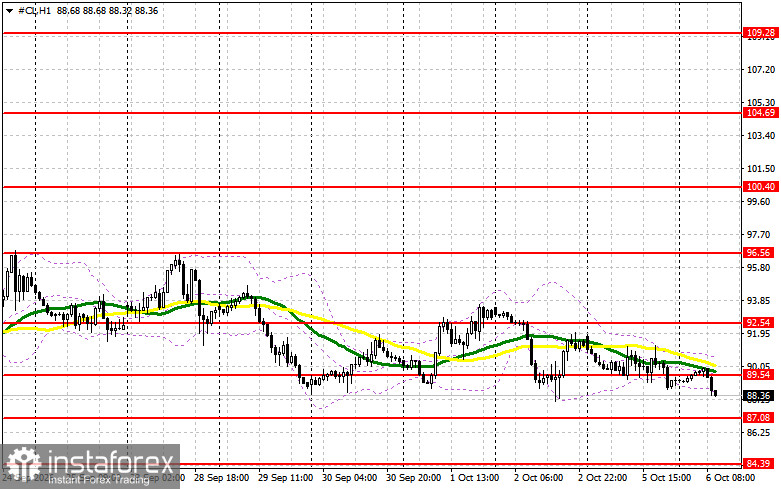
Technical picture: buyers need to take nearby resistance at $92 to target $96, above which a breakout would be difficult. The furthest target is the $100 area. On the downside, bears will try to seize $89; if they succeed, a range break would seriously damage bull positions and drive oil toward $87, with a prospect of reaching $83.


