
See also


 05.11.2026 06:41 AM
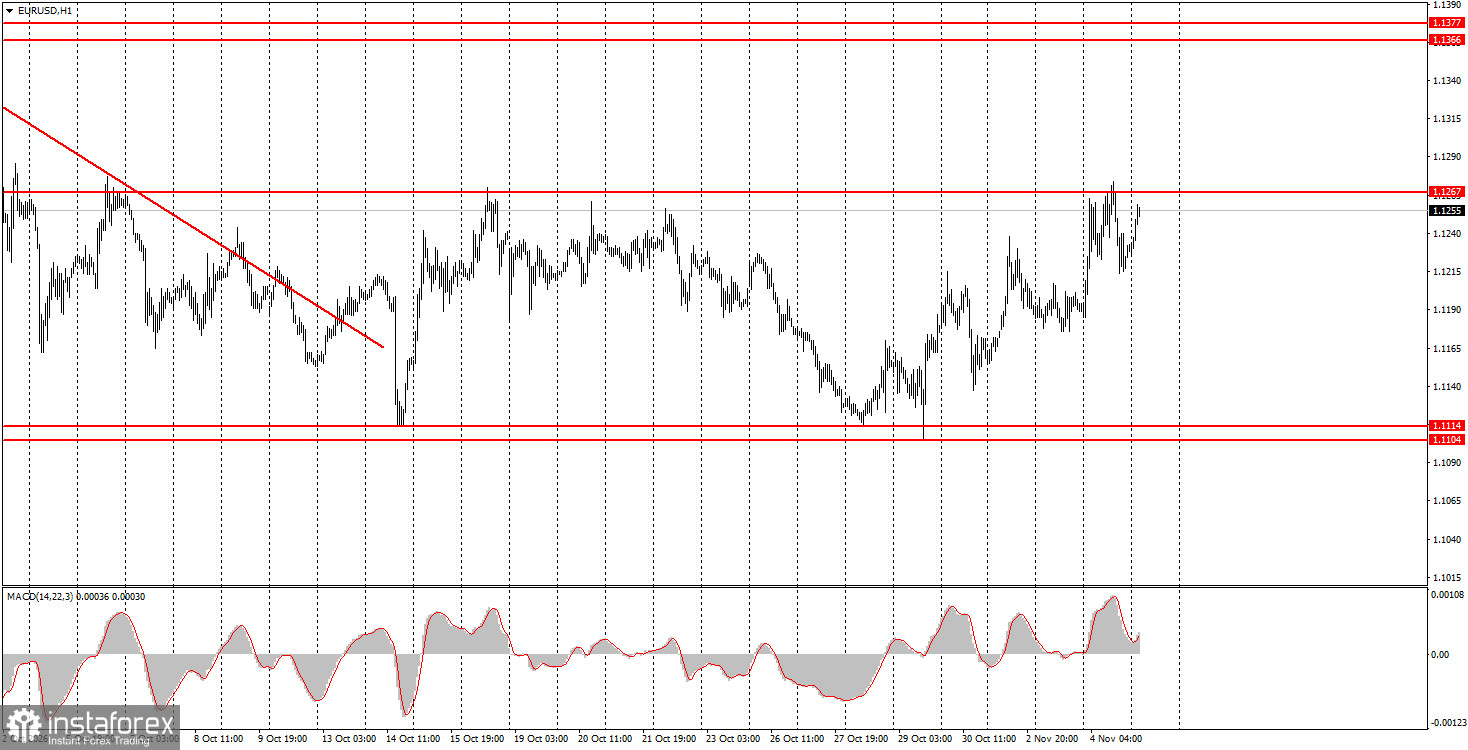
There are few macroeconomic releases scheduled for Thursday. Once all the secondary ones are excluded, virtually nothing remains. Under the current circumstances, the market is unlikely to pay much attention to the Eurozone Producer Price Index or US initial jobless claims. Yesterday, the United States released two fairly important reports, ADP and ISM, while the Eurozone published a key inflation report. Despite these releases and the results of the US congressional elections, the market did not exhibit high volatility. Today, traders' attention will be focused on the Bank of England's policy meeting.
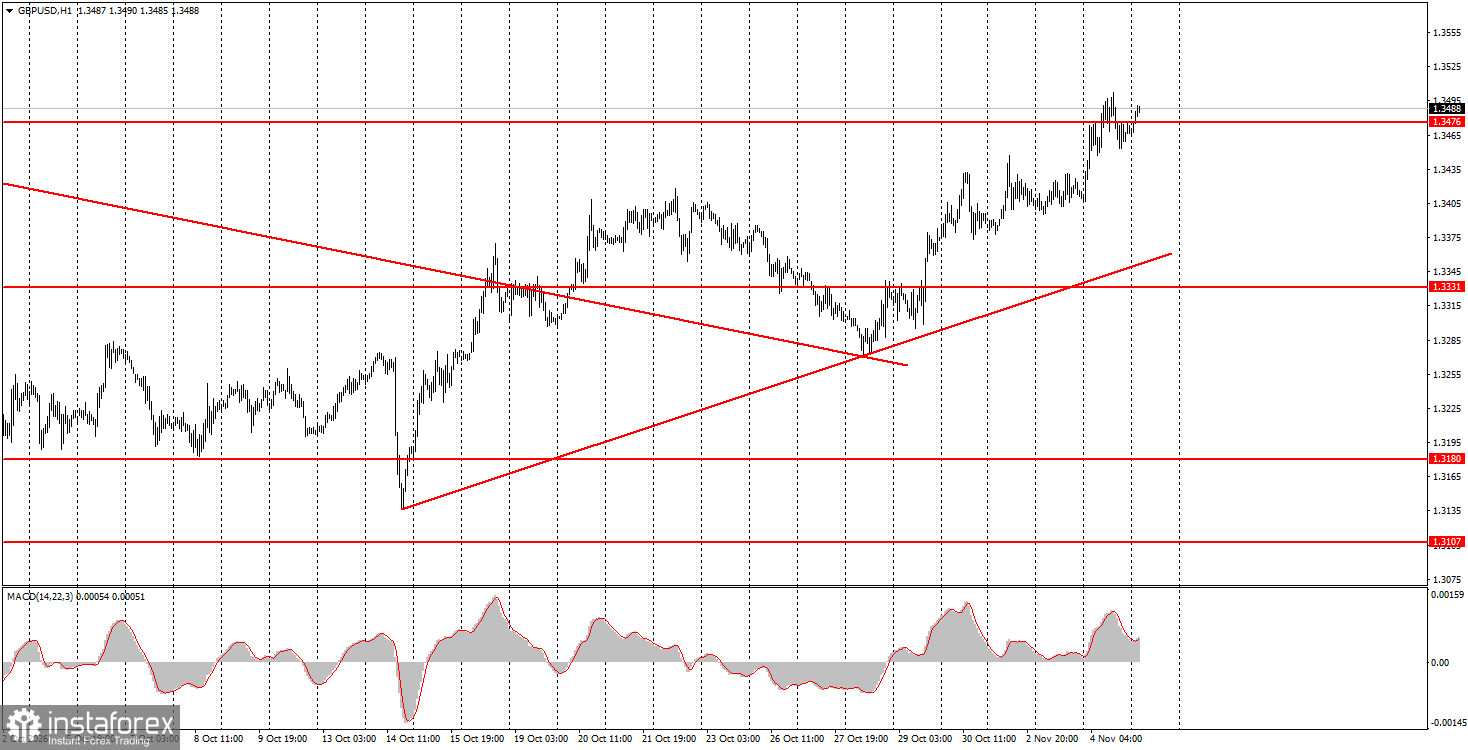
Among Thursday's fundamental events, the Bank of England's policy meeting stands out. The British central bank will be the last of the three major central banks to implement its first key interest rate increase, making this a significant event. Since the British pound, unlike the euro, has been trading in a technically consistent manner, further appreciation can be expected. There is little reason to focus on Christine Lagarde's speech, as the market has shown no reaction to the ECB's monetary policy tightening, while the euro remains near its lows and has been unable to stage even a corrective rebound.
The geopolitical backdrop remains unfavorable. The United States and Iran are not currently holding official negotiations, while Donald Trump still appears uncertain about how to proceed with Iran following his party's crushing defeat in the elections. Yesterday, Democrats announced that they would demand an end to the war in the Middle East. Trump responded with the following statement: "The war will end when I want it to." Therefore, it is still too early to celebrate the end of the military conflict. However, oil prices fell sharply yesterday, which is already a positive development for the global economy.
Market volatility could be relatively high on the penultimate trading day of the week, as the Bank of England's policy meeting is scheduled for today. The euro remains within a sideways channel, while the British pound continues to trade within an uptrend. The euro can be traded from the 1.1267–1.1275 level, while the pound can be traded from the 1.3456–1.3476 level.
Support and resistance price levels (zones) are levels that serve as targets when opening buy or sell positions, or as sources of trading signals.
Red lines indicate channels or trendlines that show the current trend and the preferred trading direction.
The MACD indicator (14,22,3), consisting of a histogram and a signal line, is an auxiliary indicator that can also be used to generate trading signals.
Important speeches and reports (listed in the economic calendar) can have a significant impact on currency pair movements. Therefore, trading during their release should be approached with extreme caution, or positions should be closed to avoid a sharp price reversal against the preceding movement.
Beginner forex traders should remember that not every trade can be profitable. Developing a clear trading strategy and applying sound money management are essential for long-term success in trading.


