
Lihat juga


 10.02.2026 03:38 PM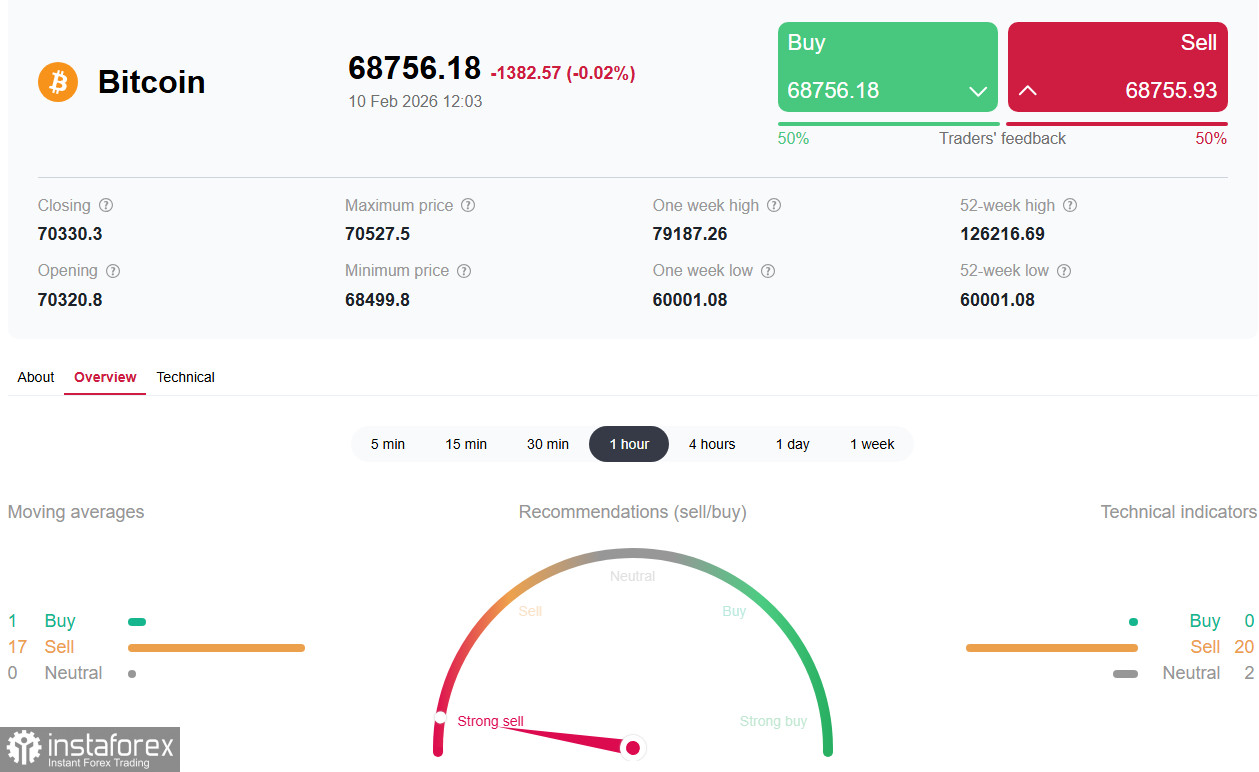
The dollar remains under pressure ahead of key US macroeconomic data. At the same time, the US dollar retains its attractiveness versus cryptocurrencies, partly because the Federal Reserve is expected to keep the status quo on monetary policy. The prior FOMC meeting left the policy rate in the 3.50–3.75% range, citing resilient economic growth and reduced risks of either inflation or rising unemployment.
The crypto market itself is going through one of its toughest periods in recent years. BTC is now trading around $69,000.00, roughly 50% below its October 2025 highs (about $125,000.00), while ETH has only partially recovered to around $2,010.00.
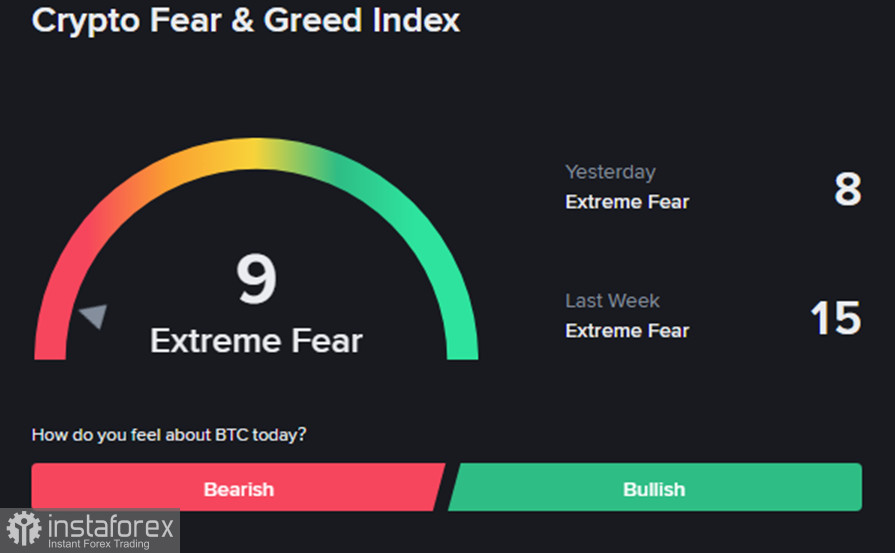
Crypto market capitalization is shrinking, and the Fear & Greed Index is stuck at 9, indicating "extreme fear." The current situation is the result of a clash between strong external macro forces and internal industry problems, casting doubt on near?term growth prospects.
Why is the crypto market in a deep correction?
Tomorrow (13:30 GMT) the investment community will focus on US labor market data. If the figures match expectations (unemployment stable at 4.4% and payrolls rising from 50.0k to 70.0k), demand for dollar hedges and safe havens would continue to rise, increasing pressure on cryptocurrencies and other dollar alternatives.
Technical picture
BTC/USD
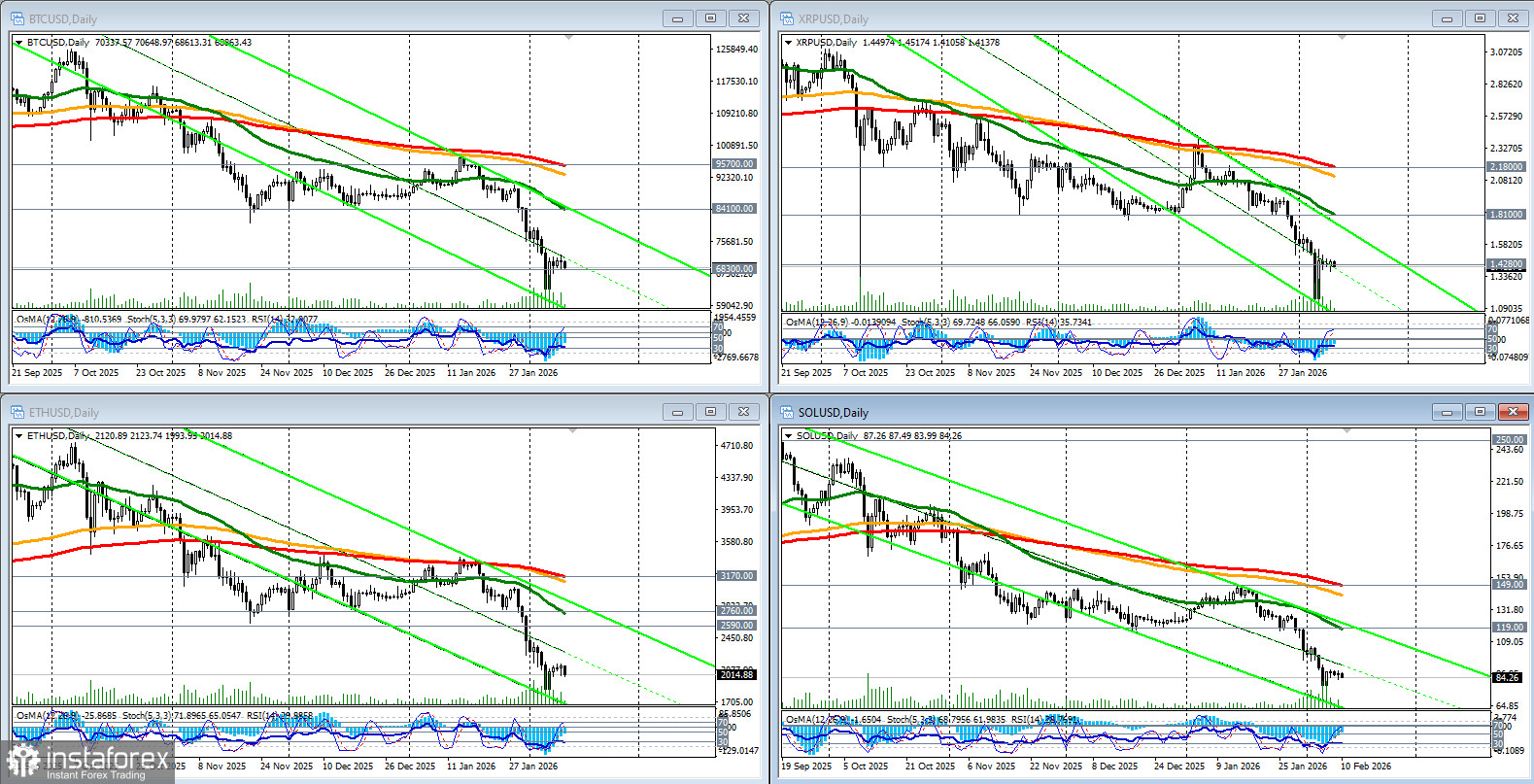
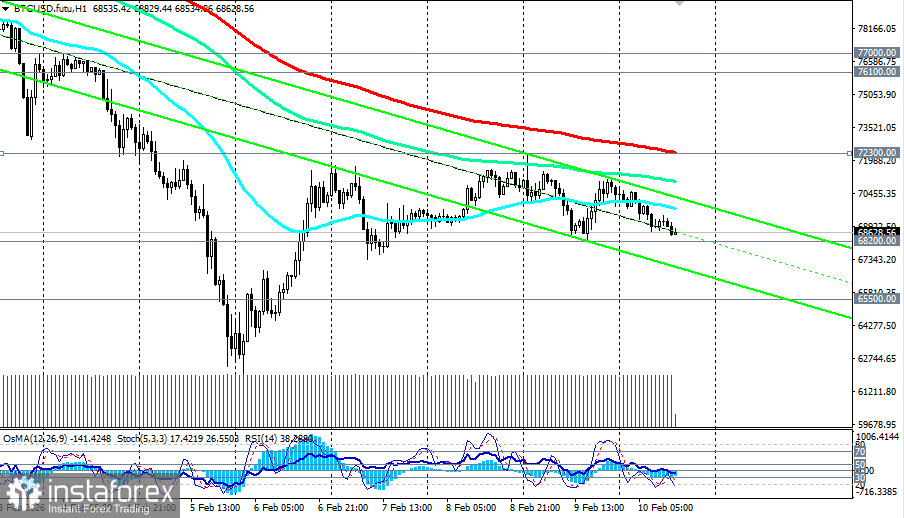
For BTC/USD, the situation remains very vulnerable. Price trades at long?term support near $68,300.00 (200?week EMA) but is substantially below key mid?term moving averages (200?day EMA at $95,700.00, 50?day EMA at $84,100.00), confirming the strength of the downtrend.
Key support: $60,000.00. A break of this psychological and technical level would open the way to $52,500.00 – $50,000.00.
Key resistance: $84,000.00 (around daily 50?day EMA). Only a confident breakout above this zone could trigger a recovery toward $92,000.00 – $95,000.00.
Indicators (OsMA, RSI, Stochastic) on the 1?hour chart retain a bearish bias.
ETH/USD
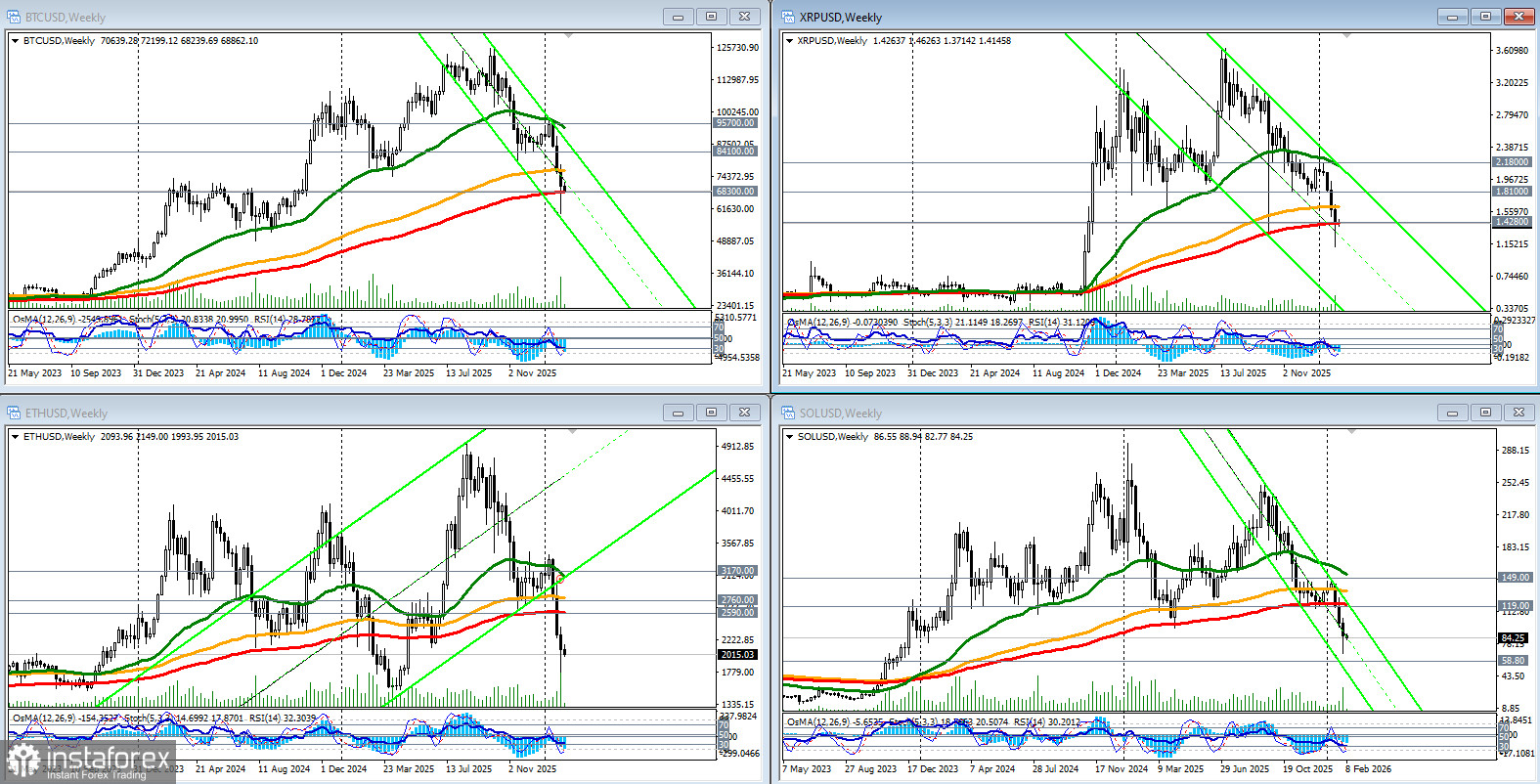
Ethereum is heading toward April lows ($1,400.00 – $1,700.00) and is even weaker. Its rebound looks more like a technical bounce amid a broadly negative backdrop. Further dynamics will be highly correlated with BTC.
Outlooks and possible scenarios
Despite the overall slump, there are signs of capital rotation and constructive developments in the ecosystem:
Base case (continuation of consolidation/pressure) is likely if current conditions persist — hawkish Fed rhetoric, geopolitical risks and regulatory deadlock. BTC could remain range?bound in $50,000.00 – $70,000.00 while ETH stays under pressure. The market will await clear catalysts.
Negative case (deepening correction) would play out if BTC breaks below $65,000.00 – 55,000.00 on stronger US labor data (pushing out expectations for easing) or a new wave of panic. Targets would be $50,000.00 – $45,000.00.
Positive case (recovery) is possible on unexpectedly dovish Fed signals, breakthrough regulatory agreements in the US, or a return of sustained institutional inflows into ETFs. The first technical signal would be BTC holding above $72,300.00 – $72,500.00 (hourly 200?EMA area).
Conclusion
The crypto market is in a "crypto winter" triggered by external circumstances. Today's picture reflects the investment climate: the Fear & Greed Index sits in extreme fear (9), while ETF capital flows remain subdued, recovering only partially from recent large losses.
Short-term prospects remain unclear and heavily depend on macroeconomic conditions and regulators' actions. Investor confidence is seriously damaged.
In such conditions the buy-and-hold strategy is severely tested. Investors should exercise extra caution, viewing current levels as zones of elevated risk rather than obvious entry points. The key to a trend reversal lies outside the industry: clear Fed monetary policy, a reduction in geopolitical tensions and much?needed regulatory clarity that will restore institutional confidence. Until these factors align, the crypto market will struggle to emerge from the shadow of "extreme fear."


