
See also


 16.09.2026 12:02 PM
Investors may have good reason to root for a rate hike. And this is not a paradox created for effect. Over the past fifteen years, the key question for the market has not been what is happening in the economy, but what the Fed will make of it. Even good news, such as strong employment growth, could become a coin toss between stocks falling or rising if it increased the likelihood of tighter monetary policy. The S&P 500 fell for the fifth time in the past seven days as Treasury yields rose to their highest level since 2007 ahead of the Federal Reserve's decision, which traders consider almost a foregone conclusion.
Competition for investors' money has intensified sharply. After decades of near-zero yields, bonds now offer a risk-free return of around 5%, forcing stocks to prove through their performance that investing in them justifies the risk. Stocks have performed well despite higher yields because the pressure from rising yields was offset by steady earnings growth. However, this balance could become more difficult to maintain if borrowing costs continue to rise.
Key Risks for the Stock Market
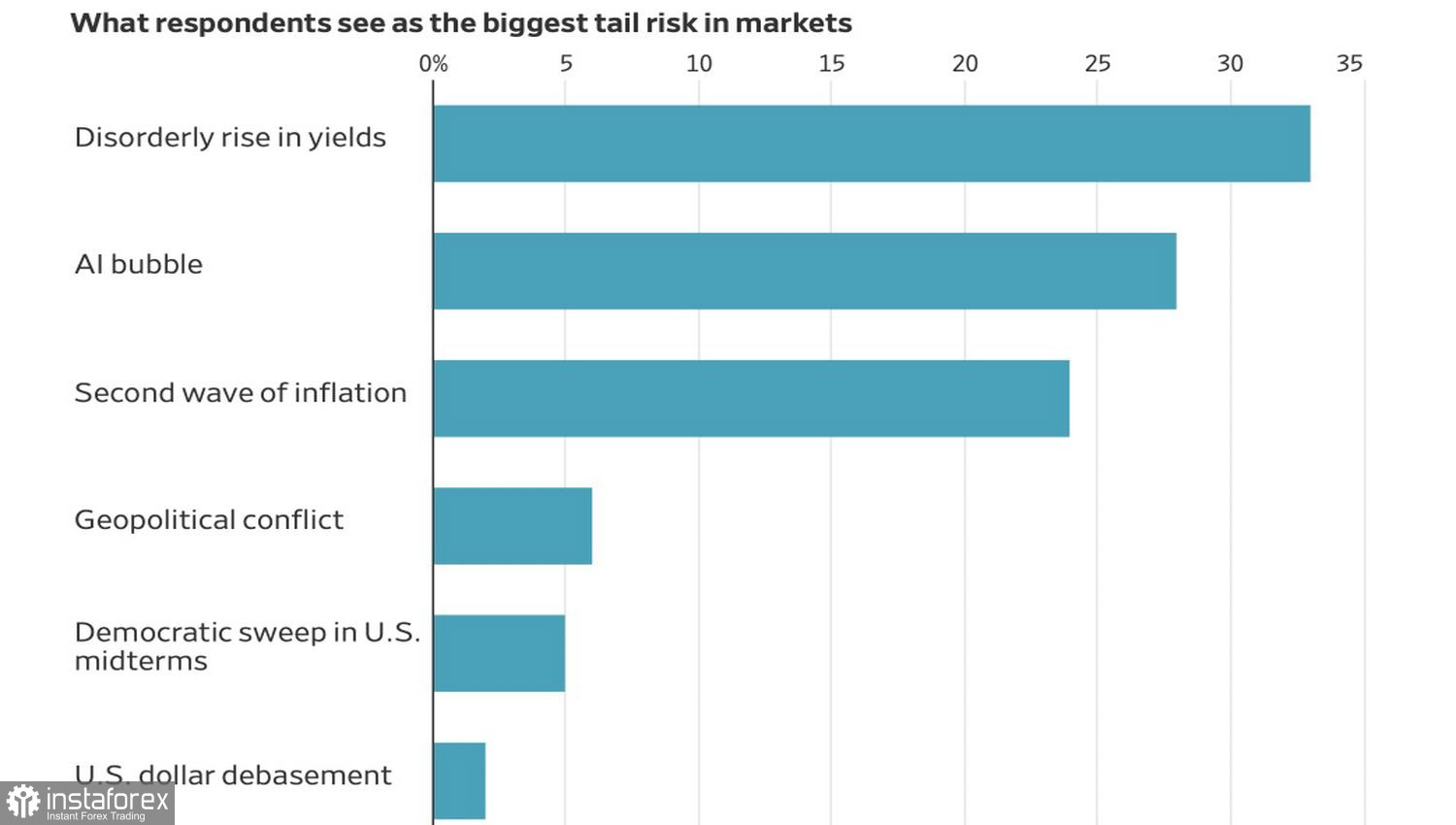
The September Bank of America fund manager survey confirms growing caution. Net overweight positions in global equities fell to 49% from 56% a month earlier, the share of cash in portfolios edged higher, and for the first time, the biggest tail risk identified was not an artificial intelligence bubble but a disorderly rise in Treasury yields. And this was before the 10-year Treasury yield broke through the psychologically important 5% level.
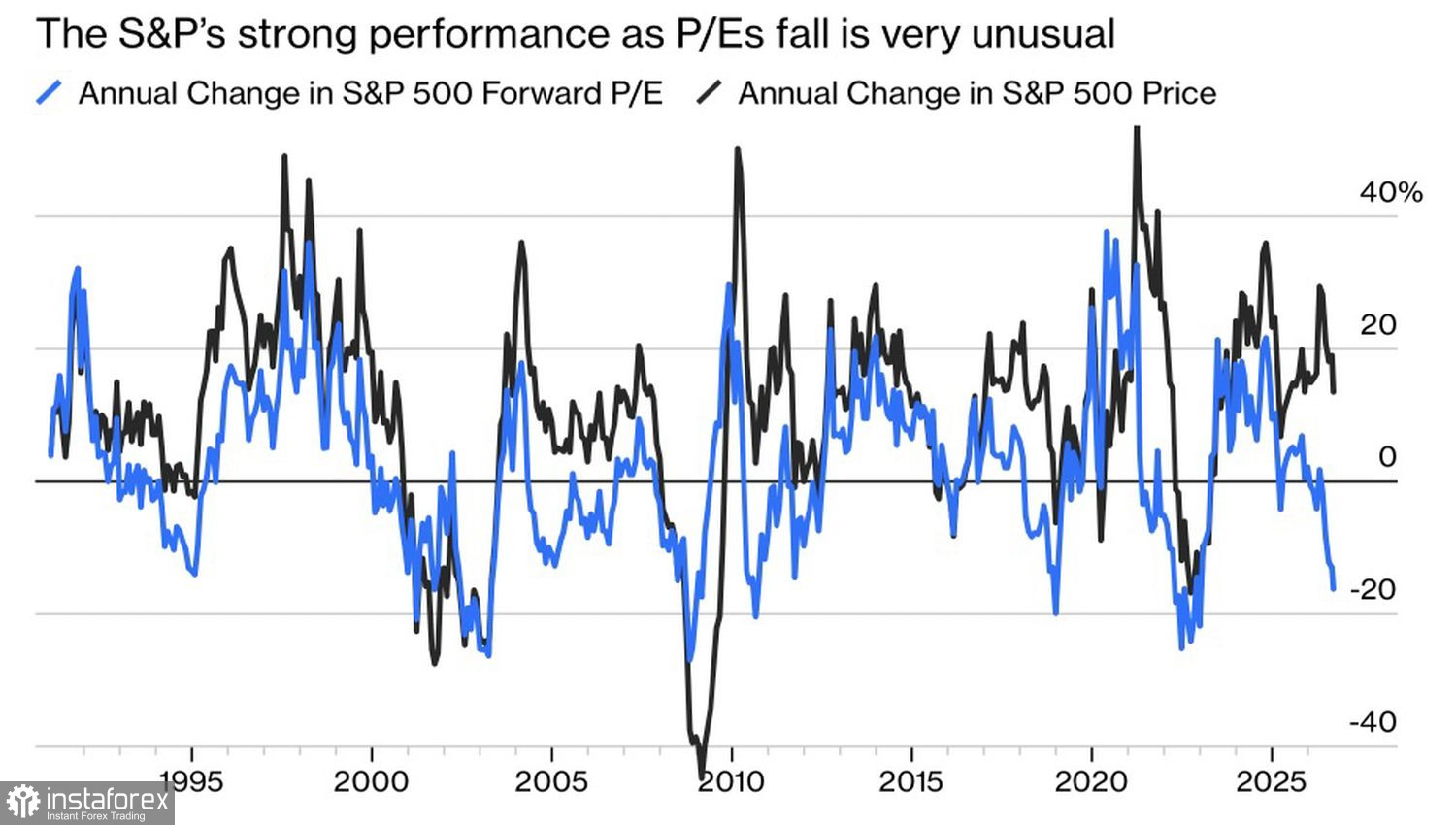
Nevertheless, the resilience of the S&P 500, which has gained 10.7% since the beginning of the year despite an 80-basis-point increase in yields and a 65% surge in oil prices, is significant. Valuation multiples have indeed fallen considerably more than usual, but stock prices are holding up much better than during any previous episode of such a contraction in valuations. This has been supported by an unprecedented increase in projected earnings, largely driven by investment in AI. The concern is different: if yields continue to rise not simply because of lower valuation multiples but because the Fed ultimately slows the AI boom itself, earnings forecasts may fail to materialize.
S&P 500 and P/E Dynamics
The divergence of views on Wall Street is also telling. Wells Fargo lowered its S&P 500 target to 7,700 from 7,950, citing an inevitable slowdown in the decade-long earnings growth cycle and increasing risks to the technology sector. Meanwhile, Bank of America and Tallbacken Capital Advisors raised their targets, following JPMorgan and Yardeni Research, which raised their forecasts in August.
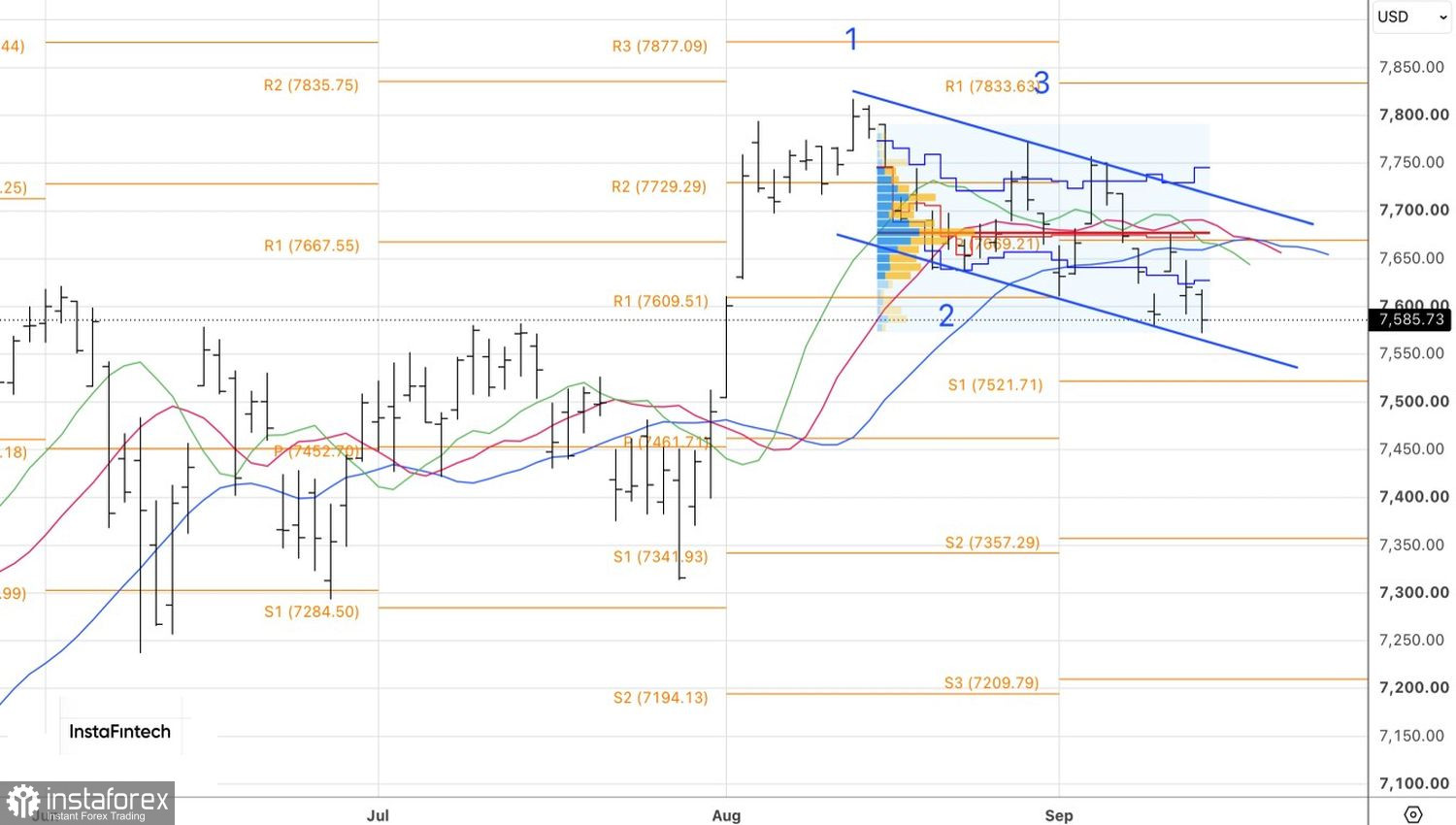
From a technical perspective, the S&P 500 is trading within a downward channel on the daily chart. A break below the lower boundary near 7,560 would provide an opportunity to add to previously established short positions. Conversely, a rebound from this boundary or the bears' inability to launch an attack would be reasons to return to long positions in the broad stock market index.


