
Veja também


 09.11.2026 01:53 PM
Ether trades near $2,100, down about 14% since November 4, when it rose toward $2,433, and at that moment Vitalik Buterin is calling for a rethink of the asset's value logic. The Ethereum co-founder believes burning is overrated: even in 2021–2023, when millions of ETH were burned annually, that mechanism did not guarantee price support. Low burn volume, he says, is not a problem even if it permanently stays below 10% of the breakeven level. For a market that for years traded Ether as "ultrasound money" with a deflationary model, this is a significant shift in emphasis.
Buterin's main argument is that chasing fees threatens the network itself. If protocol revenues are maximized, transaction costs rise, users leave, and centralization increases. He proposes valuing ETH for resilience: security, privacy, independence from intermediaries, and the network's ability to survive technological changes are more important than high fees. In other words, Ether should retain value because of Ethereum's decentralization and reliability, not because tokens are constantly burned. This line aligns with Buterin's October stance on the AI-hacking threat to wallets, where he also emphasized durability of protection.
Whether this is good or bad depends on the horizon. Over the long term the position looks healthy: an asset tied to rising fees depends on speculative activity and L2 fashion, whereas an asset grounded in reliability and neutrality is closer to a digital reserve. That helps long-term holders and institutions that need predictability rather than a deflation narrative. In the short term the risk is obvious: the burn thesis was one of the few simple buy arguments, and its downgrade removes a clear catalyst. Traders who bet on deflation's return lose out, as do ETH treasury holders such as Tom Lee's Bitmine, which held 5.62m ETH in September and built a story around price appreciation.
The contrast with earlier statements is striking. In January 2025, Buterin urged thinking about the "ETH economy" and proposed that L2 networks burn part of fees or stake them permanently so Ether would continue to accumulate value in the L2 world. Back then burning was considered one tool to support price; now he calls it overrated—rhetoric has shifted from monetizing the network to protecting it. For the market this means developers are unlikely to provide price support.
The backdrop for Ether is already weak. It is falling with the tech sector and spot Ether ETFs attracted only $53m after seven days of outflows totaling $657m. I do not think Buterin's words will cause the drop, but they will not provide support either: in the coming weeks Ether will follow Bitcoin and the Nasdaq more than value arguments. I expect trading below $2,158 with a test of support at $2,091, and a new impulse will appear only when the market accepts a resilience model instead of a burn model.
Technical analysis and recommendations:
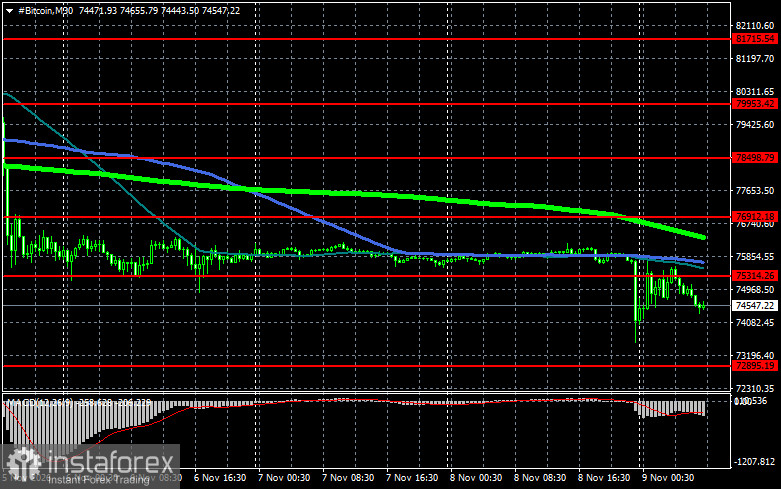
For Bitcoin, buyers are targeting a return to $75,300, which opens a direct path to $76,900 and then toward $78,500—surpassing that would signal an attempt to return to a bull market. On a decline I expect buyers at $72,800. A move below that area could quickly push BTC toward $71,100. The furthest target on the downside is $69,400.
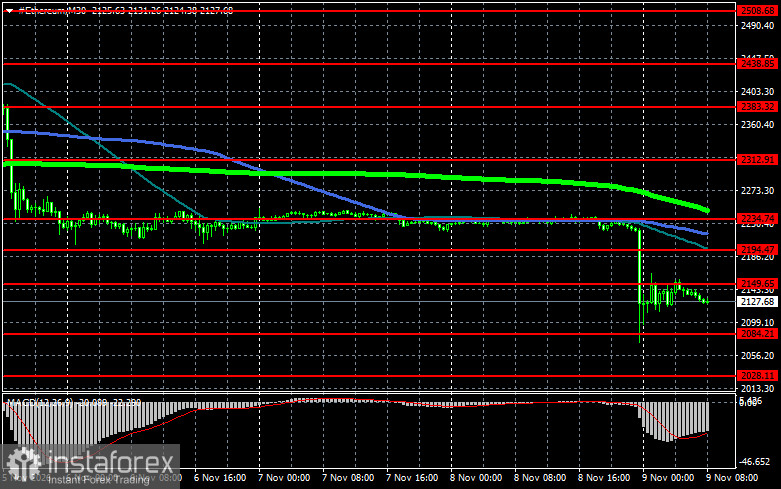
For Ethereum, a clear close above $2,149 opens a direct path to $2,194. The farther target is the high near $2,234; breaking that would indicate strengthening bullish sentiment and renewed buyer interest. On a drop I expect buyers at $2,084. A move below that area could quickly send ETH toward $2,028. The furthest downside target is $1,974.
What we see on the chart:
- Red lines indicate support and resistance levels where either a price slowdown or active growth is expected;
- Green lines indicate the 50-day moving average;
- Blue lines indicate the 100-day moving average;
- Light green lines indicate the 200-day moving average.
A crossover, or a price test of moving averages, typically either halts the move or sparks fresh market momentum.


